


CNN Travel’s weekly newsletter on Dec. 7 said that Taiwan is “renowned for its cuisine, natural scenery and hospitality, but it is also notorious for its dangerous roads.” Taiwan’s “living hell” traffic is a problem for tourism, CNN said.
The report said that multiple countries, including Australia, Canada, Japan and the US, have specifically called out Taiwan’s road conditions and warned their citizens to look out for the traffic.
With the nation’s traffic situation garnering such bad publicity, it is time that the government took action.
The main reason behind Taiwan’s notorious traffic is a disregard for traffic rules among many road users, who drive recklessly, and run red lights or accelerate when they turn yellow.
Drivers also often ignore pedestrians, who have to be doubly alert when crossing a road, even if the light is green for them.
To make matters worse, cars and scooters often emerge unexpectedly from alleys.
Other common problems include scooters illegally parked or even driving on sidewalks, and bus and taxi drivers ignoring all else to reach the kerb when someone hails them.
Taiwan’s traffic problems have brought infamy, but the issue is serious, with statistics showing that about 3,000 people are killed in traffic incidents every year, or 12.67 for every 100,000 people.
The staggering number is six times higher than in Japan and five times higher than in the UK, putting Taiwan at the bottom of the list for road safety in developed countries.
Motorcycle riders account for more than 60 percent of the people who are killed and 75 percent of injuries, with young people riding without a license a major contributor.
Former minister of transportation and communications Hochen Tan (賀陳旦) last year said that road fatalities were on the rise.
The situation undermines tourism and Taiwan’s global image. It is also a national security issue. Lowering the road toll must be made a top priority.
After the CNN report, legislators urged the Ministry of Transportation and Communications to propose policies and solutions, calling on its minister to step down if changes are not made.
However, Taiwan’s traffic problem is not only a political issue, it also concerns the national character and culture.
While the government has full responsibility to reinforce the “three E’s” of road safety — education, engineering and enforcement — the role of road users is also important.
Education should be a priority, with opportunities in the licensing process, through promotional work as well as courses that people must sit after committing traffic offenses. The ministry must not drop the ball on any of these issues.
Moreover, the government should improve infrastructure and engineering to keep sidewalks level and free of obstacles, maintain signs, improve road design and mitigate congestion.
Police should enforce traffic laws by increasing penalties for drunk driving, fining drivers for failing to respect pedestrians’ priority at intersections, and clamp down on illegal parking and speeding.
It would be worthwhile to take a page from the policies of Denmark and other advanced countries. For example, the Danish Vision Zero strategy is a holistic safety approach that shifts responsibility from the people using roads to the people designing them. It is an important approach in the battle to boost safety and lower traffic deaths.
However, while the government has the responsibility to improve Taiwan’s notorious traffic problems, it is equally crucial that road users are self-disciplined regarding traffic rules.
The reports by CNN and other countries indicate that Taiwan has prioritized vehicles over pedestrians in its traffic policies and implementation. As a result, drivers seem to value convenience over pedestrian safety and public transportation.
It is imperative that a culture prioritizing pedestrians is developed. Even people who own a vehicle spend more time walking than driving.
Only when road users obey the traffic rules, practice good driving etiquette and acknowledge the road rights of others can Taiwan improve its traffic situation.
Traffic violations are a common sight in Taiwan, including cars parked on red lines or double parking, and scooters parked under covered walkways.
People often ride their scooters on the wrong side of the road or honk at pedestrians for “being in the way.”
Drivers often turn left without regard for oncoming traffic or fail to give way at intersections. They cut in on freeways, switch lanes without warning and illegally use the shoulder.
People often treat traffic signs as a “guide” or completely ignore them at night.
The sidewalks are often narrow, with parked vehicles adding to the obstacles, along with street lights and transformer boxes. Business owners put plants or signs on covered walkways, making it difficult for people with strollers or in wheelchairs.
At markets, people on scooters often slow down to look at stalls or ask about prices, which blocks walkways and obstructs the road, while exhaust fumes are pumped into a crowded space.
If drivers do not start making way for pedestrians and rule-breaking is not curbed, Taiwan’s “living hell” traffic will remain.
The situation in Taipei is of particular concern. Despite boasting a mass rapid transit system that gives most people the option of a safe, efficient commute on public buses and trains, the capital city still has a staggering 950,000 motorcycles on its roads.
Gas-powered two wheelers are a major source of air pollution and noise, so their ubiquity should be addressed or the nation’s image as a developed country might be undermined.
Vietnam’s capital and second-largest city, Hanoi, plans to ban motorbikes by 2030, a policy that Taipei could consider.
Taiwan’s traffic is characterized by an attitude that says: “Me above others.”
This can only be addressed through education. The goal should be to instill a daily focus on driving etiquette. At the same time, the government should refine and invest more in public transportation and maintenance, especially outside Taipei.
However, individual action would be the main driving force. People should use public transportation rather than driving or riding, just as citizens in Denmark and other Scandinavian countries do, which would benefit everyone.
That done, Taiwan would be one step closer to shedding its ignominy of being a “living hell” for pedestrians.
Translated by Rita Wang
KMT Chairwoman Cheng Li-wun’s (鄭麗文) recent visit to Beijing and her upcoming visit to Washington will serve as a high-level test of her diplomatic mettle. In Beijing, Cheng was received with symbolic gestures, a warm reception, and high-level access. In Washington, she will receive far less pomp and far sharper questions about the KMT’s vision for the future of Taiwan. Her challenge will be to persuade Washington that the KMT’s engagement with China can coexist with strong deterrence. Cheng’s April 7-12 visit to mainland China coincided with an intense period of conflict in Iran. Despite the strategic significance of Cheng’s trip,
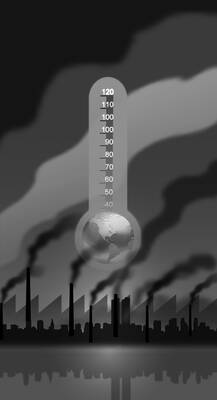
The closure of the Strait of Hormuz has sent the vast Asian chemicals industry into a tailspin. Deprived of the likes of Qatari natural gas and Saudi Arabian oil, the region’s fertilizer and plastics plants are slowing production or even shutting down. Everywhere except China, that is. In petrochemicals, China is unique. As well as a traditional industry that uses oil and gas as feedstock, it has parallel output that relies on its abundant domestic coal. Unsurprisingly, India and other regional powers want to copy and paste the Chinese method. This would not be easy — or climate friendly. The
US President Donald Trump recently repeated his claim that “Taiwan stole America’s chip industry,” reigniting public debate on the issue. As a former Taiwanese minister of economic affairs and an entrepreneur deeply involved in semiconductor supply chain development, I feel a responsibility to clarify this misunderstanding. From the perspective of global industrial evolution and the economic principle of comparative advantage, such a statement appears overly simplistic and risks obscuring the essence of the issue. The rise of Taiwan’s semiconductor industry was not built on “replacing America,” but rather emerged as a result of countries pursuing different development paths within the
The Presidential Office on Saturday reiterated that Taiwan is a sovereign, independent nation after US President Donald Trump said that Taiwan should not “go independent.” “We’re not looking to have somebody say: ‘Let’s go independence because the United States is backing us,’” Trump said in an interview with Fox News aired on Friday. President William Lai (賴清德) on Monday said that the Republic of China (ROC) — Taiwan’s official name — and the People’s Republic of China (PRC) are not subordinate to each other. Speaking at an event marking the 40th anniversary of the establishment of the Democratic Progressive Party (DPP), Lai said


 RSS
RSS