


The Central Epidemic Command Center (CECC) on Monday removed the table dividers between its officials at its daily news conference — a symbolic gesture to encourage society to return to “normal” in the post-COVID-19 era — as it announced the easing next month of more COVID-19 restrictions.
It has been 896 days since the table dividers were erected for the CECC’s daily news conference on May 15, 2020, becoming an example for restaurants and many indoor public facilities that were required to do the same if social distancing was not possible.
Following the elimination of mandatory COVID-19 tests and home quarantine for travelers from abroad, the CECC on Monday announced the end of mandatory home isolation for close contacts who live in the same residence as an infected person, starting from Nov. 7.
It also announced the end of mandatory body temperature checks at business venues and public facilities, scrapping the vaccine proof requirement for certain business venues, religious events and group tours from Nov. 7, and on Friday it said the mask mandate would be lifted in phases.
Deputy Minister of Health and Welfare Victor Wang (王必勝), who heads the CECC, on Oct. 11 said that the goal of the center is to “live with the virus” by keeping infection severity and death rates low, maintaining sufficient healthcare capacity, protecting the most vulnerable, allowing patients to receive treatment and drugs more conveniently and restoring economic growth.
However, while the CECC has shifted its focus from COVID-19 prevention and control to balancing disease prevention with economic recovery, it should enhance its public messaging through its well-established platform — the daily news conference.
Although reporting daily caseloads could serve as a public reminder to take necessary precautions, many people have grown tired of the rigid format of the center’s data presentation.
The center could address people’s concerns about the border reopening and easing of restrictions, as some might become anxious and be hesitant to stop preventive measures.
The CECC should try new forms of public health messaging to make people feel safe returning to pre-pandemic activities, without questioning whether they are contravening rules or exposing themselves to increased risk of infection.
Doctors have warned of a possible surge in flu and respiratory syncytial virus infections, especially in children, and as COVID-19 continues in the winter and severe cases of multisystem inflammatory syndrome in children (MIS-C) are frequently reported, the center could address parents’ concerns by having pediatricians share information about early signs and how to protect children.
The center could also invite officials from different ministries as guests to explain how new COVID-19 policies would work in different situations, for example in business venues, on public transportation and when traveling overseas, rather than passively responding to scenarios posited by reporters.
As people who have recovered from acute COVID-19 might worry about long COVID or reinfection, or vulnerable individuals might feel anxious about the easing of restrictions, the CECC could provide simple information on its Web site about symptoms and access to recovery programs, as well as straightforward tips for coping with anxiety and access to mental health resources, rather than its current PDF files.
The CECC, in collaboration with other ministries, can help people readjust to post-pandemic life with tips and advice on situations that are relatable to the public.

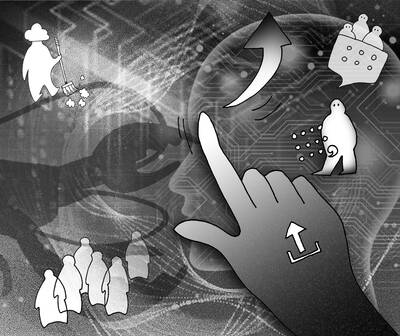
Weeks into the craze, nobody quite knows what to make of the OpenClaw mania sweeping China, marked by viral photos of retirees lining up for installation events and users gathering in red claw hats. The queues and cosplay inspired by the “raising a lobster” trend make for irresistible China clickbait. However, the West is fixating on the least important part of the story. As a consumer craze, OpenClaw — the AI agent designed to do tasks on a user’s behalf — would likely burn out. Without some developer background, it is too glitchy and technically awkward for true mainstream adoption,
A delegation of Chinese Nationalist Party (KMT) officials led by Chairwoman Cheng Li-wun (鄭麗文) is to travel to China tomorrow for a six-day visit to Jiangsu, Shanghai and Beijing, which might end with a meeting between Cheng and Chinese President Xi Jinping (習近平). The trip was announced by Xinhua news agency on Monday last week, which cited China’s Taiwan Affairs Office (TAO) Director Song Tao (宋濤) as saying that Cheng has repeatedly expressed willingness to visit China, and that the Chinese Communist Party (CCP) Central Committee and Xi have extended an invitation. Although some people have been speculating about a potential Xi-Cheng
Chinese Nationalist Party (KMT) Chairwoman Cheng Li-wun (鄭麗文) is leading a delegation to China through Sunday. She is expected to meet with Chinese President Xi Jinping (習近平) in Beijing tomorrow. That date coincides with the anniversary of the signing of the Taiwan Relations Act (TRA), which marked a cornerstone of Taiwan-US relations. Staging their meeting on this date makes it clear that the Chinese Communist Party (CCP) intends to challenge the US and demonstrate its “authority” over Taiwan. Since the US severed official diplomatic relations with Taiwan in 1979, it has relied on the TRA as a legal basis for all
The ongoing Iran conflict is putting Taiwan’s energy fragility on full display — the island of 23 million people, home to the world’s most advanced semiconductor manufacturing, is highly dependent on imported oil and gas, especially that from the Middle East. In 2025, 69.6 percent of Taiwan’s crude oil and 38.7 percent of liquified natural gas were sourced from the Middle East. In the same year, 62 percent of crude oil and 34 percent of LNG to Taiwan went through the Strait of Hormuz. Taiwan’s state-run oil company CPC Corp’s benchmark crude oil price (70 percent Dubai, 30 percent Brent)


 RSS
RSS