


After US House of Representatives Speaker Nancy Pelosi visited Taiwan in August, China flexed its military muscles around the nation. To wear out Taiwanese forces, Chinese military aircraft stepped up incursions into Taiwan’s air defense identification zone, while Chinese fighter jets crossed the Taiwan Strait median line. Beijing’s escalation has ushered in volatility in cross-strait relations, undermining the “status quo.”
China’s large-scale military exercises around Taiwan — referred to as the makings of a fourth Taiwan Strait crisis — are dangerously fraught. These actions are closer to the nation and have become “acceptable,” just because they have happened before and frequently recur. Neither side of the Taiwan Strait has sought political measures to defuse the crisis.
The risk of conflict is high. Military activities by the Chinese People’s Liberation Army reflect Beijing’s intention to reset the benchmark for acceptable military activities in the Taiwan Strait, seeking to assert its sovereignty over Taiwan’s territory. The air and sea exercises near Taiwan are not only a deliberate provocation, they are a war plan rehearsal to prepare for unification operations.
Increasing tensions in US-China relations are also detrimental to Taiwan’s security. Relations between Washington and Beijing have hit a new low and are likely to become the new normal unless there is constructive and intense engagement, with persistence, prudence and restraint.
The whirlwind of deteriorating ties between the US and China, especially after Beijing’s crackdown on democracy in Hong Kong since 2019 and the recent political crisis across the Taiwan Strait, have drained opportunities to improve China-Taiwan relations, let alone resume earnest dialogues about Taiwan’s security.
After testing its military hardware in waters adjacent to Taiwan in August, China could take measures to seize or blockade Taiwan at a time when Beijing is confident in its military posture and believes the regional military balance has shifted in its favor.
China also has other options to intimidate and isolate Taiwan, including limited campaigns to seize Taiwan’s outlying islands near China’s coast, blockades of Taiwan’s ports and measures to choke off trade.
Beijing’s last roll of the dice against Taiwan is probable and menacing, as China’s military buildup has been progressing with dramatic and formidable pace.
Regional geopolitics matter, too. Beijing’s attempt to establish a “new normal” in the Taiwan Strait have upended regional security and are detrimental to the regional theater. Not only would the new normal trigger an escalation of tensions in the Strait, it could also make the guardrails to manage cross-strait relations volatile and exacerbate the risk of miscalculation.
As most countries in Asia desire the maintenance of a “status quo,” escalated tensions or armed conflict across the Strait would pose a serious threat to their economic and security interests. If China’s extreme military measures are left unchecked, China would spiral up its pressure over Taiwan, leading to a big loss for regional countries seeking peace, stability and development.
As for the US, a statecraft opportunity of not wasting a crisis is on the table. As the rules of the game that worked well for the US and China in the past have changed, the US needs a revival of its China strategy.
The US needs a realistic containment policy for China with consolidated alignment formed with its close partners, such as those in the Quadrilateral Security Dialogue — the US, Japan, Australia and India. One option would be to strengthen deterrence by conducting maritime transits together through the Taiwan Strait. Such actions should be based on routine transits, such as one ship per month.
Global order program manager at Perry World House Thomas Shattuck said that a mutual transit of the Taiwan Strait “would demonstrate that America has powerful allies that are willing to put skin in the game.”
In conducting freedom of navigation operations through the Strait, the US and Indo-Pacific powers could counter China’s maritime aggression and undermine Beijing’s excessive maritime claims, notably stating that the strait is not international waters.
Washington should also enhance its collaboration with like-minded partners. Enhancing ties with a swing power such as India should be prioritized.
The US has helped India develop drones and supported New Delhi’s defense modernization goals, demonstrating an upswing in military and defense cooperation. The US should encourage India to issue official statements underscoring the importance of stability in the Taiwan Strait.
New Delhi does not have to turn itself into an enemy of Beijing, but the country should make clear that it has pragmatic interests in fostering economic ties with East Asian partners, including Taiwan. Peace and stability across the Taiwan Strait should become a vital part of India’s foreign policy rhetoric and political discourse.
Enhancing the frequency and efficiency of congressional visits to support Taiwan is another crucial option. Following Pelosi’s visit, congressional delegations from the US and European countries — such as France and the Czech Republic — have visited Taiwan. Legislators from like-minded countries, such as Japan, Palau, Guatemala, Tuvalu and from Europe have started visiting Taiwan while voicing their interests in Taiwan’s democracy and semiconductor industry.
However, visits from lawmakers should have more substance than form. Fortunately, future visits can gain new momentum.
Incoming visits should focus on an unwavering message of long-term engagement with Taiwan on the democratic front line, such as considering Taiwan as a principal economic and security partner. Like-minded countries should make visits routine and inclusive.
A potential move could begin with the participation of businesses, think tanks, educational institutions and industry associations. Overseas delegations engaging with Taiwan should focus on sustainability and inclusiveness.
There is a dire need for a multilateral approach in the form of a liberal-democratic partnership designed to institutionalize cooperation among like-minded partners. Institutional balancing with collective actions undertaken by member states could help minimize risky moves of the aggressive power, attract international concerns over actions that could undermine regional security and internationalize the issue.
Coordinated efforts between major and middle powers could be the most effective strategic deterrence against Beijing’s reckless activities.
While Taiwan has worked to uphold its democratic freedom, it is high time Indo-Pacific powers supported its security and democratic achievements. For Taiwan and regional powers alike, the time is (poli)ticking.
Huynh Tam Sang is an international relations lecturer at Ho Chi Minh City University of Social Sciences and Humanities, a research fellow at the Taiwan NextGen Foundation and a nonresident WSD-Handa fellow at the Pacific Forum.
We are used to hearing that whenever something happens, it means Taiwan is about to fall to China. Chinese President Xi Jinping (習近平) cannot change the color of his socks without China experts claiming it means an invasion is imminent. So, it is no surprise that what happened in Venezuela over the weekend triggered the knee-jerk reaction of saying that Taiwan is next. That is not an opinion on whether US President Donald Trump was right to remove Venezuelan President Nicolas Maduro the way he did or if it is good for Venezuela and the world. There are other, more qualified
The immediate response in Taiwan to the extraction of Venezuelan President Nicolas Maduro by the US over the weekend was to say that it was an example of violence by a major power against a smaller nation and that, as such, it gave Chinese President Xi Jinping (習近平) carte blanche to invade Taiwan. That assessment is vastly oversimplistic and, on more sober reflection, likely incorrect. Generally speaking, there are three basic interpretations from commentators in Taiwan. The first is that the US is no longer interested in what is happening beyond its own backyard, and no longer preoccupied with regions in other
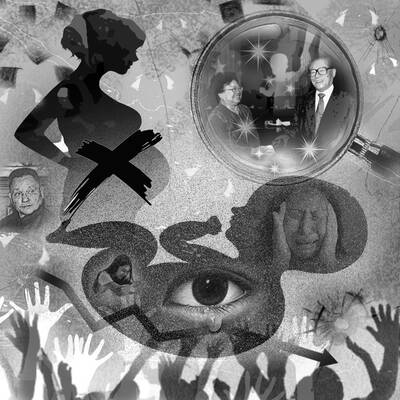
Jan. 1 marks a decade since China repealed its one-child policy. Just 10 days before, Peng Peiyun (彭珮雲), who long oversaw the often-brutal enforcement of China’s family-planning rules, died at the age of 96, having never been held accountable for her actions. Obituaries praised Peng for being “reform-minded,” even though, in practice, she only perpetuated an utterly inhumane policy, whose consequences have barely begun to materialize. It was Vice Premier Chen Muhua (陳慕華) who first proposed the one-child policy in 1979, with the endorsement of China’s then-top leaders, Chen Yun (陳雲) and Deng Xiaoping (鄧小平), as a means of avoiding the
As technological change sweeps across the world, the focus of education has undergone an inevitable shift toward artificial intelligence (AI) and digital learning. However, the HundrED Global Collection 2026 report has a message that Taiwanese society and education policymakers would do well to reflect on. In the age of AI, the scarcest resource in education is not advanced computing power, but people; and the most urgent global educational crisis is not technological backwardness, but teacher well-being and retention. Covering 52 countries, the report from HundrED, a Finnish nonprofit that reviews and compiles innovative solutions in education from around the world, highlights a


 RSS
RSS