


Within one month, two major crises in Taiwan’s higher education have been revealed: the severity of student recruitment shortfalls and the declining quality of “in-service master’s programs.”
Student shortages are nothing new, but the shortfall has reached a new high this year. Only 11 universities met their recruitment targets, while 51 universities — 22 public and 29 private — missed their target by 14,000 students, despite reporting a record acceptance rate of 98.94 percent.
The University Admission Committee said that even reputable private universities have been affected by declining enrollments, with Chinese Culture University reporting a considerable shortfall: It only recruited 257 students, despite having 2,635 available spaces.
While the Ministry of Education has drawn up a number of exit plans over the years to address the issue — such as forced closures of private universities whose recruitment rates did not meet the target, or the merging of public universities — they have only addressed low-ranking universities.
The shortfall this year reveals that Taiwan’s low birthrate has left prestigious private and public universities teetering on the brink.
This phenomenon calls for the government to reallocate its resources and funding, while loosening its policies in regards to private universities, and the whole higher education system in due course.
According to the Taiwan Higher Education Union, the government’s spending on tertiary education is only 0.39 percent of GDP, significantly lower than the 1 percent average of Organisation for Economic Co-operation and Development member countries.
Aside from increasing its budget, the Ministry of Education should provide more resources for private universities, as most students attend them. By providing grants to disadvantaged or low-income students, and incentives for universities to elevate research and teaching quality, the government could ensure the quality of private education does not fall.
The deteriorating quality of “in-service master’s programs” is a correlated issue. While the purpose of the program was to provide people already in employment with an opportunity for further education and growth, the system has become an arena for students, especially politicians, to exchange interests and connections at the university.
Students in the program are usually experts or elites in a certain field, so professors often hope to build connections with them to facilitate upcoming projects or work in the future.
As the programs usually charge exorbitant tuition fees, they have become the golden goose and a source of income to make up for universities’ deficits in undergraduate programs.
As students in the program usually have jobs during weekdays, professors also overlook low attendance rates and turn a blind eye to the poor quality of theses, as can be seen from the recent “thesis gate” scandals — from former Hsinchu mayor Lin Chih-chien (林智堅) to Chinese Nationalist Party (KMT) Nantou County commissioner candidate Hsu Shu-hua (許淑華).
To address the problem, the ministry should more rigorously regulate the requirements for acquiring master’s degrees, review graduate schools’ enrollment thresholds and the content of their courses for in-service programs.
Higher standards should be established: The number of students a thesis adviser can take should be limited, committee members should be invited to oral defenses, and measures should be taken to ensure the originality and quality of master’s theses.
Higher education is the most critical component to a nation’s development. Rather than leaving universities to sink or swim, it is high time for the government to address these two crises by increasing its budget and reallocating its resources.
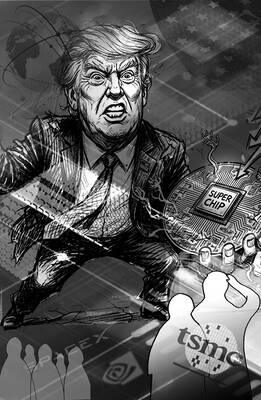
The White House’s decision to take a 9.9 percent stake in Intel Corp is looking like very shrewd business indeed. Since the government bought in at US$20.47 a share last August, the US chipmaker’s surging stock price has delivered the US a US$43 billion return. One of the reasons the investment has so far proved so sound is that the White House has made sure of it. According to The Wall Street Journal, Howard personally pushed deals on Intel’s behalf with some of the most lucrative clients imaginable. They include Nvidia Corp, the company at the heart of the AI
KMT Chairwoman Cheng Li-wun’s (鄭麗文) recent visit to Beijing and her upcoming visit to Washington will serve as a high-level test of her diplomatic mettle. In Beijing, Cheng was received with symbolic gestures, a warm reception, and high-level access. In Washington, she will receive far less pomp and far sharper questions about the KMT’s vision for the future of Taiwan. Her challenge will be to persuade Washington that the KMT’s engagement with China can coexist with strong deterrence. Cheng’s April 7-12 visit to mainland China coincided with an intense period of conflict in Iran. Despite the strategic significance of Cheng’s trip,
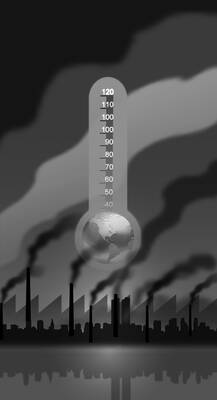
The closure of the Strait of Hormuz has sent the vast Asian chemicals industry into a tailspin. Deprived of the likes of Qatari natural gas and Saudi Arabian oil, the region’s fertilizer and plastics plants are slowing production or even shutting down. Everywhere except China, that is. In petrochemicals, China is unique. As well as a traditional industry that uses oil and gas as feedstock, it has parallel output that relies on its abundant domestic coal. Unsurprisingly, India and other regional powers want to copy and paste the Chinese method. This would not be easy — or climate friendly. The
Indonesian President Prabowo Subianto says he knows how to fix the problems facing Indonesia. Yet his economic mismanagement and authoritarian tendencies are steering the nation toward a familiar mix of currency instability and political chaos. The world’s fourth-most populous nation risks reversing the hard-won democratic and business reforms that came after the Asian Financial Crisis in 1997. At that time, the rupiah collapsed and the political upheaval that followed forced former president Haji Mohamed Suharto from power. Prabowo’s administration is ignoring similar warning signs. That disconnect was apparent in a national address on Wednesday, when Prabowo projected the swagger that has


 RSS
RSS