


Chiseled into rock in Kinmen County’s Jinhu Township (金湖) are the Chinese characters for one of Chiang Kai-shek’s (蔣介石) favorite memes. Translated they read: “Remember our days at Ju” (毋忘在莒), referencing the Warring States period when the armies of the state of Qi were forced to retreat to the city of Ju. Once there, they regrouped and returned to regain their lost territory.
That meme serves as an important yet also an ironic reference in understanding the “limbo state” of Taiwan and why it needs to break its nebulous past with Kinmen and Matsu.
More than a decade ago, I wrote “The civil war that was never ours,” (Taipei Times, June 8, 2009). Those ideas still hold true. Taiwan was never part of the Chinese Civil War, in which after 1912 many warlords and leaders sought to control either parts of or the whole of the crumbling Manchu Empire. At that time, Taiwan was a colony of Japan and separate from the ensuing chaos developing on the continent.
In the 1895 Treaty of Shimonoseki, the Manchu Empire ceded the half of Taiwan that it controlled to the Japanese “in perpetuity”— if that can ever be done. Japan, of course, took the whole island, regardless of whether the Manchus controlled it. So Japan became the first colonial power to subdue and rule the whole of Taiwan.
However, Kinmen and Matsu were never part of that treaty, and that is an important piece of the puzzle when it comes to the 1952 San Francisco Peace Treaty. That treaty officially ended World War II and in it Japan officially gave up any sovereignty claims over Taiwan.
Again, as has been said so often, one must disregard statements of intent as found in the Cairo and Potsdam declarations, and that military occupation does not equal annexation; similarly, ceremonies marking the end of hostilities are not treaties. It was finally in the San Francisco Treaty that Japan surrendered its claims of sovereignty over Taiwan and it did not name a recipient. In short, it did not name the Chinese Nationalist Party (KMT), the Chinese Communist Party (CCP), the Republic of China (ROC) or the People’s Republic of China (PRC), etc, with full knowledge of all that had happened. It left that open with the possibility that sovereignty could fall to the people of Taiwan by the UN right to self-determination.
The US as the chief victorious power in the Pacific also did not designate a recipient. Instead, it unfortunately began kicking the can down the road. These are distinctions that need to be made.
However, they also reveal why then-US secretary of state Mike Pompeo recently could make the bold assertion that Taiwan has never been a part of China. It is the US who determines the recipient.
Unfortunately, there are many lazy historians who are looking for a quick fix by which to escape the distinctions of all that happened on the continent. They, as well as some who could be called “panda huggers,” resort to calling the Mongol Empire and the Manchu Empire, which sandwiched Ming China as a simple all-flowing “China.”
They are useful idiots who play into the hands of those who today desire to change the narrative to support all this as part of Chinese claims of what is their “motherland.”
These people never fully deconstruct and/or explain how in the past century, the former Soviet Union (USSR) insisted that Mongolia escape from this nonsense nomenclature of “motherland.” The ideological rulers in the USSR still wanted a pragmatic buffer state between them and their spawn in what would become the PRC.
A better way to conceive the KMT and the subsequent CCP is to see them as competing ideological warlords who instead of wanting to control any local areas, wanted to claim as much of the Manchu territory as they could. The Tibetans, Mongols and Uighurs each have different ideas of what “their motherland” is, but they of course have been ignored.
Taiwan’s “limbo status” stands, as a separate by-product of that civil war. Without a new constitution, Taiwan will be unable to separate itself from that past turmoil.
This brings up the sticky point of Kinmen and Matsu. They were never part of the Treaty of Shimonoseki and therefore they also cannot be part of the Treaty of San Francisco. Japan only occupied them as it had occupied other parts of China in World War II. They likewise are not part of what the US would administer in the Treaty of San Francisco.
The CCP never captured Kinmen and Matsu, which allows them to be considered the KMT’s “city of Ju” for the ROC. KMT members on Kinmen and Matsu can still be considered ROC citizens occupying their “miniscule part of China.” They are unlike the KMT on Taiwan, which is made up of refuges or are a diaspora. They are ironically still participants in the Chinese Civil War.
So while the PRC has no legal or rightful claim to Taiwan, it can make a claim to Kinmen and Matsu. Taiwan’s history has been skewed and misappropriated by many to serve their ends, but this aspect of it remains clear.
It is for these reasons that some groups, such as members of the Taiwan Civil Government, have tried to address this issue. Some even advocate wild claims that Taiwan could become a 51st state of the US, or at least one of its territories, as Guam is. Such thoughts have a better claim than anything the CCP promotes, but I prefer the UN right to self-determination granted to all former colonials.
Instead, I offer a modest proposal for Kinmen and Matsu. When Japan took Taiwan in the Treaty of Shimonoseki, it gave all of Taiwan’s residents two years to decide whether they wished to remain on Taiwan or return to the Manchu Empire. The same could be done for those on Kinmen and Matsu. They could be given the option of remaining on those islands and contesting the civil war with the PRC, or they could pull up stakes, abandon their heritage and come to Taiwan as refuges.
Taiwan is also taking in citizens from Hong Kong.
Similarly, KMT members on Taiwan who feel that they are more a part of the ROC and not of Taiwan could be given the option of going to Kinmen and Matsu, or even to continental China, and sorting things out with the CCP.
Several KMT members have already retired in the PRC and this would be a good way to cleanse Taiwan of those remaining die-hards who believe in the bogus “1992 consensus.”
Ceremonies marking the cessation of hostilities of World War II cannot be considered a transfer of sovereignty. Transfer of sovereignty comes with a formal peace treaty. This is how the Manchus transferred their half of Taiwan in the Shimonoseki treaty and how the Japanese gave up Taiwan in the San Francisco treaty.
As for Kinmen and Matsu, technically the Chinese Civil War has never ended. These islands could be the KMT’s “city of Ju.”
For this reason, Taiwan cannot be claimed as a “renegade province” of the PRC. It was long gone before the Manchu Empire split apart. In the Treaty of San Francisco, Japan simply surrendered its sovereignty over Taiwan, but Kinmen and Matsu are different. If the PRC dares, it can perhaps classify these islands as “some part of a renegade province.”
When the Manchu Empire fell apart, it did not give the resultant warlords, ideological or territorial, the right to claim any or all of the splintering Manchu past. A decision on Kinmen and Matsu would force all sides to expose their spurious hegemonic wishes and claims.
As far as Taiwan’s integrity is concerned, the citizens of Kinmen and Matsu could be termed “splitists” if they try to drag Taiwan back from its de facto independence and into the cauldron of what they and others try to define as “motherland China.”
Jerome Keating is a writer based in Taipei.
KMT Chairwoman Cheng Li-wun’s (鄭麗文) recent visit to Beijing and her upcoming visit to Washington will serve as a high-level test of her diplomatic mettle. In Beijing, Cheng was received with symbolic gestures, a warm reception, and high-level access. In Washington, she will receive far less pomp and far sharper questions about the KMT’s vision for the future of Taiwan. Her challenge will be to persuade Washington that the KMT’s engagement with China can coexist with strong deterrence. Cheng’s April 7-12 visit to mainland China coincided with an intense period of conflict in Iran. Despite the strategic significance of Cheng’s trip,
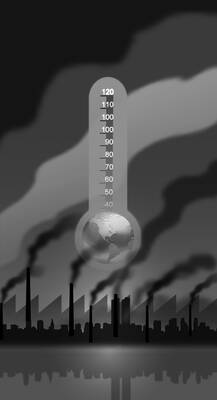
The closure of the Strait of Hormuz has sent the vast Asian chemicals industry into a tailspin. Deprived of the likes of Qatari natural gas and Saudi Arabian oil, the region’s fertilizer and plastics plants are slowing production or even shutting down. Everywhere except China, that is. In petrochemicals, China is unique. As well as a traditional industry that uses oil and gas as feedstock, it has parallel output that relies on its abundant domestic coal. Unsurprisingly, India and other regional powers want to copy and paste the Chinese method. This would not be easy — or climate friendly. The
Indonesian President Prabowo Subianto says he knows how to fix the problems facing Indonesia. Yet his economic mismanagement and authoritarian tendencies are steering the nation toward a familiar mix of currency instability and political chaos. The world’s fourth-most populous nation risks reversing the hard-won democratic and business reforms that came after the Asian Financial Crisis in 1997. At that time, the rupiah collapsed and the political upheaval that followed forced former president Haji Mohamed Suharto from power. Prabowo’s administration is ignoring similar warning signs. That disconnect was apparent in a national address on Wednesday, when Prabowo projected the swagger that has
“Of course you can choose not to be Taiwanese, just do not stay here,” chairwoman of Taipei 101 operator Taipei Financial Center Corp Janet Chia (賈永婕) said in an online interview with local entertainer Tai Chih-yuan (邰智源), triggering intense discussion on social media, with politicians across party lines weighing in. In the interview, which was aired on May 14, Chia and Tai’s discussion over a meal in Taipei 101 covered Chia’s career change from entertainer to chairwoman and US climber Alex Honnold’s free solo climb up the Taipei 101 building. During the interview, Chia said, “Being on this land, we


 RSS
RSS