


With a new US president in the White House, Beijing might have to rethink its approach toward Taiwan following a public meeting on Feb. 10 between Representative to the US Hsiao Bi-khim (蕭美琴) and a US Department of State official.
Prior to his inauguration on Jan. 20, there was little known about what then-US president-elect Joe Biden’s China policy would be, and there were reports that Beijing had hoped to influence members of the incoming administration over Taiwan and other areas of contention.
A BBC report on Dec. 3 last year cited a US intelligence official as saying that China had increased the scale of its influence campaign to include members of the new administration and those around them, and had attempted to meddle in the US elections, as well as US attempts to develop a COVID-19 vaccine.
Hsiao’s meeting with Acting Assistant Secretary of East Asian and Pacific Affairs Sung Kim is a clear statement that Washington will continue to support Taiwan under Biden’s administration. If there was any doubt about that, the bureau posted a photograph of the meeting on its official Twitter account and wrote: “The US is deepening ties with Taiwan, a leading democracy and important economic and security partner.”
On Jan. 23, the State Department also issued a statement saying that Washington’s commitment to Taiwan was “rock solid,” and it cautioned China over its “attempts to intimidate” Taipei through military activity in and around the Taiwan Strait.
However, it remains to be seen how US-Taiwan ties would be deepened, and how the US’ commitment to Taiwan would manifest in the face of ongoing Chinese threats.
Scott Kennedy, a senior adviser at the US Center for Strategic and International Studies, said during an interview with CNBC that the Biden administration was likely to continue a policy of strategic ambiguity on Taiwan, and that direct involvement by the US military would likely only occur if there was significant loss of Taiwanese or American life resulting from a unilateral attack by China.
However, the Biden administration will “need to look at” clarifying specifics of its commitment to Taiwan, he added.
It is clear that Biden will not be soft on China. During a CNN town hall on Tuesday, he admonished Beijing for human rights abuses in Xinjiang. The US Navy has also continued its freedom of navigation exercises in the region, including the USS Russell on Wednesday performing a freedom of navigation operation near the Spratly Islands (Nansha Islands, 南沙群島).
Given what the Biden administration has said about the US-Taiwan relationship, President Tsai Ing-wen’s (蔡英文) administration should continue to explore ways to deepen ties in a manner that sends a clear message to Beijing and deters Chinese military action.
Some military experts have suggested stationing a US Navy or US Air Force contingent in Taiwan, with some officials discussing the logistics involved, which would include upgrades to one or more of the nation’s ports. Beijing would protest such a move, but it is highly unlikely it would engage the US in a military conflict — the implications of doing so would be detrimental to China’s global interests.
Of course, dialogue is the best option to solve the impasse, but Beijing must be made aware that no compromises on Taiwan’s sovereignty would be made during any such talks. Tsai has always expressed an openness toward dialogue with Beijing, but Chinese President Xi Jinping (習近平) has not reciprocated. It is not clear what Xi’s endgame is, but if China continues on its current trajectory, no good can possibly come of it.
Tsai and Biden must clearly articulate to Xi that no strategy exists in which Beijing ends up with manageable control over Taiwan. Conversely, if China eases up on the rhetoric and aggressive posturing, and shows some goodwill, it might attract greater cooperation from Taiwanese, which would be a win-win situation for both sides of the Taiwan Strait.
Minister of Labor Hung Sun-han (洪申翰) on April 9 said that the first group of Indian workers could arrive as early as this year as part of a memorandum of understanding (MOU) between the Taipei Economic and Cultural Center in India and the India Taipei Association. Signed in February 2024, the MOU stipulates that Taipei would decide the number of migrant workers and which industries would employ them, while New Delhi would manage recruitment and training. Employment would be governed by the laws of both countries. Months after its signing, the two sides agreed that 1,000 migrant workers from India would
On March 31, the South Korean Ministry of Foreign Affairs released declassified diplomatic records from 1995 that drew wide domestic media attention. One revelation stood out: North Korea had once raised the possibility of diplomatic relations with Taiwan. In a meeting with visiting Chinese officials in May 1995, as then-Chinese president Jiang Zemin (江澤民) prepared for a visit to South Korea, North Korean officials objected to Beijing’s growing ties with Seoul and raised Taiwan directly. According to the newly released records, North Korean officials asked why Pyongyang should refrain from developing relations with Taiwan while China and South Korea were expanding high-level
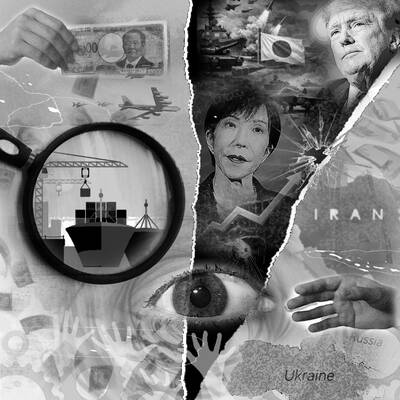
Japan’s imminent easing of arms export rules has sparked strong interest from Warsaw to Manila, Reuters reporting found, as US President Donald Trump wavers on security commitments to allies, and the wars in Iran and Ukraine strain US weapons supplies. Japanese Prime Minister Sanae Takaichi’s ruling party approved the changes this week as she tries to invigorate the pacifist country’s military industrial base. Her government would formally adopt the new rules as soon as this month, three Japanese government officials told Reuters. Despite largely isolating itself from global arms markets since World War II, Japan spends enough on its own
When 17,000 troops from the US, the Philippines, Australia, Japan, Canada, France and New Zealand spread across the Philippine archipelago for the Balikatan military exercise, running from tomorrow through May 8, the official language would be about interoperability, readiness and regional peace. However, the strategic subtext is becoming harder to ignore: The exercises are increasingly about the military geography around Taiwan. Balikatan has always carried political weight. This year, however, the exercise looks different in ways that matter not only to Manila and Washington, but also to Taipei. What began in 2023 as a shift toward a more serious deterrence posture


 RSS
RSS