


Suddenly, it seems all the world is heading to zero. Just a month after Chinese President Xi Jinping (習近平) promised to reduce carbon emissions to net zero by 2060, the leaders of Japan and South Korea pledged to hit the same target 10 years sooner. The EU and UK have already put their 2050 pledges into law.
In total, countries accounting for about 56 percent of the world’s emissions have announced or are investigating targets to eliminate their emissions by mid-century.
Who is next?

Illustration: Yusha
Looking down the list of the world’s major emitters, you might think we have hit a roadblock. Most of those remaining are major exporters of fossil fuels, which you would expect to be late to the zero-emissions party. Of the main exceptions, India has for decades vocally resisted efforts to cap its ability to pollute until it is wealthier and the status of the US is likely to be uncertain until the dust settles on its presidential election.
One major economy is in a different place, though: Brazil. Although the country has never promised to zero out its emissions — and is unlikely to do so under its populist President Jair Bolsonaro — it would find that path far easier than most.
Brazil’s first advantage is that its electricity system was largely decarbonized long ago. Thanks to its vast river systems, the country is the most hydro-powered major economy on the planet, with about 64 percent of electricity generation coming from its dams. Wind, solar and nuclear account for another 21 percent of the total, leaving fossil fuels with a scant 15 percent.
Even that small slice should be easier to eliminate than in many other countries. Brazil’s ample hydro endowment means it is unusually well-placed to manage peaks and troughs in electricity demand in a 100 percent renewable system, and the costs of building new wind farms from scratch are already lower than those of fueling and maintaining existing gas and coal power stations.
Dams, like fossil-fired generators — but unlike wind, solar and nuclear — can be switched on and off depending on when they are needed. Where excess solar generation is available in the middle of the day, they can even pump water uphill to be released again during the evening peak.
Industry would also be simpler to zero out. One of the challenges emerging economies face is that development in this sector is uniquely carbon-intensive. On-site emissions from China’s industrial companies alone — not including those associated with electricity consumed by factories and building sites — accounts for about 8 percent of global fossil pollution.
For Brazil, that process has long since played out: Its most intensive industrialization and construction happened in the middle of the 20th century, and as a share of GDP it is among the lowest in the world, in line with the US and Western Europe.
Transport, the third big slice of emissions in most countries, is also less of a lift. Unlike emerging economies in Asia, which are to see millions of people move to cities over the coming decades, Brazil is already one of the most urbanized places on the planet, with a higher share of the population in cities than the UK, US or South Korea.
Public transport is more developed than in most other countries in the Americas, and since the oil crises of the 1970s, the country has been trying to use biofuel from sugarcane to reduce its dependence on petroleum. Such bioethanol provides about one-third of all road fuel.
That is not a carbon-free option, to be sure — and it is also failing to provide promised self-sufficiency. In the past few years, Brazil has often been a net importer of ethanol, largely from the US. Using the country’s huge renewable potential to electrify its passenger vehicle fleet would free up biofuel for export to other countries — and other uses, such as trucking, jet fuel and shipping — that would find substitution away from petroleum harder.
It is in the area of agricultural and quasi-agricultural exports that Brazil has most to gain. The largest slices of its emissions come from just two activities: deforestation and cattle farming.
Each of those, though, has significant improvement potential. Brazilian beef is some of the most carbon-intensive on the planet. Each kilogram of Brazilian cattle raised on newly deforested land adds as much as 726kg of carbon-equivalent emissions to the atmosphere, according to one 2011 study.
In more established parts of the country, it requires only about 22kg of carbon dioxide, and farms in other countries require half of that, with some figures running as low as 3kg.
That is largely a result of Brazilian ranching’s low productivity. Often lacking the intensive feeding systems that get cattle in other parts of the world to prime weight in one or two years, your average Brazilian cow has burped up a lot more methane by the time it reaches the slaughterhouse. Grass-fed beef also requires a lot more land than grain-fed intensive cattle, especially when the latter are used for dairy production, too.
Encouraging the ongoing trend toward intensification of cattle farming would also have a dramatic impact on deforestation. Brazil’s emissions shrank by a remarkable 39 percent in just five years from 2005 to 2010, almost entirely as a result of an 80 percent reduction in deforestation under the administration of then-Brazilian president Luiz Inacio Lula da Silva.
That had already started to reverse under new forest laws introduced well before Bolsonaro’s election in 2018, but it is an example of what is possible with the right incentives for land preservation.
Just allowing formerly logged Brazilian forests to continue naturally regenerating could fix about 22 billion tonnes of carbon dioxide, according to a 2016 study — roughly enough to absorb the country’s own emissions for half a century.
A better idea, though, would be to turn Brazil’s ample forest land endowment into a new export industry. A growing group of countries making pledges to hit “net zero” are not yet clear about where the gross emissions in excess of the net figure are going to be offset. Brazilian trees could offer just the solution. At a US$50 per tonne carbon price, restoring just 1 percent of the country’s 126 million hectares of cultivated pasture each year could fix 150 million tonnes of carbon dioxide and represent a more valuable export industry than beef.
Such a change is not going to happen under the slash-and-burn policies of Bolsonaro. Brazil’s opposition is bitterly divided ahead of 2022 presidential elections and poor forest management is often a bipartisan issue — Da Silva’s left-wing successor former Brazilian president Dilma Rousseff bears as much responsibility for the return to deforestation as Bolsonaro.
Still, as my colleague Clara Ferreira Marques has written, self-interested reasons are still the best way to get Brazil to join the group of net-zero countries. Its failure to protect its forests has put the free trade agreement between the EU and South America’s Mercosur bloc on ice. Bolsonaro ultimately has not followed through on a campaign threat to pull Brazil out of the Paris Agreement, and the powerful agribusiness bloc in the Brazilian Congress can be surprisingly pragmatic on such issues.
Momentum on climate could be the catalyst to move forward on trade, while an early seat at the table would give Brasilia the chance to help craft global climate agreements to maximize its own economic benefit from decarbonization.
Brazil could be a major winner from the world going to zero on carbon. It is high time it seized that opportunity.
David Fickling is a Bloomberg Opinion columnist covering commodities, as well as industrial and consumer companies. He has been a reporter for Bloomberg News, Dow Jones, the Wall Street Journal, the Financial Times and the Guardian.
This column does not necessarily reflect the opinion ofthe editorial board or Bloomberg LP and its owners.

KMT Chairwoman Cheng Li-wun’s (鄭麗文) recent visit to Beijing and her upcoming visit to Washington will serve as a high-level test of her diplomatic mettle. In Beijing, Cheng was received with symbolic gestures, a warm reception, and high-level access. In Washington, she will receive far less pomp and far sharper questions about the KMT’s vision for the future of Taiwan. Her challenge will be to persuade Washington that the KMT’s engagement with China can coexist with strong deterrence. Cheng’s April 7-12 visit to mainland China coincided with an intense period of conflict in Iran. Despite the strategic significance of Cheng’s trip,
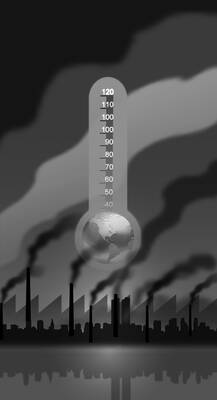
The closure of the Strait of Hormuz has sent the vast Asian chemicals industry into a tailspin. Deprived of the likes of Qatari natural gas and Saudi Arabian oil, the region’s fertilizer and plastics plants are slowing production or even shutting down. Everywhere except China, that is. In petrochemicals, China is unique. As well as a traditional industry that uses oil and gas as feedstock, it has parallel output that relies on its abundant domestic coal. Unsurprisingly, India and other regional powers want to copy and paste the Chinese method. This would not be easy — or climate friendly. The
Indonesian President Prabowo Subianto says he knows how to fix the problems facing Indonesia. Yet his economic mismanagement and authoritarian tendencies are steering the nation toward a familiar mix of currency instability and political chaos. The world’s fourth-most populous nation risks reversing the hard-won democratic and business reforms that came after the Asian Financial Crisis in 1997. At that time, the rupiah collapsed and the political upheaval that followed forced former president Haji Mohamed Suharto from power. Prabowo’s administration is ignoring similar warning signs. That disconnect was apparent in a national address on Wednesday, when Prabowo projected the swagger that has
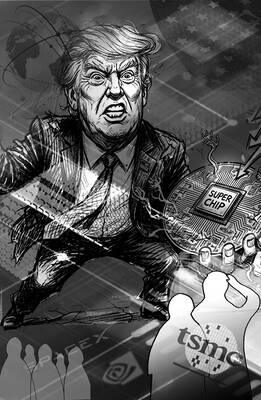
The White House’s decision to take a 9.9 percent stake in Intel Corp is looking like very shrewd business indeed. Since the government bought in at US$20.47 a share last August, the US chipmaker’s surging stock price has delivered the US a US$43 billion return. One of the reasons the investment has so far proved so sound is that the White House has made sure of it. According to The Wall Street Journal, Howard personally pushed deals on Intel’s behalf with some of the most lucrative clients imaginable. They include Nvidia Corp, the company at the heart of the AI


 RSS
RSS