


As the COVID-19 pandemic rages around the world, China and the US have been directly or indirectly accusing each other of being its source — China has even accused Italy of starting it — and WHO Director-General Tedros Adhanom Ghebreyesus, who has been praising China throughout the crisis, has faced a wave of criticism and calls for him to resign.
China on Wednesday lifted the lockdown on Wuhan, where the virus was first reported, and is striding onto the international scene like a relief pitcher at a baseball game, wanting to turn this calamity to its advantage.
The spread of the coronavirus has taken off in Europe and the US, which are trying to cope with worse outbreaks than what happened in China. This has provided a heaven-sent opportunity for China to exert its “grand overseas propaganda,” even though most countries and their citizens do not believe Beijing’s official statements about China’s outbreak or the figures it gives for people confirmed infected or dead.
This clash between China and the US seems to be more than a war of words. On March 24, EU High Representative and European Commission Vice President Josep Borrell issued a statement about the pandemic, in which he said: “There is a global battle of narratives going on... China is aggressively pushing the message that, unlike the US, it is a responsible and reliable partner.”
China is dispensing foreign aid to dilute its negative image as the virus’ source and getting a head start on the restructuring of international power that is to take place in the “post-COVID era.”
The EU, the US, Japan and other countries can see what China is up to.
On March 18, the White House announced that US President Donald Trump intends to nominate US Assistant Secretary for Health Admiral Brett Giroir, head of the Public Health Service within the US Department of Health and Human Services, to be the US’ representative on the WHO Executive Board.
Japan wants to expand the membership of the Comprehensive and Progressive Agreement for Trans-Pacific Partnership by inviting Taiwan and other countries to join, thus making itself less dependent on Chinese supply chains.
The US Navy and Air Force have taken steps in the Taiwan Strait and South China Sea to restrain China’s People’s Liberation Army as Beijing tries to take advantage of the pandemic to extend its regional hegemony.
These developments are all signs of what is to come.
Since taking off economically, China has used its factories to entrap Western countries and multinational companies, while arrogantly promoting Chinese norms and its version of political correctness. It is also using the Belt and Road Initiative and debt-trap diplomacy to ensnare emerging countries.
Beijing has been positioning its pawns to achieve China’s dream of becoming a great power, which has allowed it to gain sway over international bodies such as the WHO, the International Civil Aviation Organization and the International Criminal Police Organization.
China’s influence in these organizations is undermining universal values and international norms. Western countries were angry when the Chinese government kept Nobel Peace Prize-winning dissident Liu Xiaobo (劉曉波) imprisoned up to his death, but they did not dare to voice their anger.
China has repeatedly obstructed and vetoed Taiwan’s participation in international organizations. Beijing’s dictatorial ideology has infected the whole world — even democracies such as Australia have not been immune.
China has over the past three decades undergone an economic miracle driven by a massive influx of foreign investment. Chinese President Xi Jinping (習近平) in 2018 unmasked his true ambitions when China’s National People’s Congress abolished a two-term limit for presidents. Not long afterward, China was ravaged by the pandemic, a sequence of events that appears to have set off internal structural changes.
The outbreak reached the scale that it did because Chinese authorities first concealed it and then handled it in the wrong way. The consequences have severely disrupted manufacturing in China, which might have pushed internal conflicts beyond the point where they could be controlled by domestic macroeconomic measures.
The pandemic has exacerbated the trend of the past few years of multinational companies pulling out of China. The virus hit countries in Europe, the Americas and elsewhere later than in East Asia, but also harder, causing a big drop in consumer demand, and a speedy recovery is unlikely. With the engine that drives its economy sputtering, China is likely to have difficulty maintaining the strong position that it had in relation to Western economies.
Following a video conference with G7 foreign ministers on March 26, US Secretary of State Mike Pompeo told reporters in Washington: “The Chinese Communist Party poses a substantial threat to our health and way of life.” He urged all of the countries participating in the video conference to work together to protect the UN and other organizations from China’s malign influence and authoritarianism.
Pompeo’s words must have struck a chord with Western countries that are battered and bruised from their relations with China.
Borrell said in his statement: “COVID-19 will reshape our world. We don’t yet know when the crisis will end, but we can be sure that by the time it does, our world will look very different.”
The pandemic does resemble a powerful earthquake that has shattered the landscape, but while new vistas will appear during the reconstruction, they will not naturally appear on their own, but will come about through the plans and actions of those who take part in the restoration.
Borrell also said: “Solidarity between countries and a readiness to make sacrifices for the common good are decisive,” but the common good for various international bodies is radically different from the 2008 Beijing Olympic Games motto of “one world, one dream.”
Taiwan is an example of this.
In the wave of globalization — when Japan, the EU, the US and other countries established close economic and trade ties with China although it stuck to its national peculiarities — Taiwan and China had every reason to base relations on opportunity cost and the comparative advantage that it would give them.
However, as China uses business and trade as weapons and launches a general offensive against universal values, international norms, democratic processes and geopolitics, Taipei must be wary and align itself with like-minded allies in the international community as Beijing seeks to build a Chinese empire under one-party rule.
If China has represented both a risk and an opportunity for Taiwan, it will increasingly become more of a risk than an opportunity. If Taiwan’s 23.6 million people reject the policies of past leaders of the Chinese Nationalist Party (KMT), such as former premier Lien Chan (連戰) and former president Ma Ying-jeou (馬英九), it is an instinctive reaction to the changing international environment.
President Tsai Ing-wen (蔡英文) was re-elected on Jan. 11 and the inauguration for her second term is to take place on May 20. In the interim, her administration has won the appreciation of the public for its competence in fighting the coronavirus. This is a good start for Tsai’s second term in office.
Countries around the world are full of praise for Taiwan’s decisive and skilled disease prevention measures. Their admiration for Taiwan’s highly effective model of disease control once again demonstrates the significance of the nation’s soft power.
In this moment of global danger, the Tsai administration can use initiatives such as mask donations and medical aid to consolidate mutually beneficial ties with Taiwan-friendly countries.
True friendship in adversity, along with the positive energy of Taiwan’s expert model of disease prevention, is much better than the absurdity of China’s control over the WHO.
These friendships will make it easier for Taiwan to open up new international spaces for itself in the post-COVID era, and to step out onto a new path of normalization and internationalization.
Translated by Julian Clegg
Minister of Labor Hung Sun-han (洪申翰) on April 9 said that the first group of Indian workers could arrive as early as this year as part of a memorandum of understanding (MOU) between the Taipei Economic and Cultural Center in India and the India Taipei Association. Signed in February 2024, the MOU stipulates that Taipei would decide the number of migrant workers and which industries would employ them, while New Delhi would manage recruitment and training. Employment would be governed by the laws of both countries. Months after its signing, the two sides agreed that 1,000 migrant workers from India would
On March 31, the South Korean Ministry of Foreign Affairs released declassified diplomatic records from 1995 that drew wide domestic media attention. One revelation stood out: North Korea had once raised the possibility of diplomatic relations with Taiwan. In a meeting with visiting Chinese officials in May 1995, as then-Chinese president Jiang Zemin (江澤民) prepared for a visit to South Korea, North Korean officials objected to Beijing’s growing ties with Seoul and raised Taiwan directly. According to the newly released records, North Korean officials asked why Pyongyang should refrain from developing relations with Taiwan while China and South Korea were expanding high-level
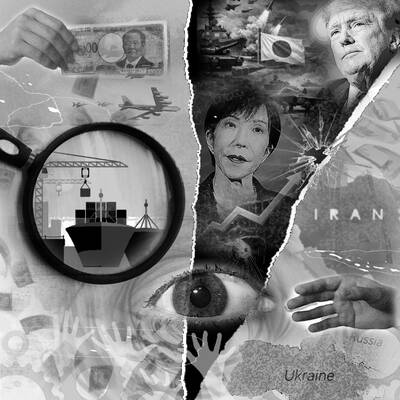
Japan’s imminent easing of arms export rules has sparked strong interest from Warsaw to Manila, Reuters reporting found, as US President Donald Trump wavers on security commitments to allies, and the wars in Iran and Ukraine strain US weapons supplies. Japanese Prime Minister Sanae Takaichi’s ruling party approved the changes this week as she tries to invigorate the pacifist country’s military industrial base. Her government would formally adopt the new rules as soon as this month, three Japanese government officials told Reuters. Despite largely isolating itself from global arms markets since World War II, Japan spends enough on its own
When 17,000 troops from the US, the Philippines, Australia, Japan, Canada, France and New Zealand spread across the Philippine archipelago for the Balikatan military exercise, running from tomorrow through May 8, the official language would be about interoperability, readiness and regional peace. However, the strategic subtext is becoming harder to ignore: The exercises are increasingly about the military geography around Taiwan. Balikatan has always carried political weight. This year, however, the exercise looks different in ways that matter not only to Manila and Washington, but also to Taipei. What began in 2023 as a shift toward a more serious deterrence posture


 RSS
RSS