


The world is seeing the emergence of another health crisis originating in China. Exact details regarding the exposure, virulence and mortality rates of the disease remain unclear. The lack of transparency from Chinese officials has only worsened the spread of a virus that does not discriminate based on ethnicity, nationality or political beliefs.
Rapid diagnosis and open collaboration on information sharing is crucial in preventing the early spread of new epidemics. Governments need all hands on deck to keep populations safe from disease. This kind of collaboration was present with past outbreaks, such as when SARS and Middle East respiratory syndrome (MERS) emerged on the world stage.
In 2002, Chinese officials stalled their reporting in the wake of the SARS epidemic emerging in China. Eventually, the world learned that more than 8,000 people contracted this disease and nearly 800 people died from it. This new coronavirus is on track to surpass that number.
We learned that the rate of SARS transmission was worsened by deception and incompetence on the part of the People’s Republic of China. It is essential that the US bring every capable world health partner into the conversation for keeping harmful diseases from the country’s shores.
Interestingly enough, Taiwan was the first nation to diagnose the cause, which reaffirms their role as an invaluable ally on global health and disease prevention efforts. The US must take the lead on inviting their assistance.
Since 1996, Taiwan has invested more than US$6 billion in international medical and humanitarian aid efforts in more than 80 countries. During the 2014 Ebola crisis, Taiwan donated US$1 million and provided 100,000 sets of personal protective equipment.
Taiwan has proven its capability and determination on the global stage to contribute to disease prevention efforts time and again, and Taiwan deserves the opportunity to participate in the international health arena.
Despite Taiwan’s contributions, China has steadily increased its marginalization of the nation through provocative military actions and pressuring their remaining diplomatic partners to exclude them from international organizations.
Although Taiwan participated in the WHO’s annual summit as an observer for years, the Taiwanese delegation has been blocked from attending since 2017, for seemingly no other reason than to placate the insecurities of Beijing.
This pressure from China seems even more hypocritical given that it is at least partially responsible for the spread of the coronavirus across much of Asia, including Taiwan. Undoubtedly, this should be of concern to Americans as hundreds of people across the nation are currently being tested for coronavirus.
Taiwan’s exclusion from the WHO puts the world at risk. That is why I have called for the re-establishment of Taiwan’s observer status on numerous occasions.
On Jan. 8 last year, I introduced a bipartisan bill with the support of US House of Representatives Foreign Affairs Committee Chairman Eliot Engel and ranking member Mike McCaul that would direct the US secretary of state to develop a strategy to regain Taiwan’s observer status in the WHO’s World Health Assembly.
The bill, H.R. 353, passed the House unanimously on Jan. 22 last year, demonstrating the US government’s resolve in defending Taiwan’s seat at the table.
It would be naive to think the world community can effectively combat cross-border infectious diseases, especially in the Indo-Pacific region, while excluding a population of 23 million people in Taiwan from participating in disease prevention efforts happening in their own backyard.
The health of the world needs and benefits from the expertise of Taiwan’s healthcare researchers. The US’ expectation is that China looks beyond its pride and works together with Taiwan and the rest of the world before all continents become infected by this new Chinese plague.
Ted Yoho is the US representative for Florida’s Third Congressional District and is the ranking Republican member of the US House of Representatives Foreign Affairs Subcommittee on Asia, the Pacific and Nonproliferation.
KMT Chairwoman Cheng Li-wun’s (鄭麗文) recent visit to Beijing and her upcoming visit to Washington will serve as a high-level test of her diplomatic mettle. In Beijing, Cheng was received with symbolic gestures, a warm reception, and high-level access. In Washington, she will receive far less pomp and far sharper questions about the KMT’s vision for the future of Taiwan. Her challenge will be to persuade Washington that the KMT’s engagement with China can coexist with strong deterrence. Cheng’s April 7-12 visit to mainland China coincided with an intense period of conflict in Iran. Despite the strategic significance of Cheng’s trip,
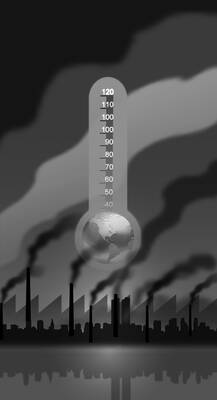
The closure of the Strait of Hormuz has sent the vast Asian chemicals industry into a tailspin. Deprived of the likes of Qatari natural gas and Saudi Arabian oil, the region’s fertilizer and plastics plants are slowing production or even shutting down. Everywhere except China, that is. In petrochemicals, China is unique. As well as a traditional industry that uses oil and gas as feedstock, it has parallel output that relies on its abundant domestic coal. Unsurprisingly, India and other regional powers want to copy and paste the Chinese method. This would not be easy — or climate friendly. The
US President Donald Trump recently repeated his claim that “Taiwan stole America’s chip industry,” reigniting public debate on the issue. As a former Taiwanese minister of economic affairs and an entrepreneur deeply involved in semiconductor supply chain development, I feel a responsibility to clarify this misunderstanding. From the perspective of global industrial evolution and the economic principle of comparative advantage, such a statement appears overly simplistic and risks obscuring the essence of the issue. The rise of Taiwan’s semiconductor industry was not built on “replacing America,” but rather emerged as a result of countries pursuing different development paths within the
The Presidential Office on Saturday reiterated that Taiwan is a sovereign, independent nation after US President Donald Trump said that Taiwan should not “go independent.” “We’re not looking to have somebody say: ‘Let’s go independence because the United States is backing us,’” Trump said in an interview with Fox News aired on Friday. President William Lai (賴清德) on Monday said that the Republic of China (ROC) — Taiwan’s official name — and the People’s Republic of China (PRC) are not subordinate to each other. Speaking at an event marking the 40th anniversary of the establishment of the Democratic Progressive Party (DPP), Lai said


 RSS
RSS