


Taiwan is four days away from the presidential and legislative elections, and flashpoint controversies are all but a given. Most recently, Lin Ching-yi (林靜儀), spokeswoman for President Tsai Ing-wen’s (蔡英文) campaign office, became the latest figure to experience the f ull weight of the public gaze.
In an interview published on Friday last week by broadcaster Deutsche Welle, Lin said that, in terms of national sovereignty, advocating unification is tantamount to treason.
Her statement made headlines, and although Lin initially defended herself by accusing the China Times of misquoting the original report, she announced her resignation two hours later.
While she apologized for her “imprecise” wording, in reality it was anything but.
In the interview, Lin clarified that China constantly threatens the nation’s sovereignty and “continually threatens to use military force to invade Taiwan.” Therefore, she said advocating “this kind of” unification is tantamount to treason.
This definition is supported by articles 103 and 104 of the Criminal Code, which stipulate penalties for colluding or conspiring to collude with a foreign power to start a war against the Republic of China (ROC) or subject its territory to a foreign state, while Article 115-1, which was added last year, specifies that it also applies to China, Hong Kong and Macau.
Lin also said that her proposition was true “on many fronts,” especially after last year’s amendments to five acts on national security that would punish retired military officers for attending political or military events in China, as these could “cause great damage to national sovereignty.”
More broadly, treason can be defined as attempting or colluding to undermine one’s own state. Would the ROC not cease to exist if it were unified with China? This would naturally constitute undermining the state.
Lin was not wrong in making her statement, but she did make a mistake by resigning.
Many voters will be going to the polls on Saturday with the Hong Kong protests and China’s plans to implement its “one country, two systems” framework in Taiwan at the front of their minds.
One of Tsai’s biggest assets is her anti-China stance in contrast to her competitor, Kaohsiung Mayor Han Kuo-yu (韓國瑜), but if Tsai and her Democratic Progressive Party (DPP) keep equivocating on this point, they could lose the trust of their supporters.
Although she was not incorrect in the concerns she expressed, Lin cowed to pressure from the pro-China camp the same day the interview was published, as the DPP scrambled to control any damage.
Who exactly were they afraid of offending? The DPP was never going to receive the pro-unificationist vote, while backtracking so quickly insinuates that it is not willing to defend its beliefs, a necessary skill when facing off against China.
Lin even fell prey to the same obstructionist forces of fabricated and sensationalized news the DPP has been decrying the entire election season — what kind of message does that send days after the Anti-infiltration Act (反滲透法) cleared the legislative floor?
Critics have already cast doubt on the act’s potential effectiveness, citing its relatively light penalties and narrow scope. The DPP’s reaction to the “treason” controversy casts further doubt on whether it would risk a political backlash by implementing the act.
The threat posed by China is undeniable, but it cannot be solved through politicking. A courageous and concerted effort is needed to safeguard against this threat, whether external or internal.
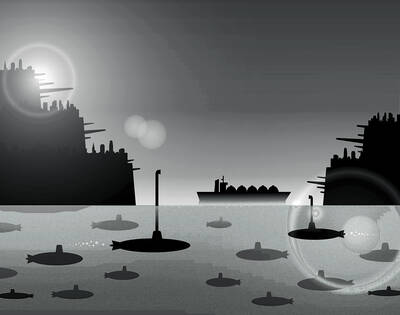
In the event of a war with China, Taiwan has some surprisingly tough defenses that could make it as difficult to tackle as a porcupine: A shoreline dotted with swamps, rocks and concrete barriers; conscription for all adult men; highways and airports that are built to double as hardened combat facilities. This porcupine has a soft underbelly, though, and the war in Iran is exposing it: energy. About 39,000 ships dock at Taiwan’s ports each year, more than the 30,000 that transit the Strait of Hormuz. About one-fifth of their inbound tonnage is coal, oil, refined fuels and liquefied natural gas (LNG),
On Monday, the day before Chinese Nationalist Party (KMT) Chairwoman Cheng Li-wun (鄭麗文) departed on her visit to China, the party released a promotional video titled “Only with peace can we ‘lie flat’” to highlight its desire to have peace across the Taiwan Strait. However, its use of the expression “lie flat” (tang ping, 躺平) drew sarcastic comments, with critics saying it sounded as if the party was “bowing down” to the Chinese Communist Party (CCP). Amid the controversy over the opposition parties blocking proposed defense budgets, Cheng departed for China after receiving an invitation from the CCP, with a meeting with
Chinese Nationalist Party (KMT) Chairwoman Cheng Li-wun (鄭麗文) is leading a delegation to China through Sunday. She is expected to meet with Chinese President Xi Jinping (習近平) in Beijing tomorrow. That date coincides with the anniversary of the signing of the Taiwan Relations Act (TRA), which marked a cornerstone of Taiwan-US relations. Staging their meeting on this date makes it clear that the Chinese Communist Party (CCP) intends to challenge the US and demonstrate its “authority” over Taiwan. Since the US severed official diplomatic relations with Taiwan in 1979, it has relied on the TRA as a legal basis for all
Taiwan ranks second globally in terms of share of population with a higher-education degree, with about 60 percent of Taiwanese holding a post-secondary or graduate degree, a survey by the Organisation for Economic Co-operation and Development showed. The findings are consistent with Ministry of the Interior data, which showed that as of the end of last year, 10.602 million Taiwanese had completed post-secondary education or higher. Among them, the number of women with graduate degrees was 786,000, an increase of 48.1 percent over the past decade and a faster rate of growth than among men. A highly educated population brings clear advantages.


 RSS
RSS