


China’s underhand tactics at the UN Human Rights Council are a serious problem, but should come as no surprise.
China has undergone a third review of its human rights record at the UN Human Rights Council as part of the organization’s Universal Periodic Review (UPR).
This is a process all UN member states must go through every five years and gives other countries the opportunity to question and put forward recommendations. With the input of civil society groups, the UPR is supposed to be an opportunity to raise serious concerns, monitor progress and hold governments to account.
Naturally, Chinese officials faced robust questioning about a number of issues, including political prisoners, torture and freedom of expression.
The situation in Xinjiang, which is home to a vast network of detention camps for the region’s Muslim minorities, was rightly put in the spotlight in a way that it simply had not been before. Likewise, Hong Kong, an area not raised during previous UPRs, was mentioned by 12 countries which expressed concerns about the deteriorating levels of freedom.
Scrutiny was in abundance — not that this necessarily means much. When you have a country like China under review, whose government holds the concept of human rights in contempt, the process can quickly turn into a farce.
The Chinese Communist Party (CCP) will not advance human rights that threaten its one-party rule. As a result, the regime is quick to deny or deflect any allegations thrown at it.
Responding to the events at the third UPR, Chinese Ministry of Foreign Affairs spokeswoman Hua Chunying (華春瑩) branded it “politically biased, malicious and unreasonable accusations made by a very small number of people.”
This response follows a similar pattern whereby Beijing bleats on about “respecting national sovereignty” and goes on to criticize its critics for “naming and shaming,” and accuses them of “double standards.”
In the rare moments when the CCP talks human rights, it does so on its own terms by discarding their universality and inalienability. Human rights depend on culture and development, according to the CCP, which is convenient as it allows it to sideline political rights and boast about raising living standards.
This agenda to redefine human rights in international bodies is being aggressively pushed by Beijing. What the UPR process shows is that there are plenty of dictators and strongmen out there happy to go along with the CCP.
Take Pakistan, which is currently enjoying the patronage of Beijing, and its approach to the UPR. You would think as an Islamic Republic it might speak up for the many Muslims facing persecution in Xinjiang, but no, unlike many other countries, Pakistan avoided raising the serious human rights issues there. Being the sycophant it is, the Pakistani government praised China for making “tremendous achievements in implementing the right to development.”
Similar flattery came from Russia, which praised China for advancing the rule of law, while Algeria went for the softball approach by asking Beijing to share “its experience and good practices in guaranteeing the right to education of ethnic minorities.”
Back in 2013, the process was completely distorted by Cuba, which used the UPR to recommend that Beijing “investigate activities of fabrication and dissemination of false information, and take measures with regard to persons engaged in illegal activities through [the] Internet.”
It should come as no surprise to hear that China supported this recommendation.
Such moves, which make a mockery of the UPR, are commonplace.
The UN is a forum for 193 member states and to be a forum for the world it is naturally compromised. Yet the UN’s inevitable flaws do not excuse the underhand tricks used by Beijing to undermine the Human Rights Council’s work.
As well as blocking access into China for UN human rights observers, particularly to ethnic minority areas, the CCP also meddles in the council by harassing officials and those rights groups that engage with them.
During China’s latest UPR, numerous human rights organizations have criticized the Office of the High Commissioner for Human Rights, which oversees the process, for removing references and citations to non-governmental organizations and groups from a stakeholder report published online. This included the World Uyghur Congress, the Uyghur Human Rights Project, the Tibetan Center for Human Rights and Democracy, and Hong Kong political party Demosisto.
While the office did, belatedly, reverse this act of censorship, it nonetheless highlights a much bigger problem. After all, this is not the first time China has tried to block its critics from participating in the Human Rights Council’s procedures.
A Human Rights Watch report last year highlighted numerous occasions when the Chinese government has sought to marginalize non-governmental organizations at the UN.
In the most benign cases China pressures UN officials to enforce pro-CCP terminology, thereby silencing ethnic minority groups who it regards as “splittists.” The more extreme examples documented note the harassment of activists and witnesses during hearings.
At the latest UPR, like many other reviews, China used denial, deflection and dirty tricks to undermine scrutiny of its human rights record.
As the CCP more assertively pushes its own version of human rights on the world stage, those who stand for universal and inalienable human rights should expect more of this sort of behavior — and must continue to challenge it.
Gray Sergeant is a postgraduate student of Chinese politics at the University of London’s School of Oriental and African Studies and a human rights advocate.
Minister of Labor Hung Sun-han (洪申翰) on April 9 said that the first group of Indian workers could arrive as early as this year as part of a memorandum of understanding (MOU) between the Taipei Economic and Cultural Center in India and the India Taipei Association. Signed in February 2024, the MOU stipulates that Taipei would decide the number of migrant workers and which industries would employ them, while New Delhi would manage recruitment and training. Employment would be governed by the laws of both countries. Months after its signing, the two sides agreed that 1,000 migrant workers from India would
In recent weeks, Taiwan has witnessed a surge of public anxiety over the possible introduction of Indian migrant workers. What began as a policy signal from the Ministry of Labor quickly escalated into a broader controversy. Petitions gathered thousands of signatures within days, political figures issued strong warnings, and social media became saturated with concerns about public safety and social stability. At first glance, this appears to be a straightforward policy question: Should Taiwan introduce Indian migrant workers or not? However, this framing is misleading. The current debate is not fundamentally about India. It is about Taiwan’s labor system, its
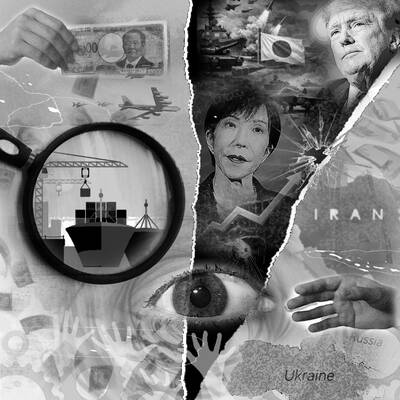
Japan’s imminent easing of arms export rules has sparked strong interest from Warsaw to Manila, Reuters reporting found, as US President Donald Trump wavers on security commitments to allies, and the wars in Iran and Ukraine strain US weapons supplies. Japanese Prime Minister Sanae Takaichi’s ruling party approved the changes this week as she tries to invigorate the pacifist country’s military industrial base. Her government would formally adopt the new rules as soon as this month, three Japanese government officials told Reuters. Despite largely isolating itself from global arms markets since World War II, Japan spends enough on its own
On March 31, the South Korean Ministry of Foreign Affairs released declassified diplomatic records from 1995 that drew wide domestic media attention. One revelation stood out: North Korea had once raised the possibility of diplomatic relations with Taiwan. In a meeting with visiting Chinese officials in May 1995, as then-Chinese president Jiang Zemin (江澤民) prepared for a visit to South Korea, North Korean officials objected to Beijing’s growing ties with Seoul and raised Taiwan directly. According to the newly released records, North Korean officials asked why Pyongyang should refrain from developing relations with Taiwan while China and South Korea were expanding high-level


 RSS
RSS