


Before we learn how to use language properly for communication, it is like an umbilical cord, connecting us to the world as we develop a relationship with our surroundings. This begins with the baby and its main caretaker calling each other.
Language is not only a tool for communication and identification, it is also loaded with emotions related to our experience of the world, including trust, emotions, a sense of identity and of reality.
In a community, a shared mother language is the vessel of shared experience. A shared language not only facilitates communication, mutual understanding and reaching agreement when we work together, it also gives us a basic sense of security thanks to the community’s concern, embrace and comfort.
In modern history, many governments have tried to make the native language of a socially dominant group the national language. When that is the case, the language can help bring about cultural hegemony. Without protection of cultural diversity and language equality, the national language could serve the vested interests of the dominant group.
In multilingual and multi-ethnic countries, the need for a common national language to allow citizens to communicate with each other must not be the only consideration: Consideration must also be given to the continued existence of the languages that other groups use for emotional, identity, recognition and security reasons.
This is not a matter of which language is more widely used, but about promoting social justice.
For these reasons, there should be laws in multiethnic nations to ensure that the native language of each group — including sign language for the hearing impaired — is given the same status and official recognition as a national language.
However, a look at language politics shows that in reality, hegemonic languages gain dominance over minority languages in daily interactions; languages are not given the same opportunity in communication, broadcasting or education, and can also be systemically excluded.
This is why governments must intervene and, for example, introduce national language laws to protect minority languages to improve language equality.
In the spirit of language equality and cultural diversity, Taiwan’s national languages should include Taiwanese Mandarin, Hoklo, Hakka and the languages of all the Aboriginal peoples.
Languages on the verge of extinction due to their disadvantaged position in daily interactions and the exchange of social information must be preserved, revived and promoted through reallocation of resources, more cultural representation and legislation.
Taiwan should also promote the learning of other Asian languages and especially Southeast Asian languages, not only because it would facilitate exchanges with neighboring countries, but also because it is a source of identity and recognition among Southeast Asian immigrants and their children.
As a result of globalization, English has become an essential skill. However, Taiwanese must not forget that English has become more than just a tool for communication and it is establishing potential cultural hegemony.
In a way, this threatens Taiwanese’s sense of identity by creating a polarized framework in which you either speak English or you do not.
This creates an imaginary relationship between master and slave, as many Taiwanese do not realize that by worshiping the English language and identifying with the “English empire” they have become willing victims of a kind of colonialism by placing themselves in a marginalized position from the English center, which gives them a false emotional solace and sense of recognition.
Chou Ping is an associate professor at Nanhua University’s Department of Applied Sociology.
Translated by Tu Yu-an
We are used to hearing that whenever something happens, it means Taiwan is about to fall to China. Chinese President Xi Jinping (習近平) cannot change the color of his socks without China experts claiming it means an invasion is imminent. So, it is no surprise that what happened in Venezuela over the weekend triggered the knee-jerk reaction of saying that Taiwan is next. That is not an opinion on whether US President Donald Trump was right to remove Venezuelan President Nicolas Maduro the way he did or if it is good for Venezuela and the world. There are other, more qualified
The immediate response in Taiwan to the extraction of Venezuelan President Nicolas Maduro by the US over the weekend was to say that it was an example of violence by a major power against a smaller nation and that, as such, it gave Chinese President Xi Jinping (習近平) carte blanche to invade Taiwan. That assessment is vastly oversimplistic and, on more sober reflection, likely incorrect. Generally speaking, there are three basic interpretations from commentators in Taiwan. The first is that the US is no longer interested in what is happening beyond its own backyard, and no longer preoccupied with regions in other
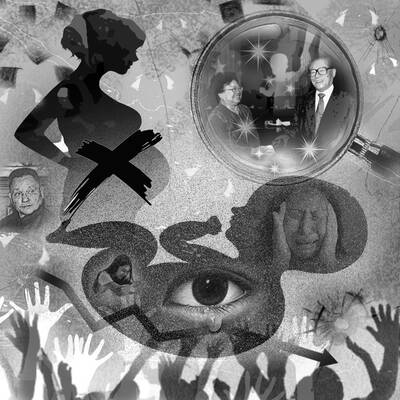
Jan. 1 marks a decade since China repealed its one-child policy. Just 10 days before, Peng Peiyun (彭珮雲), who long oversaw the often-brutal enforcement of China’s family-planning rules, died at the age of 96, having never been held accountable for her actions. Obituaries praised Peng for being “reform-minded,” even though, in practice, she only perpetuated an utterly inhumane policy, whose consequences have barely begun to materialize. It was Vice Premier Chen Muhua (陳慕華) who first proposed the one-child policy in 1979, with the endorsement of China’s then-top leaders, Chen Yun (陳雲) and Deng Xiaoping (鄧小平), as a means of avoiding the
As technological change sweeps across the world, the focus of education has undergone an inevitable shift toward artificial intelligence (AI) and digital learning. However, the HundrED Global Collection 2026 report has a message that Taiwanese society and education policymakers would do well to reflect on. In the age of AI, the scarcest resource in education is not advanced computing power, but people; and the most urgent global educational crisis is not technological backwardness, but teacher well-being and retention. Covering 52 countries, the report from HundrED, a Finnish nonprofit that reviews and compiles innovative solutions in education from around the world, highlights a


 RSS
RSS