


A series of medical-related issues have cropped up over the past few months. Arguments about whether international medical services should be provided in the proposed free economic pilot zones and whether healthcare should be profit-oriented have caused quite a clamor. In some medical litigation cases, medical service providers have been told to pay part of the litigation costs, while the diagnosis-related group (DRG) system is being implemented more widely in medical service funding.
Factors such as these hamper doctors’ exercise of their medical expertise and the interests of seriously ill patients may be harmed when cost control is the primary concern. These arguments may seem to be independent issues, but the thinking behind them is the same, namely that the state is following neoliberal logic by implementing austerity across the board and contracting many public services out to private capital, while forcing workers and consumers to shoulder greater external costs.
All these disputes show that when the state withdraws from its role in healthcare provision — thus weakening the National Health Insurance (NHI) and other systems that shared a portion of the burden of health costs — the public nature of healthcare must surely go into decline. Policies such as these are increasingly turning healthcare into industrialized and commercialized services.
What must be made clear is that failings of the NHI should not be seen as an abject failure of socialism. Rather, it is privatization and over-extended free markets that have led to worsening work conditions because of the priority given to cost-efficiency, and led to increasing disparities in purchasing power among different consumer classes.
Among people working in the medical field, the idea that the NHI will soon be bankrupt has come to be viewed as a politically correct position, but there is a great lack of imagination regarding alternative healthcare systems. Who benefits from the current situation in which the NHI system survives in name only? Putting off the crisis lends prestige and legitimacy to our rulers, while big hospital operators, who enjoy greater political bargaining power, stand to benefit from the austerity measures embraced by the DRG system, which seeks to exploit basic staff and consumers for profit, and squeeze out basic healthcare.
The DRG system has come in for plenty of criticism, but it has gained the approval of hospitals for obvious reasons. Clinical staff and disadvantaged consumers stand to suffer, while hospital management may gain from its cost-control measures.
Healthcare policy departments do not think about how to reduce medical waste in the healthcare system or improve the healthcare environment. All they care about is maintaining the NHI’s fiscal balance. Hospital management and government bureaucrats have acted in unison to ravage public property, causing basic staff to lose faith in the NHI and giving them no option but to move over to the profit-oriented market.
Amid all the criticism of the NHI, there is an absence of any representative self-reflection about the medical field. The widespread anger among basic staff has not led to any rationalization of hospitals’ management systems. The possibility of unity among basic medical staff is drowned out by all the noisy grumbling. Worse, some health workers spend their time finger-pointing or blaming the public who are suffering just as much as they are, or else seek solace and indulge in self-pity through emotional comments and Internet posts. It is, after all, simpler and safer to moan about the NHI than to reexamine the system.
That is why the NHI is stuck in a rut in which the weak and the disadvantaged waste their energies on blaming one another.
Chen Liang-fu is a student in National Taiwan University’s Department of Medicine.
Translated by Julian Clegg
KMT Chairwoman Cheng Li-wun’s (鄭麗文) recent visit to Beijing and her upcoming visit to Washington will serve as a high-level test of her diplomatic mettle. In Beijing, Cheng was received with symbolic gestures, a warm reception, and high-level access. In Washington, she will receive far less pomp and far sharper questions about the KMT’s vision for the future of Taiwan. Her challenge will be to persuade Washington that the KMT’s engagement with China can coexist with strong deterrence. Cheng’s April 7-12 visit to mainland China coincided with an intense period of conflict in Iran. Despite the strategic significance of Cheng’s trip,
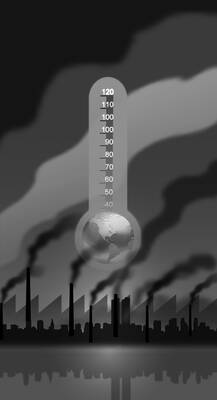
The closure of the Strait of Hormuz has sent the vast Asian chemicals industry into a tailspin. Deprived of the likes of Qatari natural gas and Saudi Arabian oil, the region’s fertilizer and plastics plants are slowing production or even shutting down. Everywhere except China, that is. In petrochemicals, China is unique. As well as a traditional industry that uses oil and gas as feedstock, it has parallel output that relies on its abundant domestic coal. Unsurprisingly, India and other regional powers want to copy and paste the Chinese method. This would not be easy — or climate friendly. The
US President Donald Trump recently repeated his claim that “Taiwan stole America’s chip industry,” reigniting public debate on the issue. As a former Taiwanese minister of economic affairs and an entrepreneur deeply involved in semiconductor supply chain development, I feel a responsibility to clarify this misunderstanding. From the perspective of global industrial evolution and the economic principle of comparative advantage, such a statement appears overly simplistic and risks obscuring the essence of the issue. The rise of Taiwan’s semiconductor industry was not built on “replacing America,” but rather emerged as a result of countries pursuing different development paths within the
The Presidential Office on Saturday reiterated that Taiwan is a sovereign, independent nation after US President Donald Trump said that Taiwan should not “go independent.” “We’re not looking to have somebody say: ‘Let’s go independence because the United States is backing us,’” Trump said in an interview with Fox News aired on Friday. President William Lai (賴清德) on Monday said that the Republic of China (ROC) — Taiwan’s official name — and the People’s Republic of China (PRC) are not subordinate to each other. Speaking at an event marking the 40th anniversary of the establishment of the Democratic Progressive Party (DPP), Lai said


 RSS
RSS