


Ma favors PRC, not Taiwan
A day after China’s Taiwan Affairs Office Minister Zhang Zhijun (張志軍) wrapped up his four-day whirlwind trip around the nation on June 28, President Ma Ying-jeou (馬英九) left the country on a tour of Central America as part of his “Promoting Friendship Project.”
During his trip, Ma attended new Panamanian President Juan Carlos Varela’s inauguration, where he got to shake hands with US Secretary of State John Kerry and held a dinner for Taiwanese expatriates, before going on to El Salvador to visit recently inaugurated Salvadoran President Salvador Sanchez Ceren.
On his way home in San Francisco, more than 300 overseas Taiwanese and Chinese at the Chinese Consolidated Benevolent Association in San Francisco on Friday last week, before making a transit stop in Hawaii on Saturday.
After returning to Taiwan, the president boasted that his seven-day trip had been a great success, neglecting to mention the Panamanian press gaffe in which a photograph of Zhang was used to accompany an article about Ma.
A review of this so-called Promoting Friendship Project reveals that of the 300 attendees at Ma’s dinner party in Panama, 80 percent were Chinese, while in San Francisco, most of the guests were pan-blue camp supporters. This shows that the aim of “promoting friendship” was focused on pan-blue supporters and Chinese, with a few other individuals thrown in as an embellishment.
Fortunately, there was one dissenting voice to greet Ma in California. When the president arrived in San Francisco at 10am on Thursday last week, in a press conference led by attorney Cheng Wen-lung (鄭文龍), the 22 members of the Taiwan Jury Association and Bay Area Taiwanese Community representatives at the Ramada Inn in Sunnyvale.
I was the final speaker at the conference and asked the president: “President Ma, where are your political achievements?”
In my closing remarks, I satirized the diplomacy trip’s title in Mandarin, the Xingyi Project (興誼之旅), to question Ma. I started with xing in the sense of to stir up trouble (興風作浪), saying that soon after the president embarked on his trip, he blamed Greater Kaohsiung Mayor Chen Chu (陳菊) for choosing Sizihwen Sunset Beach Resort as the location of the second meeting between Zhang and Mainland Affairs Council Minister Wang Yu-chi (王郁琦). However, the council confirmed that it had made the decision, not Chen.
I then went on to yi (誼中賣台), meaning friendly to China, but betraying Taiwan. After Ma landed in Panama he accused Democratic Progressive Party Chairperson Tsai Ing-wen (蔡英文) of planning the protests against Zhang’s visit, but that is not true.
It is very unprofessional and unethical for a president to criticize an opposition leader while on an overseas trip, especially when he uses taxpayers’ money to party with Chinese expatriates.
My third point was zhi (中國至上), in the sense of putting China first. At the end of last month, Ma pointed a finger at the Tokyo National Museum for the absence of the word “national” from promotional posters for the National Palace Museum’s exhibition in the Japanese capital.
The president made a fuss over this, but was fine with pulling down the Republic of China flag wherever Zhang went in Taiwan and flying the Chinese flag instead.
My final point was lu (屢次跳票), which I used to refer to Ma’s promises and policies which never come to fruition.
The president’s “6-3-3” campaign pledge has remained unfulfilled since he was first elected.
Ma chided former president Chen Shui-bian (A-bian, 陳水扁) when he was in power because college students were earning an average of NT$26,000 a month, but Ma is proud of his NTS$22,000 policy.
Ma condemned A-bian for having an approval rating of 18 percent, but is not ashamed of his much lower rating of 9 percent.
In terms of political achievements, Ma has tried his best to curry favor with China and in doing so has trampled Taiwan. This stance was reflected throughout his trip, which revealed his favoritism toward China to all who cared to look.
John Hsieh
Hayward, California
Minister of Labor Hung Sun-han (洪申翰) on April 9 said that the first group of Indian workers could arrive as early as this year as part of a memorandum of understanding (MOU) between the Taipei Economic and Cultural Center in India and the India Taipei Association. Signed in February 2024, the MOU stipulates that Taipei would decide the number of migrant workers and which industries would employ them, while New Delhi would manage recruitment and training. Employment would be governed by the laws of both countries. Months after its signing, the two sides agreed that 1,000 migrant workers from India would
On March 31, the South Korean Ministry of Foreign Affairs released declassified diplomatic records from 1995 that drew wide domestic media attention. One revelation stood out: North Korea had once raised the possibility of diplomatic relations with Taiwan. In a meeting with visiting Chinese officials in May 1995, as then-Chinese president Jiang Zemin (江澤民) prepared for a visit to South Korea, North Korean officials objected to Beijing’s growing ties with Seoul and raised Taiwan directly. According to the newly released records, North Korean officials asked why Pyongyang should refrain from developing relations with Taiwan while China and South Korea were expanding high-level
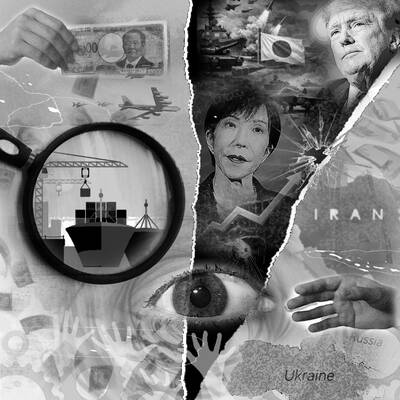
Japan’s imminent easing of arms export rules has sparked strong interest from Warsaw to Manila, Reuters reporting found, as US President Donald Trump wavers on security commitments to allies, and the wars in Iran and Ukraine strain US weapons supplies. Japanese Prime Minister Sanae Takaichi’s ruling party approved the changes this week as she tries to invigorate the pacifist country’s military industrial base. Her government would formally adopt the new rules as soon as this month, three Japanese government officials told Reuters. Despite largely isolating itself from global arms markets since World War II, Japan spends enough on its own
When 17,000 troops from the US, the Philippines, Australia, Japan, Canada, France and New Zealand spread across the Philippine archipelago for the Balikatan military exercise, running from tomorrow through May 8, the official language would be about interoperability, readiness and regional peace. However, the strategic subtext is becoming harder to ignore: The exercises are increasingly about the military geography around Taiwan. Balikatan has always carried political weight. This year, however, the exercise looks different in ways that matter not only to Manila and Washington, but also to Taipei. What began in 2023 as a shift toward a more serious deterrence posture


 RSS
RSS