


To some in Tajikistan, Misha represents a better future. To others, he is in the vanguard of the biggest imperial threat to Central Asia since the Soviet Union collapsed.
Misha, born Wang Shuai, is Chinese. His farming expertise is helping villagers in an impoverished part of southern Tajikistan to earn a living growing vegetables.
The land he farms is also Chinese, temporarily at least, under a landmark deal signed this month to lease 2,000 hectares of Tajikistan to Beijing.
The Tajik government has not released financial details of the land lease terms. It says more such agreements are planned. China says it has no territorial ambitions in Central Asia.
“China has no plans to garrison its people in foreign lands in order to farm undeveloped land,” Chinese foreign ministry spokeswoman Jiang Yu (姜瑜) said. “Our increasing agricultural cooperation is based on equality and mutual benefit.”
Yet China’s sheer size and its relentless hunger for raw materials to feed its fast-growing economy mean its influence in the vast mineral-rich region is growing fast. Governments in Central Asia have accepted billions of US dollars in Chinese loans in exchange for access to natural resources.
A quarter of Kazakhstan’s oil production is Chinese-owned and Beijing has built a pipeline to pump natural gas from the world’s fourth-largest reserves in Turkmenistan. In Tajikistan, a Chinese company is majority owner of the largest gold mine.
China’s westward expansion across its 2,800km border with Central Asia has inflamed passions within the former Soviet region, where opposition activists say governments are giving up too many of their precious resources.
“This process is capable of stirring up tension within the local population, who perhaps cannot accept such a mass influx of Chinese,” Tajik political analyst Zafar Abdullayev said.
Tajikistan, where the average monthly wage is US$93, is the poorest of the five former Soviet states in Central Asia. Nearly 40 percent of its GDP is derived from remittances sent home by about 1 million migrant workers.
In the capital, Dushanbe, Chinese firms have won contracts to repair roads and construct the national library and new premises for the Tajik foreign ministry.
“My husband works in Russia because he can’t find work here, while the government is bringing in Chinese to build our roads. How can this be right?” asked Zarrina, 35, a Dushanbe resident.
About 6,000 Chinese citizens live in Tajikistan, mainly engaged in building roads and tunnels in the mountainous republic, where arable land is at a premium.
After Russia, China is Tajikistan’s biggest trade partner, with an 18 percent share of the country’s total trade turnover.
Tajikistan also owes China US$700 million, 36 percent of its national debt. Loans from Beijing have been granted with a 20-year repayment period and 2 percent annual interest.
Abdullayev said Tajik President Imomali Rakhmon, like other Central Asian leaders, was using closer ties with Beijing for leverage against ex-Soviet master Russia and Western countries with an interest in the strategic region bordering Afghanistan.
“Beijing’s support is now the main bargaining chip in dialogue between Rakhmon’s government and major world powers,” the analyst said.
Ties were reinforced this year when the two countries agreed to end a century-old dispute over their border high in the Pamir mountains, reaching an accord that evaded both Tsarist Russia and the Soviet Union.
While the Tajik foreign ministry heralded the deal to cede only 4 percent of a disputed region the size of Albania as a “great victory” for Tajik diplomacy, opponents accused the government of surrendering sovereign territory.
The Tajik government believes Chinese farming expertise will improve productivity and revitalize the rural communities that are home to three-quarters of the country’s 7.5 million people.
Safar Safarov, first deputy chairman of the ruling People’s Democratic Party of Tajikistan, said such projects would boost food security in a country that imports 30 percent of its grain.
“It’s practically impossible right now to find agricultural produce from Tajikistan in our markets,” he said. “We need to feed and water our own people.”
Minister of Labor Hung Sun-han (洪申翰) on April 9 said that the first group of Indian workers could arrive as early as this year as part of a memorandum of understanding (MOU) between the Taipei Economic and Cultural Center in India and the India Taipei Association. Signed in February 2024, the MOU stipulates that Taipei would decide the number of migrant workers and which industries would employ them, while New Delhi would manage recruitment and training. Employment would be governed by the laws of both countries. Months after its signing, the two sides agreed that 1,000 migrant workers from India would
In recent weeks, Taiwan has witnessed a surge of public anxiety over the possible introduction of Indian migrant workers. What began as a policy signal from the Ministry of Labor quickly escalated into a broader controversy. Petitions gathered thousands of signatures within days, political figures issued strong warnings, and social media became saturated with concerns about public safety and social stability. At first glance, this appears to be a straightforward policy question: Should Taiwan introduce Indian migrant workers or not? However, this framing is misleading. The current debate is not fundamentally about India. It is about Taiwan’s labor system, its
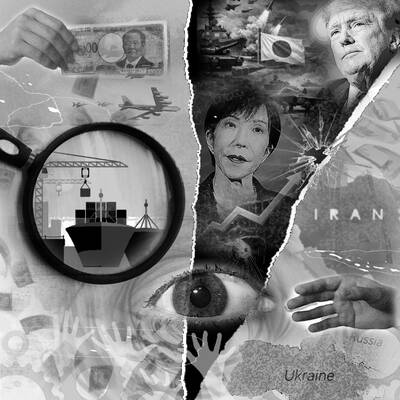
Japan’s imminent easing of arms export rules has sparked strong interest from Warsaw to Manila, Reuters reporting found, as US President Donald Trump wavers on security commitments to allies, and the wars in Iran and Ukraine strain US weapons supplies. Japanese Prime Minister Sanae Takaichi’s ruling party approved the changes this week as she tries to invigorate the pacifist country’s military industrial base. Her government would formally adopt the new rules as soon as this month, three Japanese government officials told Reuters. Despite largely isolating itself from global arms markets since World War II, Japan spends enough on its own
On March 31, the South Korean Ministry of Foreign Affairs released declassified diplomatic records from 1995 that drew wide domestic media attention. One revelation stood out: North Korea had once raised the possibility of diplomatic relations with Taiwan. In a meeting with visiting Chinese officials in May 1995, as then-Chinese president Jiang Zemin (江澤民) prepared for a visit to South Korea, North Korean officials objected to Beijing’s growing ties with Seoul and raised Taiwan directly. According to the newly released records, North Korean officials asked why Pyongyang should refrain from developing relations with Taiwan while China and South Korea were expanding high-level


 RSS
RSS