


A few days ago, Emperor Akihito of Japan appeared on national TV with an impassioned address regarding the massive earthquake and subsequent tsunami and nuclear reactor crisis that had rocked his country. He expressed the hope that more victims would be saved, saying that even one more survivor would make the continued rescue attempts worthwhile. One couldn’t help but be touched by the compassion and empathy in his words.
On the other side of the world, in north Africa, Libyan leader Muammar Qaddafi, in the face of attempts to topple him, was giving the order for his forces to kill his own people, without mercy. That is, one more death wouldn’t matter.
Taiwan’s neighbor, which some regard as their “motherland,” was led 22 years ago by Deng Xiaoping (鄧小平), a man whose name ironically means “Little Peace,” but who preferred to countenance the killing of thousands of his own people to preserve two decades of “stability.”
Some Chinese may well berate me for comparing Akihito with Deng, but the only reason I use the example of Akihito is that he exhibited the emotional response one would expect from an ordinary person.
There is a well-known Buddhist saying in China: “It is better to save one life than to build a seven-story pagoda.” The meaning is simple: to kill is wrong, to save lives is good.
It is quite astonishing that some Chinese netizens have actually been falling over themselves to welcome, even celebrate, the Japanese earthquake. In Taiwan, too, some extreme pan-blue netizens have been advocating retaking the Diaoyutai Islands (釣魚台) by force, and even attacking Tokyo, slaughtering the millions of “Jap devils” who live there.
This type of thinking is the product of brainwashing by the Chinese Communist Party (CCP) and the education system in China, which promotes anti-Japanese sentiment and non-humanistic ideas. Both the CCP and Chinese Nationalist Party (KMT) exploit the memory of the Nanjing Massacre to teach anti-Japanese sentiment and even outright hatred for Japanese. They are not concerned with teaching the specifics of the massacre; they just want the anti--Japanese feeling to live on in later generations.
From a humanistic perspective, the killing of innocents is a crime, whether it is the massacre of thousands or the taking of a single life. Since the Chinese vilify the Japanese for the Nanjing Massacre, why do they have a portrait of Mao Zedong (毛澤東), the instigator of the Cultural Revolution, displayed for all to see — and praise — in Tiananmen Square? And why is the person responsible for the 228 Massacre, Chiang Kai-shek (蔣介石), given in his own “memorial hall”?
According to one official Chinese estimate, as many as 2 million people died as a direct result of the Cultural Revolution, many times more than the number of people who lost their lives during the Nanjing Massacre. Some people believe as many as 200,000 were killed during the 228 Massacre. In the nationalist ideology of the CCP and KMT, Mao and Chiang are heroes, despite having slaughtered their own “compatriots.” This is a warped view resulting from a warped education system.
Taiwan is now a democracy and as such education in this country should be focused on the pursuit of the truth, instilling in students a moral compass and the cultivation of a belief in the sacred nature of life, so that no one else ever slaughters others again.
James Wang is a media commentator.
TRANSLATED BY PAUL COOPER
Minister of Labor Hung Sun-han (洪申翰) on April 9 said that the first group of Indian workers could arrive as early as this year as part of a memorandum of understanding (MOU) between the Taipei Economic and Cultural Center in India and the India Taipei Association. Signed in February 2024, the MOU stipulates that Taipei would decide the number of migrant workers and which industries would employ them, while New Delhi would manage recruitment and training. Employment would be governed by the laws of both countries. Months after its signing, the two sides agreed that 1,000 migrant workers from India would
In recent weeks, Taiwan has witnessed a surge of public anxiety over the possible introduction of Indian migrant workers. What began as a policy signal from the Ministry of Labor quickly escalated into a broader controversy. Petitions gathered thousands of signatures within days, political figures issued strong warnings, and social media became saturated with concerns about public safety and social stability. At first glance, this appears to be a straightforward policy question: Should Taiwan introduce Indian migrant workers or not? However, this framing is misleading. The current debate is not fundamentally about India. It is about Taiwan’s labor system, its
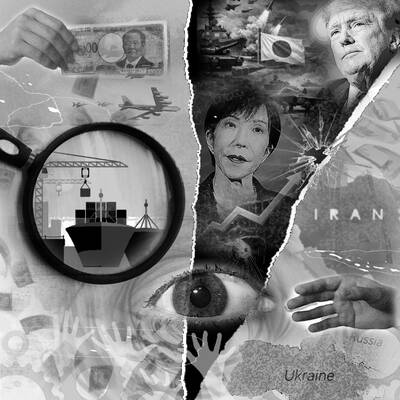
Japan’s imminent easing of arms export rules has sparked strong interest from Warsaw to Manila, Reuters reporting found, as US President Donald Trump wavers on security commitments to allies, and the wars in Iran and Ukraine strain US weapons supplies. Japanese Prime Minister Sanae Takaichi’s ruling party approved the changes this week as she tries to invigorate the pacifist country’s military industrial base. Her government would formally adopt the new rules as soon as this month, three Japanese government officials told Reuters. Despite largely isolating itself from global arms markets since World War II, Japan spends enough on its own
On March 31, the South Korean Ministry of Foreign Affairs released declassified diplomatic records from 1995 that drew wide domestic media attention. One revelation stood out: North Korea had once raised the possibility of diplomatic relations with Taiwan. In a meeting with visiting Chinese officials in May 1995, as then-Chinese president Jiang Zemin (江澤民) prepared for a visit to South Korea, North Korean officials objected to Beijing’s growing ties with Seoul and raised Taiwan directly. According to the newly released records, North Korean officials asked why Pyongyang should refrain from developing relations with Taiwan while China and South Korea were expanding high-level


 RSS
RSS