


As the end of my two-year term of president of the North American Taiwanese Medical Association (NATMA) draws near, I reflect on these past two years and see great accomplishments and some disappointments for the agenda I laid out during my presidency. Yet through it all, the one unwavering element was your much needed cooperation and participation. My goal as president was to promote the visions and mission of NATMA and I hope I was successful in doing so. Though we’ve made progress as an organization, I believe our dream has yet to be realized and the best is yet to come.
NATMA consists of Taiwanese medical related professionals living in the US and Canada, with a large constituent of second generation medical related professionals. We all share deep ties and a love for Taiwan, and we will do anything and everything to ensure a bright future for Taiwan. To achieve this goal, we ought to maintain the continuous influx of Taiwanese physicians to North America. This year we established a “Taiwan Chapter” as a contact window to facilitate the smooth transition for newcomers. In addition, one of our seven foundations has set up five scholarships.
Since 2003, NATMA has provided annual medical missions to the poor and needy in various Caribbean nations who retain diplomatic ties with Taiwan and recognize Taiwan as a nation, not as part of the People’s Republic of China. I decided to set up a medical mission in Haiti in March last year because of the large and growing Haitian immigrant presence in the Elizabeth, New Jersey, area. Haiti is perhaps the most destitute country in the western hemisphere, largely because of political unrest, and as a result the majority of Haitians fail to receive even the most basic healthcare. During our five days in Haiti, our team provided medical, dental and surgical care to more than 1,500 patients.
This year, we traveled to the Dominican Republic, where we examined and treated more than 3,000 medical and dental patients and performed 20 major surgeries at an army hospital. Our pediatric seminar at a newly established children’s hospital provided a much needed education on children’s healthcare. It won a prestigious award and the friendship of the Dominican Republic’s first lady. As physicians with ties to Taiwan, one of NATMA’s goals is to do everything in its power to give back to society while promoting Taiwan. We, as an organization, will continue to serve in this capacity, maximizing the resources we have.
South African cleric and activist Desmond Tutu once said: “If you are neutral in situations of injustice, you have chosen the side of the oppressor. If an elephant has its foot on the tail of a mouse and you say that you are neutral, the mouse will not appreciate your neutrality.”
The US and Taiwan share the same values, such as democracy, human rights and justice. Therefore, we believe that former president Chen Shui-bian (陳水扁) was treated and sentenced unfairly and we will strike down those who attempt to poison and destroy our Taiwanese brothers and sisters. We have always stood up for the suppressed, from the time of Chiang Kai-shek’s (蔣介石) authoritarian regime to the present day suppression of Taiwan by China and its followers.
Medical education, mission, interaction and outreach for all generations are the pillars of our organization. I humbly ask you to join me in this journey at the 25th annual meeting in Kaohsiung on Nov. 7. Typhoon Morakot’s floods and mudslides killed more than 700 people. Our most sincere thoughts and prayers go out to the victims’ families and we will bring our donations and medical expertise on our upcoming trip to comfort them in their darkest hour. Help us to help them.
Jung T. Tsai is the president of the North American Taiwanese Medical Association.
We are used to hearing that whenever something happens, it means Taiwan is about to fall to China. Chinese President Xi Jinping (習近平) cannot change the color of his socks without China experts claiming it means an invasion is imminent. So, it is no surprise that what happened in Venezuela over the weekend triggered the knee-jerk reaction of saying that Taiwan is next. That is not an opinion on whether US President Donald Trump was right to remove Venezuelan President Nicolas Maduro the way he did or if it is good for Venezuela and the world. There are other, more qualified
The immediate response in Taiwan to the extraction of Venezuelan President Nicolas Maduro by the US over the weekend was to say that it was an example of violence by a major power against a smaller nation and that, as such, it gave Chinese President Xi Jinping (習近平) carte blanche to invade Taiwan. That assessment is vastly oversimplistic and, on more sober reflection, likely incorrect. Generally speaking, there are three basic interpretations from commentators in Taiwan. The first is that the US is no longer interested in what is happening beyond its own backyard, and no longer preoccupied with regions in other
As technological change sweeps across the world, the focus of education has undergone an inevitable shift toward artificial intelligence (AI) and digital learning. However, the HundrED Global Collection 2026 report has a message that Taiwanese society and education policymakers would do well to reflect on. In the age of AI, the scarcest resource in education is not advanced computing power, but people; and the most urgent global educational crisis is not technological backwardness, but teacher well-being and retention. Covering 52 countries, the report from HundrED, a Finnish nonprofit that reviews and compiles innovative solutions in education from around the world, highlights a
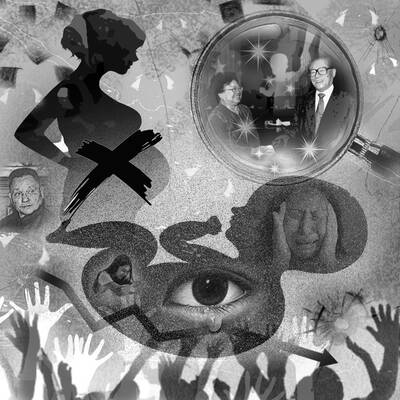
Jan. 1 marks a decade since China repealed its one-child policy. Just 10 days before, Peng Peiyun (彭珮雲), who long oversaw the often-brutal enforcement of China’s family-planning rules, died at the age of 96, having never been held accountable for her actions. Obituaries praised Peng for being “reform-minded,” even though, in practice, she only perpetuated an utterly inhumane policy, whose consequences have barely begun to materialize. It was Vice Premier Chen Muhua (陳慕華) who first proposed the one-child policy in 1979, with the endorsement of China’s then-top leaders, Chen Yun (陳雲) and Deng Xiaoping (鄧小平), as a means of avoiding the


 RSS
RSS