


Ava Gardner, I once read, pulled up loose skin on her face with hooks and stuffed it under a wig. That was her makeshift face-lift. Joan Crawford is said to have smothered her acne with a mortician's layer of makeup. Marilyn Monroe's scalp was reportedly visible to intimates, shining scarlet from the scalding bleach she used. She was also, legend has it, going bald.
These are the US' greatest beauties, but they would never have gotten away with it these days. Those gorgeous Life magazine spreads of Gardner, the fresh-faced, green-eyed brunette: She was life's crisp and sparkling perfection.
Today we would never gaze placidly at those photos, dazzled as if by a Vermeer. If Ava were still around, she'd appear on idontlikeyouinthatway.com or dlisted.com and we wouldn't ogle her face as much as her hairline and the microscopic mysteries of the snagged skin -- each hook tugging gruesomely at the flesh.
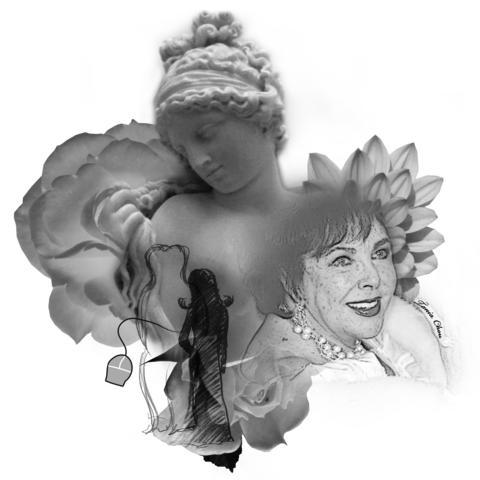
And there would be a caption, angry, as if Gardner had intruded on us, and not we on her: What the hell is wrong with Ava's face?!
Like so many other 20th century US institutions, Hollywood beauty is now regularly treated as a fairy tale only for dreamers and chumps. Readers with any sense are supposed to recognize its strategic function, but otherwise acknowledge it as a lie. The availability of plastic surgery and the widespread use of tooth bleach and self-tanners and finally the photo manipulation that any grandma can do to brighten up her Canon PowerShot photos has somehow made even transcendent beauty manifestly suspect.
Celebrity magazines that in earlier incarnations used to peddle a fantasy of loveliness now traffic in dismantling that same fantasy. In collusion with ever more Johnny-on-the-spot Web sites, tabloids have invited viewers first to evaluate photos of celebrities for signs that they are human and now for evidence of monstrosity a la Nicole Richie pregnant at 40kg and loaded on 73,000 pills.
Certain celebrities lend themselves especially well to the new form of high-resolution scrutiny. Displaying weight loss and gain, unstable pigmentation, shadowy pregnancies, ocular dilations and erratic body language, figures like Nicole Richie, Lindsay Lohan and Britney Spears have become favored specimens, inviting analysis and -- like little Mona Lisas -- repaying those who are willing to look and look and look again.
IMP OR URCHIN?
In a recent tabloid photograph, Richie, who in the last few years appears to have transformed from a jolly imp into a gaunt urchin, is shown leaving an office building in Los Angeles with a pink smoothie in hand and wearing a thigh-length, gathered T-shirt-dress.
The image invites speculation on multiple fronts: Would that be a fetus-harming caffeinated drink? Or a calorie-laden one? In which case, does that mean Richie is eating again? And if so, is the pregnancy confirmed?
Similarly engrossing photos appear almost daily of Britney Spears, whose rather stockier and more off-balance figure in slovenly summerwear suggests master narratives about her maternal and filial shortcomings, as well as her fall from fit superstardom.
Lindsay Lohan, who seems to have altered her ethnic inheritance entirely in becoming a tan blonde, appears in disguise even when barely dressed.
No question is too small or insignificant for Web sites like TMZ, X17online, PerezHilton, idontlikeyouinthatway, justjared, egotastic, wwtdd, dlisted and pinkisthenewblog, where the sites' hosts post photos with commentary ("Parasite Hilton: Her Face Is Growing Stuff"), and invite others to do the same.
"She has the weirdest stomach," reads one comment on idontlikeyouinthatway.
"I can see in his eyes that he's not `perfectly normal,'" reads another, about a celebrity's son, on x17online.
Scrutinizing pixel after pixel of clavicles or vulnerable underbellies, we have come to treat these bodies like Sanskrit manuscripts.
Why are we looking so hard? And what do we expect to find?
It's almost hard to remember now, but the old frustration of entertainment news was that celebrities made almost no false moves: a phalanx of publicists and stylists monitored them so closely that they always seemed composed, styled, scripted and (in the bygone idiom) "airbrushed."
Only five years ago I remember watching a taped David Frost interview with Elizabeth Taylor and Richard Burton in which they smoked, appeared drunk and insulted one another. I was sure nothing like that would appear on any screen ever again.
But little did I know. Us Weekly and its copycats quickly reinvented celebrity photography, eschewing production stills and party pictures in favor of snapshots. But they didn't only go for red-carpet fashion photos or the gotchas that come along once in a lifetime: Gary Hart with Donna Rice, Kate Moss with cocaine. Instead they focused on the mundane: stars in supermarkets, dog parks, parking lots. In all that natural light they looked indistinct, sometimes homely.
INTIMACY, PLEASE
At first I thought, who cares? But then the magazines taught me to care -- and to mistake the new unkempt images for intimacy, if intimacy is something I might achieve by rooming with a celebrity at a mental hospital.
Jennifer Aniston looking pensive occasioned a headline on her misery since her divorce from Brad Pitt. The caption drew me to Aniston's eyes. Interesting: those part-Greek eyes, darkened by experience. What was Aniston thinking after being left for Pitt's co-star in an action movie, the tattooed siren Angelina Jolie? So human, her hurt and expression. And so recent, I thought. I bought the magazine.
Over the following months her body betrayed other secrets, illuminated by shrinks who no doubt had never met her: muscles meant a comeback, casual clothes suggested depression, party clothes meant desperation. A tan signaled a rebound, as did a nose job or haircut, unless either were too dramatic; un-made-up eyes indicated grief.
Perez Hilton, the screen name for Mario Lavandeira, the reigning online gossip maven who runs PerezHilton.com, prides himself on the sensitivity of his readings of photographs.
SOMETHING EXTRA
"I took several art history classes in school. And photography," Lavandeira said in a phone interview. "When you pay attention, you see some things that somebody else might miss, so it behooves you to try and find that special thing in an image. Then your interpretation will stand out more."
He recognizes too that analyzing a photograph also often means embellishing it.
"When I look at a picture, I go through the same process as when I look at a news story. How can I process this image to make this as entertaining as possible to my readers? I'm looking at it, cropping it, resizing it, drawing on it, making it my own," he said.
I asked him why we like to examine our celebrities so closely. Do we just want them to be more human?
"We like to look where we can't or shouldn't look," he said, citing the photographs that seem to accidentally reveal the most vulnerable square inches on celebrities' bodies. These draw the most traffic to PerezHilton. Forget the hourglass figures of stars of old; fans and anti-fans want small pink dots of light, partially obscured, that could represent human glands.
Lavandeira boasts that his site is the one that most frightens Hollywood, and nearly every celebrity site keeps up some pretense that it shines a bright light on the famous.
Weakly, I have hoped reading portraits in this way might strengthen some evolutionary skill -- the way gossiping is said to make you better at forging allegiances. One possibility presented itself last summer when I spoke to a lawyer I met on a "Lonelygirl15" message board. He and I were both obsessed with figuring out whether she was an actress or an ordinary girl.
"What do you do with your time when you're not studying Web images?" I asked him in an e-mail message.
"I usually stick to stuff like Rathergate or the doctored Reuters photographs," he wrote back, referring first to the bloggers who questioned documents cited by Dan Rather about President George W. Bush's National Guard service, and then to a well-known falsified news picture. "But this is fascinating."
And that's when it occurred to me: There is an undeniable pleasure in inferring stories from pieces of data, whether the story is trivial -- "Lonelygirl15" -- or substantial, like the military service of the president. Isn't the discovery of that pleasure what drives science and all manner of detective work?
We're all on the Web, weighing various kinds of data we get -- eBay listings, blog posts, Craigslist solicitations -- and trying to read between some pixels, and connect others.
Sure, I don't expect we'll break any big news reading PerezHilton.com. But maybe we're not entirely wasting our time; we're practicing interpreting images from the new close-range, high-def magazines and Web sites.
In any case the danse macabre that stars now do with the paparazzi, who appear to lurk everywhere, must be logistically maddening and emotionally draining. Every trip to the grocery store is a performance piece; every day at the beach is a soft-porn movie.
What's more the consumers of the resulting plays, movies, video projects and photographs -- that's us -- are not primarily looking to be entertained or transported. We're just looking for data, more and more data, the more raw the better.
Someday we may need nothing but zeros and ones to give our prognostications. And then we really won't need the star herself. But for now a young star is in a strange place.
To become a specimen, a lab slide, a piece of data: surely this is not what people dream of when they quit high school, take singing lessons and move to Hollywood.

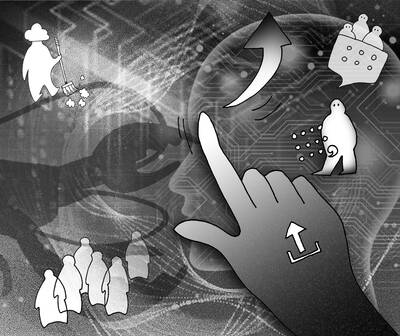
Weeks into the craze, nobody quite knows what to make of the OpenClaw mania sweeping China, marked by viral photos of retirees lining up for installation events and users gathering in red claw hats. The queues and cosplay inspired by the “raising a lobster” trend make for irresistible China clickbait. However, the West is fixating on the least important part of the story. As a consumer craze, OpenClaw — the AI agent designed to do tasks on a user’s behalf — would likely burn out. Without some developer background, it is too glitchy and technically awkward for true mainstream adoption,
A delegation of Chinese Nationalist Party (KMT) officials led by Chairwoman Cheng Li-wun (鄭麗文) is to travel to China tomorrow for a six-day visit to Jiangsu, Shanghai and Beijing, which might end with a meeting between Cheng and Chinese President Xi Jinping (習近平). The trip was announced by Xinhua news agency on Monday last week, which cited China’s Taiwan Affairs Office (TAO) Director Song Tao (宋濤) as saying that Cheng has repeatedly expressed willingness to visit China, and that the Chinese Communist Party (CCP) Central Committee and Xi have extended an invitation. Although some people have been speculating about a potential Xi-Cheng
Chinese Nationalist Party (KMT) Chairwoman Cheng Li-wun (鄭麗文) is leading a delegation to China through Sunday. She is expected to meet with Chinese President Xi Jinping (習近平) in Beijing tomorrow. That date coincides with the anniversary of the signing of the Taiwan Relations Act (TRA), which marked a cornerstone of Taiwan-US relations. Staging their meeting on this date makes it clear that the Chinese Communist Party (CCP) intends to challenge the US and demonstrate its “authority” over Taiwan. Since the US severed official diplomatic relations with Taiwan in 1979, it has relied on the TRA as a legal basis for all
On Monday, the day before Chinese Nationalist Party (KMT) Chairwoman Cheng Li-wun (鄭麗文) departed on her visit to China, the party released a promotional video titled “Only with peace can we ‘lie flat’” to highlight its desire to have peace across the Taiwan Strait. However, its use of the expression “lie flat” (tang ping, 躺平) drew sarcastic comments, with critics saying it sounded as if the party was “bowing down” to the Chinese Communist Party (CCP). Amid the controversy over the opposition parties blocking proposed defense budgets, Cheng departed for China after receiving an invitation from the CCP, with a meeting with


 RSS
RSS