


This July marks the 10th anniversary of East Asia's financial crisis. In July 1997, the Thai baht plummeted. Soon after, financial panic spread to Indonesia and South Korea, then to Malaysia. In a little more than a year, the Asian financial crisis became a global financial crisis, with the crash of Russia's ruble and Brazil's real.
In the midst of a crisis, no one knows how far an economy will drop or for how long. But capitalism, since its beginning, has been marked by crises; each time, the economy recovers, but each crisis carries its own lessons. So 10 years after Asia's crisis, it is natural to ask some questions: What were the lessons? Has the world learned them? Could such a crisis occur again? Is another crisis imminent?
Some similarities exist between the situation then and today. Before the 1997 crisis, there had been rapid increases in capital flows from developed to developing countries -- a six-fold increase in six years. Afterward, capital flows to developing countries stagnated.
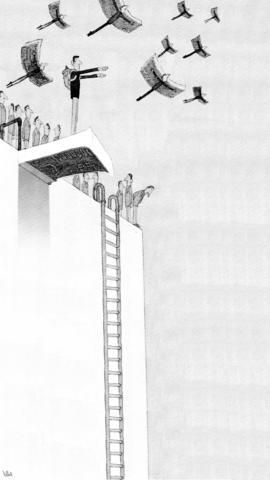
Before the crisis, some thought risk premia for developing countries were irrationally low. These observers proved right: The crisis was marked by soaring risk premia. Today, the global surfeit of liquidity has once again resulted in comparably low risk premia and a resurgence of capital flows, despite a broad consensus that the world faces enormous risks (including the risks posed by a return of risk premia to more normal levels.)
In 1997, the IMF and the US Treasury blamed the crisis on a lack of transparency in financial markets. But when developing countries pointed their fingers at secret bank accounts and hedge funds, IMF and US enthusiasm for greater transparency diminished. Since then, hedge funds have grown in importance, and secret bank accounts have flourished.
But there are some big differences between then and now. Most developing countries have accumulated massive foreign currency reserves. They learned the hard way what happens to countries otherwise, as the IMF and US Treasury marched in, took away economic sovereignty and demanded policies intended to enhance repayment to Western creditors, which plunged their economies into deep recessions and depressions.
Reserves are costly, for the money could have been spent on development projects that would enhance growth. Nevertheless, the benefits in reducing the likelihood of another crisis and another loss of economic independence far outweigh the costs.
This growth in reserves, while providing insurance to developing countries, created a new source of global volatility. Especially as the dollar lost its sacred place as a store of value under the Bush administration, rebalancing these multi-trillion dollar portfolios entails selling off dollar holdings, contributing to weakening of the dollar.
Developing countries have also increasingly borrowed in their own currencies during the last few years, thus reducing their foreign exchange exposure. For those developing countries that remain heavily indebted abroad, an increase in risk premia would almost certainly bring economic turmoil, if not crisis. But the fact that so many countries hold large reserves means that the likelihood of the problem spreading into a global financial crisis is greatly reduced.
In the midst of the 1997 crisis, a consensus developed that there was a need for a change in the global financial architecture: The world needed to do better in preventing crises and dealing with them when they occur. But the US Treasury and the IMF realized that the likely reforms, as desirable as they were for the world, were not in their interest.
They did what they could to ensure that no meaningful reforms occurred during the crisis, with the knowledge that after the crisis, momentum for reform would dissipate. They were more right than they knew. Who, after all, could have anticipated that former US president Bill Clinton would be followed by a US leader committed to undermining the multilateral system in all its manifestations?
For example, when the IMF correctly suggested, after Argentina's crisis, that a better way of restructuring debt (an international bankruptcy procedure) was needed, the US vetoed the initiative. When the OECD proposed an agreement that would restrict bank secrecy, President George W. Bush's administration vetoed that initiative, too.
Indeed, the two most important lessons of the crisis have not been absorbed. The first is that capital market liberalization -- opening up developing countries' financial markets to surges in short-term "hot" money -- is dangerous. It was not an accident that the only two major developing countries to be spared a crisis were India and China. Both resisted capital market liberalization. Yet today, both are under pressure to liberalize.
The second lesson is that in a highly integrated world, there is a need for a credible international financial institution to design the rules of the road in ways that enhance global stability and promote economic growth in developing countries. With the IMF so dominated by the US (it is the only country with a veto) and Europe (which, by custom, appoints its head), the Fund was long seen as representing the interests of international creditors. Its failures in the 1997 crisis further undermined its credibility, and its failure to do anything about massive global financial imbalances posing the main threat to global financial stability today, have underscored its limitations.
Reforms are still needed -- including an overhaul of the global reserve system. We may not be facing a repeat of the global financial crisis of 1997, but make no mistake, imperfections in the global financial system can still be costly, both in terms of global prosperity and stability.
Joseph Stiglitz is a Nobel laureate in economics.
Copyright: Project Syndicate
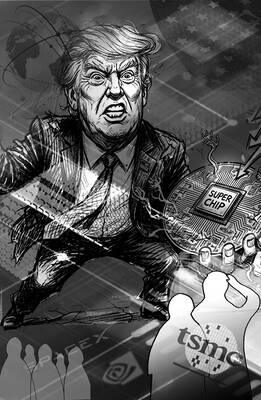
The White House’s decision to take a 9.9 percent stake in Intel Corp is looking like very shrewd business indeed. Since the government bought in at US$20.47 a share last August, the US chipmaker’s surging stock price has delivered the US a US$43 billion return. One of the reasons the investment has so far proved so sound is that the White House has made sure of it. According to The Wall Street Journal, Howard personally pushed deals on Intel’s behalf with some of the most lucrative clients imaginable. They include Nvidia Corp, the company at the heart of the AI
A single photograph can cut through a lot of noise, but it can also be used to misrepresent the truth. At the very least, it can concentrate the mind on something that requires further investigation. On Monday last week, Ma Ying-jeou Foundation CEO Tai Hsia-ling (戴遐齡) and former National Security Council secretary-general King Pu-tsung (金溥聰) held a news conference in which they showed a photograph of former foundation CEO Hsiao Hsu-tsen (蕭旭岑), now Chinese Nationalist Party (KMT) deputy chairman. In the image Hsiao is seated next to Xiamen Taiwan Businessmen Association chairman Han Ying-huan (韓螢煥). The two men were holding
I first met Professor Ray Jiing (井迎瑞) as a film and documentary student at Shih Hsin University’s (SHU) Department of Radio Television and Film in 1988. The following year, he went on to become the director of the Chinese Taipei Film Archive — forerunner of the Taiwan Film and Audiovisual Institute (TFAI). Over his eight-year tenure, Jiing rescued and restored over 200 classic Taiwanese films. In 1997, he established the Graduate Institute of Studies in Documentary and Film Archiving at Tainan National University of the Arts (TNNUA), and I joined the program in his third cohort of students. Beyond a
A recent report concerning a student who is suing his teacher posed the question in its headline: Does failing a student in two subjects constitute bullying? The college student in Chiayi County apparently sought NT$2 million (US$63,603) in state compensation, but a court dismissed the case. The first reaction of many might have been to ask: What has happened to students nowadays? Some say that teachers have lost their authority, while others say students are overindulged. Some even start reminiscing over the days when “whatever the teacher says goes.” However, the real issue might be overlooked if emotional reactions like that are the


 RSS
RSS