


A single photograph can cut through a lot of noise, but it can also be used to misrepresent the truth. At the very least, it can concentrate the mind on something that requires further investigation.
On Monday last week, Ma Ying-jeou Foundation CEO Tai Hsia-ling (戴遐齡) and former National Security Council secretary-general King Pu-tsung (金溥聰) held a news conference in which they showed a photograph of former foundation CEO Hsiao Hsu-tsen (蕭旭岑), now Chinese Nationalist Party (KMT) deputy chairman.
In the image Hsiao is seated next to Xiamen Taiwan Businessmen Association chairman Han Ying-huan (韓螢煥). The two men were holding up a huge wad of cash between them. It is uncertain for whom the cash was intended, or what it was for.
Han has said the cash was a NT$1 million (US$31,836) donation to former president Ma Ying-jeou (馬英九), not his foundation. In the news conference, King, a long-term aide to Ma who said he was holding the news conference on Ma’s behalf, accused Hsiao of receiving, but not reporting, donations for the foundation, and of not informing Ma of a meeting he had with China’s Taiwan Affairs Office Director Song Tao (宋濤) soon after Hsiao was appointed KMT deputy chair. Hsiao has said that he reported all of his China visits to Ma. He has also said that Ma “forgot many things” recently, including Hsiao’s engagements in China. The statement has been interpreted by local media as an attempt to give the impression that Ma may be suffering from dementia. Why exactly Hsiao was meeting Song, or what the two discussed, remains a mystery.
The image of a smiling Hsiao apparently receiving cash from a China-based businessman encapsulates the controversy and mistrust that has played out over the past few weeks.
Ma announced the departure of Hsiao from his position in the foundation on March 16, and on March 23 accused him and the foundation’s former deputy CEO Wang Kuang-tzu (王光慈) of “severe lapses in fiduciary discipline,” authorizing King to dismiss them.
Last week, Ma’s eldest sister, Ma Yi-nan (馬以南), authorized a lawyer to petition a court for a declaration of commencement of assistance, following the hints at dementia.
On Sunday last week, the foundation announced that a probe authorized by the foundation’s board of directors on March 27 had found no evidence that Hsiao or Wang had embezzled funds. That same day, Ma issued a statement expressing regret over the findings and questioned whether the panel responsible had deliberately delayed or concealed information. Hsiao played up suggestions that Ma’s cognitive faculties were in decline.
On Friday, the foundation revealed it had filed criminal complaints at Ma’s request against two former foundation officials, claiming breach of trust and embezzlement. It is uncertain, however, if lawsuits initiated by Ma could go ahead without his eldest sister’s consent, should the Taipei District Court approve the petition for a declaration of commencement of assistance.
It is right that financial propriety and trust within the foundation are investigated, and we can only expect more layers to be revealed as the investigation proceeds. However, it is also important not to miss the wood for the trees: The power plays, shifting loyalties and lapses in trust on display are symptoms of far more weighty concerns.
The accusations and counter-accusations speak not only of internal power struggles within the foundation itself but also within the KMT; they speak, too, of the sidelining of a former president who used to enjoy considerable influence within the party. He was influential enough in 2020 to put a stop to then-KMT chairman Johnny Chiang’s (江啟臣) attempts to reform the KMT and retire party adherence to the “1992 consensus,” reducing it to a “historical fact.” KMT Chairwoman Cheng Li-wun (鄭麗文) shares Ma’s insistence on the “1992 consensus,” but now wants to see Ma sidelined as she seeks to consolidate her own control over the KMT.
At the same time, the photograph speaks to the nature of unrecorded, unreported cross-strait exchanges. King has always been Ma’s right-hand man; until recently, there was little reason to doubt that Hsiao was similarly on board. There is now the possibility that he has discovered other loyalties. The nub is to work out where those loyalties lie: with Ma, the KMT or the Chinese Communist Party’s “united front” efforts.
We can be certain that more will be revealed if the fire started at the Ma Ying-jeou Foundation continues to spread uncontrolled.
KMT Chairwoman Cheng Li-wun’s (鄭麗文) recent visit to Beijing and her upcoming visit to Washington will serve as a high-level test of her diplomatic mettle. In Beijing, Cheng was received with symbolic gestures, a warm reception, and high-level access. In Washington, she will receive far less pomp and far sharper questions about the KMT’s vision for the future of Taiwan. Her challenge will be to persuade Washington that the KMT’s engagement with China can coexist with strong deterrence. Cheng’s April 7-12 visit to mainland China coincided with an intense period of conflict in Iran. Despite the strategic significance of Cheng’s trip,
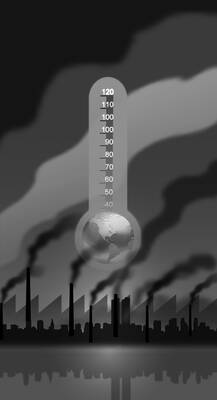
The closure of the Strait of Hormuz has sent the vast Asian chemicals industry into a tailspin. Deprived of the likes of Qatari natural gas and Saudi Arabian oil, the region’s fertilizer and plastics plants are slowing production or even shutting down. Everywhere except China, that is. In petrochemicals, China is unique. As well as a traditional industry that uses oil and gas as feedstock, it has parallel output that relies on its abundant domestic coal. Unsurprisingly, India and other regional powers want to copy and paste the Chinese method. This would not be easy — or climate friendly. The
Indonesian President Prabowo Subianto says he knows how to fix the problems facing Indonesia. Yet his economic mismanagement and authoritarian tendencies are steering the nation toward a familiar mix of currency instability and political chaos. The world’s fourth-most populous nation risks reversing the hard-won democratic and business reforms that came after the Asian Financial Crisis in 1997. At that time, the rupiah collapsed and the political upheaval that followed forced former president Haji Mohamed Suharto from power. Prabowo’s administration is ignoring similar warning signs. That disconnect was apparent in a national address on Wednesday, when Prabowo projected the swagger that has
“Of course you can choose not to be Taiwanese, just do not stay here,” chairwoman of Taipei 101 operator Taipei Financial Center Corp Janet Chia (賈永婕) said in an online interview with local entertainer Tai Chih-yuan (邰智源), triggering intense discussion on social media, with politicians across party lines weighing in. In the interview, which was aired on May 14, Chia and Tai’s discussion over a meal in Taipei 101 covered Chia’s career change from entertainer to chairwoman and US climber Alex Honnold’s free solo climb up the Taipei 101 building. During the interview, Chia said, “Being on this land, we


 RSS
RSS