


This summer, friends who live a few kilometers from us in rural Montana in the western US had to interrupt their dinner when a black bear suddenly came out of the trees. They went indoors to watch as it came up to the picnic table, licked the dishes clean, and then drank two cans of beer.
Over the following days, the bear turned over the garbage cans of two neighbors and terrorized children and pets. Forest Service rangers set up a cage and put some bacon inside, soon catching and transporting the bear 30km into the wilderness. The bear was tagged before it was released, to show that it had been causing trouble. "Unfortunately," said the ranger, "that bear may be back here even before our truck returns. Once they develop a taste for bacon and beer, you can't keep them away."
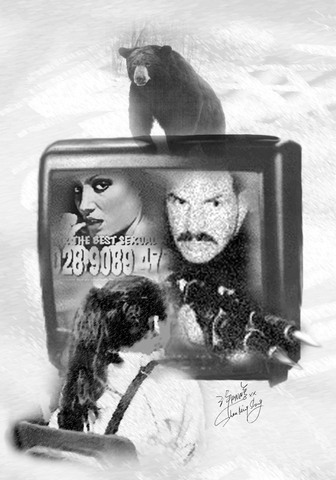
If a tagged bear is caught two or more times causing disruption, the rangers have orders to shoot it.
It is easy to feel sorry for an animal that discovers tasty food and can't resist getting more the easy way. The bear has no idea that its days are numbered unless it remains in the forest and hunts in the traditional way for its meals. But that bear was following the wisdom natural selection had programmed in its genes: food that is high in proteins and sugars is good for you, and the less energy you expend getting it, the better.
That much the bear knows well. It had no chance to learn -- and probably never will -- that picnic tables and garbage cans are defended by forest rangers with orders to kill. How much luckier we humans are, knowing what is good and bad for us. We cannot be trapped so easily by things that taste good but will cause our downfall.
But, in reality, most of us are no different from that bear. Most people are aware that high-fat diets, too much alcohol, smoking, promiscuous sex, and recreational drugs, while pleasant, can ruin one's health. Yet we can't resist the lure of the garbage can and its delights. But at least we have had clear warnings about the dangers of such habits, so people who want to use such knowledge can avoid being trapped.
There are other potentially harmful pleasures in the environment that are less known, but not less destructive than those that are. One of the most seductive of these pleasures -- and thus one of the most dangerous -- is television.
Television is attractive to the architecture of the human nervous system: our brains are built to absorb information and follow rapid changes in the sensory field. TV provides these in easily digestible, sumptuously prepared morsels.
Constant change and the appearance of excitement absorb viewers' attention. The Sistine Chapel cannot compare with it ? most children will become bored after ten minutes by the frescoes of Michelangelo, but will watch a detergent commercial with riveted interest.
All of this applies just to the way the medium works, without taking content into consideration. The content in turn reinforces the seductive qualities of the medium by offering generous helpings of sex, violence, easy comfort and other material that we are genetically prepared to respond to, but that in large doses detract from the ability to lead productive and serene lives.
Indeed, by now the evidence that television watching is a dangerous habit has grown to such proportions that it is a wonder that stronger warnings and effective prevention have not been adopted. Among the many findings is that watching too much television induces passivity, both at the level of neural functioning and of behavior and that it interferes with learning and reduces political and civic participation. It also encourages aggressive behavior in children and produces negative moods such as sadness and loneliness. Nor is there any evidence of benefits to counterbalance these negative effects.
When television was in its infancy, many thinkers -- and not surprisingly, television producers -- painted the future of the medium in glowing terms: TV would keep us informed, cultured, and entertained; it would strengthen family life and civic virtues.
None of this happened. Even the informational value of television turned out to be a dream: individuals and communities that watch TV often know much less about what is happening in the world than comparable audiences that do not.
The only clearly positive effect of TV watching is that people feel relaxed while doing it, and many people are willing to exchange that relaxation for the more enjoyable and useful things they might be doing instead. Like the bear that learned to fill his stomach comfortably, they feel satisfied to be entertained without having to exert themselves.
Of course, television can be nice when consumed in small doses and with discernment. Like drinking a glass or two of wine, it helps digestion and lightens the mind. But those who spend hours watching it each evening, with less and less control over their attention, and deriving progressively less enjoyment from what they watch, risk becoming as besotted as an alcoholic who only feels alive when he blots out reality. No bear, if it knew what we do, would fall into that trap.
Mihaly Csikszentmihaly is Professor of Psychology, Claremont Graduate University, California.
Copyright: Project Syndicate, December 2004.
The cancelation this week of President William Lai’s (賴清德) state visit to Eswatini, after the Seychelles, Madagascar and Mauritius revoked overflight permits under Chinese pressure, is one more measure of Taiwan’s shrinking executive diplomatic space. Another channel that deserves attention keeps growing while the first contracts. For several years now, Taipei has been one of Europe’s busiest legislative destinations. Where presidents and foreign ministers cannot land, parliamentarians do — and they do it in rising numbers. The Italian parliament opened the year with its largest bipartisan delegation to Taiwan to date: six Italian deputies and one senator, drawn from six
When Chinese President Xi Jinping (習近平) sits down with US President Donald Trump in Beijing on Thursday next week, Xi is unlikely to demand a dramatic public betrayal of Taiwan. He does not need to. Beijing’s preferred victory is smaller, quieter and in some ways far more dangerous: a subtle shift in American wording that appears technical, but carries major strategic meaning. The ask is simple: replace the longstanding US formulation that Washington “does not support Taiwan independence” with a harder one — that Washington “opposes” Taiwan independence. One word changes; a deterrence structure built over decades begins to shift.
Recently, Taipei’s streets have been plagued by the bizarre sight of rats running rampant and the city government’s countermeasures have devolved into an anti-intellectual farce. The Taipei Parks and Street Lights Office has attempted to eradicate rats by filling their burrows with polyurethane foam, seeming to believe that rats could not simply dig another path out. Meanwhile, as the nation’s capital slowly deteriorates into a rat hive, the Taipei Department of Environmental Protection has proudly pointed to the increase in the number of poisoned rats reported in February and March as a sign of success. When confronted with public concerns over young

China has long given assurances that it would not interfere in free access to the global commons. As one Ministry of Defense spokesperson put it in 2024, “the Chinese side always respects the freedom of navigation and overflight entitled to countries under international law.” Although these reassurances have always been disingenuous, China’s recent actions display a blatant disregard for these principles. Countries that care about civilian air safety should take note. In April, President Lai Ching-te (賴清德) canceled a planned trip to Eswatini for the 40th anniversary of King Mswati III’s coronation and the 58th anniversary of bilateral diplomatic


 RSS
RSS