


Recently, Taipei’s streets have been plagued by the bizarre sight of rats running rampant and the city government’s countermeasures have devolved into an anti-intellectual farce. The Taipei Parks and Street Lights Office has attempted to eradicate rats by filling their burrows with polyurethane foam, seeming to believe that rats could not simply dig another path out.
Meanwhile, as the nation’s capital slowly deteriorates into a rat hive, the Taipei Department of Environmental Protection has proudly pointed to the increase in the number of poisoned rats reported in February and March as a sign of success.
When confronted with public concerns over young children and pets accidentally ingesting rodenticide, Taipei Mayor Chiang Wan-an (蔣萬安) merely repeated the refrain that the substances were approved by the central government and the sites they were used at aligned with its guidelines, completely exposing the hollow and ineffective governance beneath the administration’s polished political facade.
The Chiang administration is placing blind faith in precision baiting, which — according to international public health experience — is an outdated approach that has long been proven to address only the symptoms of the problem rather than its root causes, and can even lead to a greater crisis.
New York is a prime example. In 2023, uncontrolled rat infestations and environmental contamination from rat urine drove human cases of leptospirosis to record highs. In response, then-New York mayor Eric Adams appointed the city’s first “rat czar” to oversee rodent control efforts.
In 2024, the New York City Council passed legislation to implement a rat contraceptive program, effectively acknowledging the failure of traditional rodenticide-based extermination methods.
In Australia, New South Wales in 2021 experienced a severe mouse plague, with millions of rodents devouring crops and invading homes. The government hastily provided large subsidies for highly toxic rodenticides, only to face backlash from local veterinarians, environmental groups and farmers. Critics warned that the poison would not only indiscriminately kill pets such as cats and dogs through the food chain, but could also lead to the widespread deaths of birds of prey and other wild animals.
The international lessons should have been a warning to Taipei that blindly relying on traditional poisons would not eradicate rodent infestations and might instead push the city’s ecosystem, along with its children and pets, into a deadly trap.
To address the public health crisis, Democratic Progressive Party Legislator Puma Shen (沈伯洋) accurately highlighted the latest international trend by advocating the use of drugs that affect rodents’ reproductive hormones — so-called “rat contraceptives” — to block reproduction at its source. That is the science-based solution that has been implemented in New York.
In contrast, Chiang, despite serving as mayor of the capital and controlling a vast amount of administrative resources, has failed to propose a strategy tailored to local conditions. Instead, he is meekly sheltering behind the excuse that the city is “following guidelines approved by the central government.”
Is this really the “rising star” that the Chinese Nationalist Party (KMT) has worked so hard to promote? As a municipal crisis looms, Taipei’s leader is not demonstrating resolve and properly addressing issues, but has been shown to be political figure unwilling to shoulder the risks of decisionmaking, capable only of reciting a bureaucratic script.
Is it truly enough for a mayor to simply be a member of the “right party,” paired with a sophisticated media and public relations package, and smiling for ceremonies while conveniently shifting controversies onto the central government?
Governing a modern international metropolis requires far more than possessing a refined and courteous demeanor before the cameras — it also demands scientific vision and the courage to make decisions in times of crisis. If Chiang continues to cling to this safe tactic of evading responsibility, the uncontrolled rat infestation would eventually tear apart his political facade, laying bare the administration’s incompetence.
Chin Ching is an educator.
Translated by Kyra Gustavsen
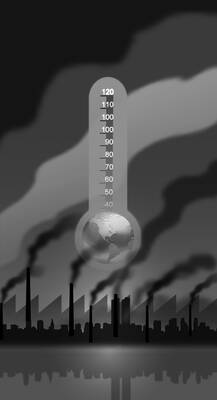
The closure of the Strait of Hormuz has sent the vast Asian chemicals industry into a tailspin. Deprived of the likes of Qatari natural gas and Saudi Arabian oil, the region’s fertilizer and plastics plants are slowing production or even shutting down. Everywhere except China, that is. In petrochemicals, China is unique. As well as a traditional industry that uses oil and gas as feedstock, it has parallel output that relies on its abundant domestic coal. Unsurprisingly, India and other regional powers want to copy and paste the Chinese method. This would not be easy — or climate friendly. The
KMT Chairwoman Cheng Li-wun’s (鄭麗文) recent visit to Beijing and her upcoming visit to Washington will serve as a high-level test of her diplomatic mettle. In Beijing, Cheng was received with symbolic gestures, a warm reception, and high-level access. In Washington, she will receive far less pomp and far sharper questions about the KMT’s vision for the future of Taiwan. Her challenge will be to persuade Washington that the KMT’s engagement with China can coexist with strong deterrence. Cheng’s April 7-12 visit to mainland China coincided with an intense period of conflict in Iran. Despite the strategic significance of Cheng’s trip,
History might remember 2026, not 2022, as the year artificial intelligence (AI) truly changed everything. ChatGPT’s launch was a product moment. What is happening now is an anthropological moment: AI is no longer merely answering questions. It is now taking initiative and learning from others to get things done, behaving less like software and more like a colleague. The economic consequence is the rise of the one-person company — a structure anticipated in the 2024 book The Choices Amid Great Changes, which I coauthored. The real target of AI is not labor. It is hierarchy. When AI sharply reduces the cost
US President Donald Trump recently repeated his claim that “Taiwan stole America’s chip industry,” reigniting public debate on the issue. As a former Taiwanese minister of economic affairs and an entrepreneur deeply involved in semiconductor supply chain development, I feel a responsibility to clarify this misunderstanding. From the perspective of global industrial evolution and the economic principle of comparative advantage, such a statement appears overly simplistic and risks obscuring the essence of the issue. The rise of Taiwan’s semiconductor industry was not built on “replacing America,” but rather emerged as a result of countries pursuing different development paths within the


 RSS
RSS