


The name of our nation is the Republic of China. This has long been the understanding of a majority of people in Taiwan. Premier Yu Shyi-kun, many DPP members and even President Chen Shui-bian (
It has been nearly 15 years since the two sides of the Taiwan Strait eased restrictions on exchanges on Nov. 2, 1987. Remarkable results have been achieved in social, cultural and economic exchanges.
In terms of social exchanges, the total visits made by people traveling between Taiwan and China has long surpassed Tai-wan's population. The number of visits made by Taiwanese visiting China exceeded 3 million in 2000 and was close to 3.5 million last year. This means, on average, one out of every seven people visited China -- quite a high proportion.
In terms of cultural exchanges, Taiwan's government had approved the import of 11,784,611 copies of printed publications, 42,420 copies of videos and radio programs and 63 feature films from China by the end of March. The numbers are indeed surprising.
As for economic exchanges, Taiwan-China trade totaled US$247.83 billion by the end of last year. Taiwan's exports to China accounted for US$209.72 billion and imports from China reached US$38.1 billion, leaving a trade surplus of US$171.62 billion for Taiwan. In terms of investment, the statistics released by the Ministry of Economic Affairs show that the approved investment cases totaled 24,160, worth US$19.89 billion. But according to China's Ministry of Foreign Trade and Economic Cooperation, the number of Taiwanese investment cases totaling 49,635, worth US$52.66 billion, have been agreed upon, while US$28.13 billion has been actually invested.
These figures show that China has become Taiwan's biggest investment destination and export market, as well as a major contributor to Taiwan's trade surplus. How can we ignore these facts?
Exchanges over the past 15 years have been a rocky road. The crux of the problem has been political manipulation. In the face of a nation that has a vast amount of land, rich resources, dense population, rapid economic development and a fatal attraction to the world -- especially Taiwan -- the government should not act impetuously since the Chinese regime is both high-handed and autocratic and is trying to gobble Taiwan up.
Taiwan should display composure and patience to make the circumstances conducive to its negotiations with China. It therefore can present a spirit of parity and dignity, maintain stability across the Strait, and ensure Taiwan's survival and development under any circumstances.
The ROC was established 91 years ago and has been an independent sovereign state since its inception. We claim that the two sides are on an equal footing. Taiwan is definitely not a province of the PRC, nor its local government. Taiwan will never become a second Hong Kong or Macau. All the above was clear and consistent China policy under the KMT government. It has also been a stance that the people of Taiwan have long identified with and supported.
So why has the public panicked over Chen's recent remarks on cross-strait relations?
Both government officials and those pushing for cross-strait exchanges with China are aware of Beijing's insolent attitude and its ignorance of Taiwanese people's feelings. But we should demonstrate more wisdom, will and tenacity to do what we should do. Our composure will keep the cross-strait situation relatively stable. I want to re-emphasize that the lack of goodwill on China's part is nothing new, nor will it change because of Chen's speech. So why should we fidget?
Yeh Chin-fong is a foundation fellow of the National Security Division at National Policy Foundation.
Translated by Jackie Lin
KMT Chairwoman Cheng Li-wun’s (鄭麗文) recent visit to Beijing and her upcoming visit to Washington will serve as a high-level test of her diplomatic mettle. In Beijing, Cheng was received with symbolic gestures, a warm reception, and high-level access. In Washington, she will receive far less pomp and far sharper questions about the KMT’s vision for the future of Taiwan. Her challenge will be to persuade Washington that the KMT’s engagement with China can coexist with strong deterrence. Cheng’s April 7-12 visit to mainland China coincided with an intense period of conflict in Iran. Despite the strategic significance of Cheng’s trip,
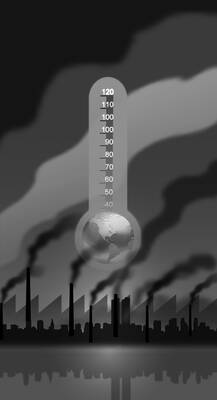
The closure of the Strait of Hormuz has sent the vast Asian chemicals industry into a tailspin. Deprived of the likes of Qatari natural gas and Saudi Arabian oil, the region’s fertilizer and plastics plants are slowing production or even shutting down. Everywhere except China, that is. In petrochemicals, China is unique. As well as a traditional industry that uses oil and gas as feedstock, it has parallel output that relies on its abundant domestic coal. Unsurprisingly, India and other regional powers want to copy and paste the Chinese method. This would not be easy — or climate friendly. The
US President Donald Trump recently repeated his claim that “Taiwan stole America’s chip industry,” reigniting public debate on the issue. As a former Taiwanese minister of economic affairs and an entrepreneur deeply involved in semiconductor supply chain development, I feel a responsibility to clarify this misunderstanding. From the perspective of global industrial evolution and the economic principle of comparative advantage, such a statement appears overly simplistic and risks obscuring the essence of the issue. The rise of Taiwan’s semiconductor industry was not built on “replacing America,” but rather emerged as a result of countries pursuing different development paths within the
The Presidential Office on Saturday reiterated that Taiwan is a sovereign, independent nation after US President Donald Trump said that Taiwan should not “go independent.” “We’re not looking to have somebody say: ‘Let’s go independence because the United States is backing us,’” Trump said in an interview with Fox News aired on Friday. President William Lai (賴清德) on Monday said that the Republic of China (ROC) — Taiwan’s official name — and the People’s Republic of China (PRC) are not subordinate to each other. Speaking at an event marking the 40th anniversary of the establishment of the Democratic Progressive Party (DPP), Lai said


 RSS
RSS