


The fearful witness or victim hiding from a vengeful criminal organization is a common plot for a crime movie. As a former prosecutor I can say that, unlike many other crime movie motifs, the problem of witness protection is a real one. Both individual defendants as well as criminal organizations do not take kindly to witnesses willing to "turn state's evidence"; that is, to testify for the prosecution. The newly-enacted Witness Protection Law creates two new and important tools for the criminal justice system. One of these new tools is the creation of a legal mechanism that will provide a range of police protections for witnesses, the other is the ability of prosecutors to offer grants of immunity to already convicted or indicted defendants for valuable testimony against other criminal suspects. Properly implemented, both will be useful tools for prosecutors and police. For purposes of analysis it is clearer to discuss these two aspects of the Witness Protection Law as two separate issues. Here I will look at the witness protection aspect.
As a matter of legislative drafting it would have been preferable to have two separate pieces of legislation. An ongoing problem with our legal system is the welding together of laws covering different issues into the same "act" or "law." This lumping together of unrelated matters creates problems with interpretation, problems with definition and creates gaps of responsibility among the government agencies responsible for implementation of the laws.
The bulk of the 23 Articles that make up the new law deal with various aspects of the Witness Protection Program. I actually should not use that phrase because what is discussed in the law is not a coherent, unified system of witness protection such as the United States Federal Witness Protection Program, but rather a range of levels of protection that might be provided to witnesses. This protection is provided by whatever agency made the initial application. The fact that many agencies can be involved can and will lead to problems.
What the new law creates is the mechanism by which a witness to a crime or a victim (or both) can seek various forms of protection. This protection can range from "stay away orders" to full relocation and financial aid with all the possibilities in between. The fundamental problem with all of this is that witness/victim protection hinges on the professionalism, responsibility and integrity of the law enforcement officers who are charged with carrying out the witness protection. To put it simply; the witness is relying on the cops. Here in Taiwan that may not be a very good bet.
The problem of witness/victim protection has, in a sense, already arisen. Legislation passed last year increased the rights of victims of spousal abuse. Victims of spousal abuse can now seek court orders that are designed to prevent the other spouse from harassing or further assaulting the victim-spouse. The law was widely praised at the time of its passage. However, as women's rights groups were quick to point out, the legislation has one fundamental flaw: many times the police simply refuse to enforce the court order. The position of the police remains, as it always has, that beating up your wife or husband, is a "family matter" and they won't "interfere" with the "treasured" family relationship. The new Witness Protection Law will suffer the same fate. The law may have changed. The cops haven't.
This problem comes out in another fashion. Consider the following hypothetical: I am fairly high up in the Bamboo Union down in Chaiyi or Yulin County. I decide to turn state's evidence against the Bamboo Union, in particular against some very senior members on some very serious crimes. Now I have to ask myself, can I rely on the police to "protect" me while I wait to testify? Can I rely on them to protect me after I testify, having helped put some senior members of the Bamboo Union in prison? The questions are, in a sense, rhetorical. The answers are obvious.
The solution to this problem is not to have witness protection handled by a plethora of police agencies. In the United States the Witness Protection Program is handled by one agency and one agency only; the US Federal Marshals. For witness protection to be taken seriously here in Taiwan, it needs to be handled by one agency whose professionalism and integrity is extremely high, that is, a law enforcement agency like the US Marshals. Setting up a similar agency here in Taiwan would do two things. It would first provide a reasonable level of security for witnesses and secondly and more broadly it would be a good opportunity to establish a foothold for the advancement of professionalism in Taiwan's law enforcement community.
Brian Kennedy is a board member of Amnesty International Taiwan and the Taiwan Association of Human Rights.
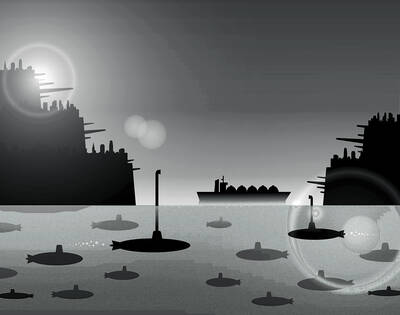
In the event of a war with China, Taiwan has some surprisingly tough defenses that could make it as difficult to tackle as a porcupine: A shoreline dotted with swamps, rocks and concrete barriers; conscription for all adult men; highways and airports that are built to double as hardened combat facilities. This porcupine has a soft underbelly, though, and the war in Iran is exposing it: energy. About 39,000 ships dock at Taiwan’s ports each year, more than the 30,000 that transit the Strait of Hormuz. About one-fifth of their inbound tonnage is coal, oil, refined fuels and liquefied natural gas (LNG),
On Monday, the day before Chinese Nationalist Party (KMT) Chairwoman Cheng Li-wun (鄭麗文) departed on her visit to China, the party released a promotional video titled “Only with peace can we ‘lie flat’” to highlight its desire to have peace across the Taiwan Strait. However, its use of the expression “lie flat” (tang ping, 躺平) drew sarcastic comments, with critics saying it sounded as if the party was “bowing down” to the Chinese Communist Party (CCP). Amid the controversy over the opposition parties blocking proposed defense budgets, Cheng departed for China after receiving an invitation from the CCP, with a meeting with
Chinese Nationalist Party (KMT) Chairwoman Cheng Li-wun (鄭麗文) is leading a delegation to China through Sunday. She is expected to meet with Chinese President Xi Jinping (習近平) in Beijing tomorrow. That date coincides with the anniversary of the signing of the Taiwan Relations Act (TRA), which marked a cornerstone of Taiwan-US relations. Staging their meeting on this date makes it clear that the Chinese Communist Party (CCP) intends to challenge the US and demonstrate its “authority” over Taiwan. Since the US severed official diplomatic relations with Taiwan in 1979, it has relied on the TRA as a legal basis for all
Taiwan ranks second globally in terms of share of population with a higher-education degree, with about 60 percent of Taiwanese holding a post-secondary or graduate degree, a survey by the Organisation for Economic Co-operation and Development showed. The findings are consistent with Ministry of the Interior data, which showed that as of the end of last year, 10.602 million Taiwanese had completed post-secondary education or higher. Among them, the number of women with graduate degrees was 786,000, an increase of 48.1 percent over the past decade and a faster rate of growth than among men. A highly educated population brings clear advantages.


 RSS
RSS