


War is widely thought to be linked to economic good times. World War II is often said to have brought the world out of the Great Depression, and war has since enhanced its reputation as a spur to economic growth. Some even suggest that capitalism needs wars, that without them, recession would always lurk on the horizon.
Today, we know that these propositions are nonsense. The 1990s boom showed that peace is economically far better than war. The Gulf War of 1991 demonstrated that wars can actually be bad for an economy. That conflict contributed mightily to the onset of the recession of 1991 (which, it should be remembered, was probably the key factor in denying former US president George Bush re-election in 1992).

ILLUSTATION: MOUNTAIN PEOPLE
The current situation is far more akin to the Gulf War than to wars that may have contributed to economic growth. Indeed, the economic effects of a second war against Iraq would probably be far more adverse. World War II called for total mobilization, and it was that total mobilization, requiring a country's total resources, that wiped out unemployment. Total war means total employment.
By contrast, the direct costs of a military attack on Iraqi President Saddam Hussein's regime will be minuscule in terms of total US government spending. Most analysts put the total costs of the war at less than 0.1 percent of America's GDP, the highest at 0.2 percent of GDP. Much of that, moreover, includes the usage of munitions that already exist, implying that little or no stimulus will be provided to today's economy.
The US President George W. Bush administration's (admittedly wavering) commitment to fiscal prudence means that much, perhaps most, of the war costs will be offset by expenditure cuts elsewhere. Investments in education, health, research and the environment will almost inevitably be crowded out. Accordingly, war will be unambiguously bad in terms of what really counts -- the standard of living of ordinary people.
America will thus be poorer, both now and the future. Obviously, if this military adventure were in fact necessary to maintain security or to preserve freedom, as its advocates and promoters proclaim -- and if it were to prove as successful as its boosters hope -- then the cost might still be worth it. But that is another matter. I want to debunk the idea that it is possible both to achieve the war's ends and benefit the economy. There is also the uncertainty factor. Of course, resolving uncertainty is no reason to invade Iraq prematurely, for the costs of any war are high, and are not to be measured only, or primarily, in economic terms. Innocent lives will be lost -- possibly far more than were lost on Sept. 11. But the wait for war adds to uncertainties that already weigh on the US, and the global, economy.
First of all their are uncertainties arising from the US' looming fiscal deficit, due to macroeconomic mismanagement and a tax cut that the country cannot afford. Uncertainties arising from the unfinished "war on terrorism." Uncertainties associated with the massive corporate accounting and banking scandals, and the Bush administration's half-hearted efforts at reform, as a result of which no one knows what America's corporations are worth. We must take into account uncertainties connected to the US' massive trade deficit, which has reached all-time records. Will foreigners be willing to continue to lend to the US, with all of its problems, at a rate in excess of a billion dollars a day?
There are also uncertainties associated with Europe's stability pact. Will it survive, and will it be good for Europe if it does?
Finally, there are the uncertainties associated with Japan -- will it at long last fix its banking system, and if it does, how negative will be the short-term impact?
Some suggest that the US may be going to war to maintain steady oil supplies, or to advance its oil interests. Few can doubt the influence that oil interests have on Bush -- witness the administration's energy policy, with its emphasis on expanding oil production rather than conservation. But even from the perspective of oil interests, war against Iraq is a risky venture. Not only is the impact on price, and therefore on oil company prices, highly uncertain, but other oil producers, including Russian and European interests, will not easily be ignored.
Indeed, should the US go to war, no one can predict the effect on oil supplies. A peaceful, democratic Iraqi regime could be established. Desperate for funds for reconstruction, that new regime could sell large amounts of oil, lowering global oil prices. Domestic US oil producers, as well as those in allied countries, such as Mexico and Russia, would be devastated, though users of oil around the world would benefit enormously. Or the turmoil throughout the Muslim world could lead to disruptions of oil supplies, with high prices the result. This will please oil producers in other parts of the world, but will have enormously adverse consequences for the global economy, akin to those resulting from the oil price hikes in 1973. Whichever way one looks at it, the economic effects of war with Iraq will not be good. Markets loathe uncertainty and volatility. War, and anticipation of war, bring both. We should be prepared for them.
Joseph Stiglitz is professor of economics and finance at Columbia University and the winner of the 2001 Nobel Prize in Economics.
Copyright: Project Syndicate
Minister of Labor Hung Sun-han (洪申翰) on April 9 said that the first group of Indian workers could arrive as early as this year as part of a memorandum of understanding (MOU) between the Taipei Economic and Cultural Center in India and the India Taipei Association. Signed in February 2024, the MOU stipulates that Taipei would decide the number of migrant workers and which industries would employ them, while New Delhi would manage recruitment and training. Employment would be governed by the laws of both countries. Months after its signing, the two sides agreed that 1,000 migrant workers from India would
In recent weeks, Taiwan has witnessed a surge of public anxiety over the possible introduction of Indian migrant workers. What began as a policy signal from the Ministry of Labor quickly escalated into a broader controversy. Petitions gathered thousands of signatures within days, political figures issued strong warnings, and social media became saturated with concerns about public safety and social stability. At first glance, this appears to be a straightforward policy question: Should Taiwan introduce Indian migrant workers or not? However, this framing is misleading. The current debate is not fundamentally about India. It is about Taiwan’s labor system, its
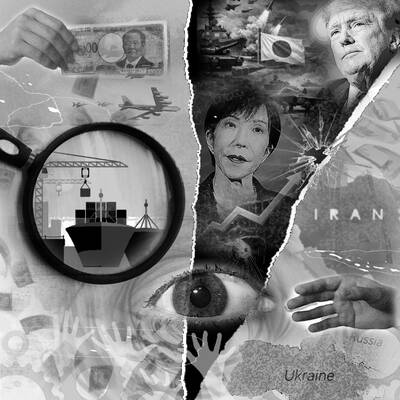
Japan’s imminent easing of arms export rules has sparked strong interest from Warsaw to Manila, Reuters reporting found, as US President Donald Trump wavers on security commitments to allies, and the wars in Iran and Ukraine strain US weapons supplies. Japanese Prime Minister Sanae Takaichi’s ruling party approved the changes this week as she tries to invigorate the pacifist country’s military industrial base. Her government would formally adopt the new rules as soon as this month, three Japanese government officials told Reuters. Despite largely isolating itself from global arms markets since World War II, Japan spends enough on its own
On March 31, the South Korean Ministry of Foreign Affairs released declassified diplomatic records from 1995 that drew wide domestic media attention. One revelation stood out: North Korea had once raised the possibility of diplomatic relations with Taiwan. In a meeting with visiting Chinese officials in May 1995, as then-Chinese president Jiang Zemin (江澤民) prepared for a visit to South Korea, North Korean officials objected to Beijing’s growing ties with Seoul and raised Taiwan directly. According to the newly released records, North Korean officials asked why Pyongyang should refrain from developing relations with Taiwan while China and South Korea were expanding high-level


 RSS
RSS