


Eighteen-year-old Erika Hotta and her mother Keiko scan the women's clothing section at Nagoya's main branch of Matsuzakaya, the biggest department store in Japan, on a recent weekday.
The pair shop at this upscale retailer several times a month. Tucked in a bag under 49-year-old Keiko's arm is a T-shirt and fancy pair of pants for her daughter that cost over 20,000 yen (US$200).

PHOTO: AFP
"We always buy something," says a giggling Keiko, whose husband works for a parts maker for local automotive giant Toyota. "We spend a lot of money."
The vibrant local economy is part of what led Matsuzakaya last September to boost its floor space at the Nagoya main branch, making it the largest in the nation, before closing two stores in Osaka, the hub of western Japan, 150km away.
As this central Japanese region prepares to host the world Expo 2005 next summer and a new international airport opens nearby in February, Nagoya, a city of 2.2 million once considered a dull backwater, is taking on a new shine.
Boring, stingy, painstaking; the same words used to ridicule Japan's fourth largest city -- skipped by the early morning Tokyo-to-Osaka bullet train in the mid-1990s -- are now being hailed as traits to admire.
"Nagoya rules Japan," the respected weekly magazine Aera declared in a recent special on the city and its produce. Another magazine Dime went even further: "Nagoya is at the center of the world."
"No one used to pay attention to us because Nagoya is between Tokyo and Osaka," said Atsushi Nakagaki, a 66-year-old pensioner, looking at the almost finished Centrair airport, built over 470 hectares in Ise Bay.
"But next year we will host the expo and the airport will open. It will be a year to remember. From now on, people from all over the world will come directly here," he said.
Whether it is the latest fashions, the curly-flip hairstyle of Nagoya-jo(Nagoya daughters), or where to eat the best miso-sauce-covered pork cutlet dish, a local invention, everything about Nagoya is suddenly cool.
The local tradition of bargain-hunting, frowned upon in Japan's boom days of the late 1980s, but sensible after more than a decade of economic stagnation, is now chic nationwide.
"Tokyo used to be the starting point for all trends," said Kazutoshi Torita, a senior manager at Komehyo, a used goods retailer that opened its newest branch in Tokyo in March.
"But a lot of things have started coming out of Nagoya and going the other way."
Nagoya's new status began as the local economy, fuelled by nearby Toyota and its directly employed 40,000 local workers, moved into higher gear several years ago while the rest of Japan stagnated.
Among the thriftiest savers in the nation with low debts and a high aversion to risk, Nagoyans were spared the pain of the asset inflation bubble's burst in the early 1990s, analysts said.
"The cut did not spread wider," said UFJ Institute economist Toshihiro Uchida.
"Even when Osaka and Tokyo were contracting after the bubble, Nagoya continued to invest gradually at the same pace as before," he said. "Nagoya's investment appeared to rise up because other regions were all falling."
"There are a lot of solid businesses in the region that did not get burned after the bubble burst," said Matsuzakaya spokesman Makoto Ito. "The so-called Nagoya-jo who live in those workers homes are rich and can spend money freely."
The booming economy has also given local residents more confidence.
After decades of insisting that his Yabaton miso-katsu pork cutlet had to be eaten in Nagoya, owner Takayuki Suzuki, 57, opened a shop in Tokyo in March and immediately enjoyed thriving sales.
"Now I even want to open up in America," he said, sitting down in his restaurant after a thronging lunch-hour crowd subsided.
Another reputed Nagoyan trait -- a stoic, heads-down work ethic -- which experts say stems from when the region was the center of chaotic civil warfare of the 16th century, has taken on a new glow.
"Local people learned that the only one you could rely on was yourself or your family," said Yoshifumi Iwanaka, the author of the non-fiction book Nagoya-gaku ("Nagoya-osophy"), which delves into the truth behind local stereotypes. "Now the Nagoya-way is being praised."
But analysts warned taking the safe path would not always keep Nagoya on top.
"When prices in Japan start to rise, I think this region may be buried," said economist Uchida. "Local businesses have really got to take adequate risks otherwise they will have no returns."
Author Iwanaka said the spurt of attention prompted by Nagoya's thrifty virtues could be shortlived if the good times roll across Japan again.
"Next year there is the expo, so it will still be in the spotlight," he said. But he said the blood-and-sweat approach to work that kept the manufacturing base afloat will lose its luster as Japan's export-led recovery begins to be felt in other major cities.
"The better the economy does, the less attention people will pay Nagoya."
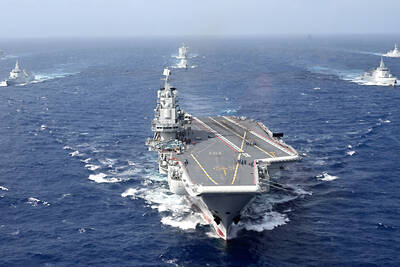
PROVOCATIVE: Chinese Deputy Ambassador to the UN Sun Lei accused Japan of sending military vessels to deliberately provoke tensions in the Taiwan Strait China denounced remarks by Japan and the EU about the South China Sea at a UN Security Council meeting on Monday, and accused Tokyo of provocative behavior in the Taiwan Strait and planning military expansion. Ayano Kunimitsu, a Japanese vice foreign minister, told the Council meeting on maritime security that Tokyo was seriously concerned about the situation in the East China and South China seas, and reiterated Japan’s opposition to any attempt to change the “status quo” by force, and obstruction of freedom of navigation and overflight. Stavros Lambrinidis, head of the EU delegation to the UN, also highlighted South China Sea

SILENCING CRITICS: In addition to blocking Taiwan, China aimed to prevent rights activists from speaking out against authoritarian states, a Cabinet department said The Ministry of Foreign Affairs (MOFA) yesterday condemned transnational repression by Beijing after RightsCon, a major digital human rights conference scheduled to be held in Zambia this week, was abruptly canceled due to Chinese pressure over Taiwanese participation. This year’s RightsCon, the world’s largest conference discussing issues “at the intersection of human rights and technology,” was scheduled to take place from tomorrow to Friday in Lusaka, and expected to draw 2,600 in-person attendees from 150 countries, along with 1,100 online participants. However, organizers were forced to cancel the event due to behind-the-scenes pressure from China, the ministry said, expressing its “strongest condemnation”
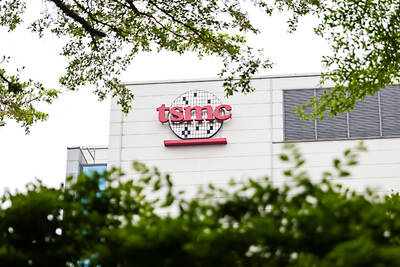
Taiwan Semiconductor Manufacturing Co (TSMC, 台積電), the world’s largest contract chipmaker, said it expects its 2-nanometer (2nm) chip capacity to grow at a compound annual rate of 70 percent from this year to 2028. The projection comes as five fabs begin volume production of 2-nanometer chips this year — two in Hsinchu and three in Kaohsiung — TSMC senior vice president and deputy cochief operating officer Cliff Hou (侯永清) said at the company’s annual technology symposium in Silicon Valley, California, last week. Output in the first year of 2-nanometer production, which began in the fourth quarter of last year, is expected to
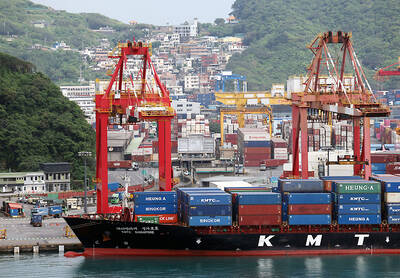
Taiwan’s economy grew far faster than expected in the first quarter, as booming demand for artificial intelligence (AI) applications drove a surge in exports, spilling over into investment and consumption, the Directorate-General of Budget, Accounting and Statistics (DGBAS) said yesterday. GDP growth was 13.69 percent year-on-year during the January-to-March period, beating the DGBAS’ February forecast by 2.23 percentage points and marking the most robust growth in nearly four decades, DGBAS senior official Chiang Hsin-yi (江心怡) told a news conference in Taipei. The result was powered by exports, which remain the backbone of Taiwan’s economy, Chiang said. Outbound shipments jumped 51.12 percent year-on-year to


 RSS
RSS