


On June 6, Citibank Taiwan Ltd marked its 21st Citi Global Community Day, bringing together employees and their families to support conservation efforts along the Xindian River in Greater Taipei. Volunteers took part in hands-on initiatives to enhance river biodiversity, including creating safe upstream passage for migrating crabs and removing invasive plant species. New Taipei City Water Resources Department Director Sung De-ren (宋德仁) attended the event in support.
“Citi has been deeply rooted in Taiwan for many years. Beyond delivering comprehensive financial services and supporting Taiwanese companies in expanding globally, we are equally committed to giving back to the communities we serve," Citi country officer for Taiwan and Citibank Taiwan chairwoman Christie Chang (張聖心) said.
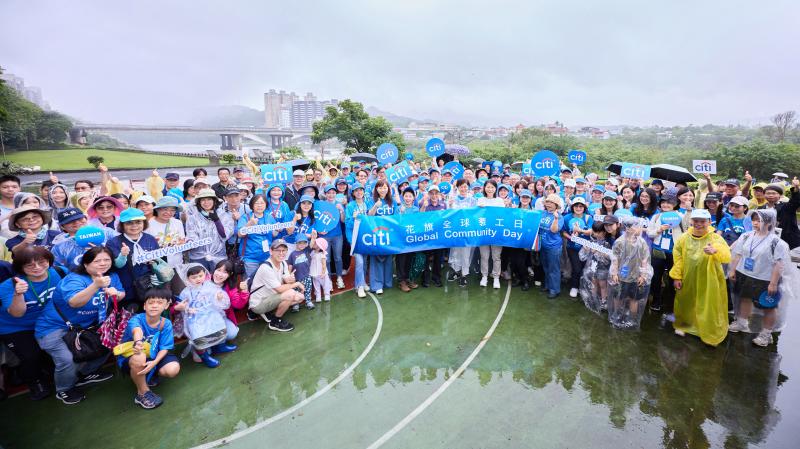
Photo courtesy of Citibank Taiwan Ltd
"Around the world, many great cities are defined by the rivers that sustain urban life and carry cultural heritage. This year, we are channeling our volunteer efforts into protecting the ecosystem of the Xindian River. As the river continues to flow through Taipei, witnessing the city’s growth and transformation, it reflects Citi’s long-standing commitment to supporting Taiwanese enterprises. We remain a steadfast partner across changing economic cycles and industries,” Chang said.
The mitten crab is an important migratory species that travels upstream each year from estuarine areas to freshwater habitats to reproduce. As June marks the peak migration season, Citi volunteers helped the crabs overcome elevation barriers at the Bitan Weir along the Xindian River.
By installing burlap bags and rope pathways along the weir, they created a crab-friendly passage to support safe upstream migration. In addition, volunteers, guided by ecological experts, worked along the riverbanks to remove invasive plant species, which have crowded out native vegetation. These efforts help restore space for indigenous plant life and support the regeneration of the river’s ecosystem.
Citi’s commitment to Taiwan extends beyond a single day of volunteer service and is reflected in the Citi Foundation’s long-term investment in local communities. Since 2004, the Citi Foundation has contributed more than NT$385 million (USD$12 million) in Taiwan, partnering with local nonprofit organizations to support financial education, youth employability, and programs serving underserved populations.
In 2025, Taiwan-based nonprofit One-Forty was selected as a recipient of the Citi Foundation’s Global Innovation Challenge for its efforts in enhancing the employability of Southeast Asian migrant workers in Taiwan over two years by building a comprehensive offline-to-online learning system, powered by AI career development tools.
In 2024, the Citi Foundation named Yo-Wash Care Association as a recipient of the Global Innovation Challenge to address homelessness, connecting individuals experiencing homelessness in Taiwan with professional development training, employment opportunities and mental health support for preparing their comeback to society.
Citi Global Community Day is a flagship annual initiative of Citigroup. From early efforts focused on providing essential supplies to vulnerable families, to more recent initiatives including overseas shoe donations, therapy dog programs, food security, marine debris cleanup, and now river ecosystem conservation, Citi Global Community Day continues to evolve in response to Taiwan’s social and environmental needs—demonstrating Citi’s long-standing commitment to growing alongside the communities it serves.


Taiwanese firms have increased investment in the Philippines in recent years as Manila’s ties with Washington deepen and global supply chains continue to shift away from China, an expert at the Chung-Hua Institution for Economic Research (CIER, 中華經濟研究院) said yesterday. The Philippines had not been among Taiwanese investors’ top choices in Southeast Asia, CIER Taiwan ASEAN Studies Center director Kristy Hsu (徐遵慈) said at a seminar in Taipei. However, Taiwan’s investment in the country has grown significantly since the COVID-19 pandemic, reaching US $257 million last year, a high in recent years, she said. Although Taiwan’s total investment in the Philippines still lags
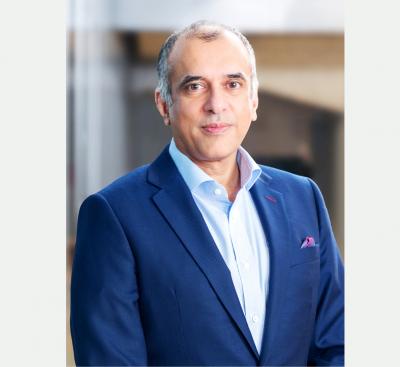
HSBC Holdings PLC is deepening its commitment to Taiwan as the economy emerges as one of the bank’s fastest-growing markets globally, driven by an artificial intelligence (AI) investment boom, expanding cross-border trade, and rising wealth creation. “The advantage that Taiwan has is a growth story linked to the semiconductor and broader AI industries, strong underlying corporate performance, and wealth creation,” said Surendra Rosha, HSBC’s co-chief executive for Asia and the Middle East, in an exclusive interview with the Taipei Times on June 2, during this year’s HSBC Taiwan Conference. That combination has helped HSBC cement its position as the most profitable international

Intel Corp regards Taiwan Semiconductor Manufacturing Co (TSMC, 台積電) as a longstanding partner, as the US chipmaker would continue outsourcing production of advanced chips to TSMC, Intel chief executive officer Lip-Bu Tan (陳立武) said yesterday. “I don’t look at people as competitors. I look at the collaboration... Nvidia is also, you know, a good friend,” Tan told a news conference following his keynote speech at the Computex trade show in Taipei. “It’s a very trusted partnership for us... We are a big, top customer for them, and we’re going to continue doing that,” he said, referring to TSMC, the world’s largest foundry

Hon Hai Precision Industry Co (鴻海精密) yesterday said it would work with US chipmaker Intel Corp to jointly develop and deploy next-generation artificial intelligence (AI) infrastructure and intelligent computing platforms in a move to capture booming demand for AI computing systems. Hon Hai, also known as Foxconn Technology Group (富士康), said in a statement that the partnership would combine its global manufacturing scale, system integration expertise and AI data center deployment capabilities with Intel’s strengths in processor architecture, silicon technologies and software ecosystem. The companies said they plan to work on equipment used in AI data centers, including server racks powered by


 RSS
RSS