


Taiwan’s business sentiment improved across manufacturing, services and construction last month, as resilient artificial intelligence (AI) demand helped cushion the economy from geopolitical uncertainty in the Middle East, the Taiwan Institute of Economic Research (TIER, 台灣經濟研究院) said yesterday.
The institute’s manufacturing business climate gauge rose 0.93 points from a month earlier to 97.14, while the services index increased 0.54 points to 96.73. The construction sector gauge rose 2.6 points to 94.67, ending three consecutive months of decline.
“The worst moment has already passed,” TIER Economic Forecasting Center director Gordon Sun (孫明德) said at a news conference in Taipei, adding that the economic impact of Middle East tensions was slowly fading.
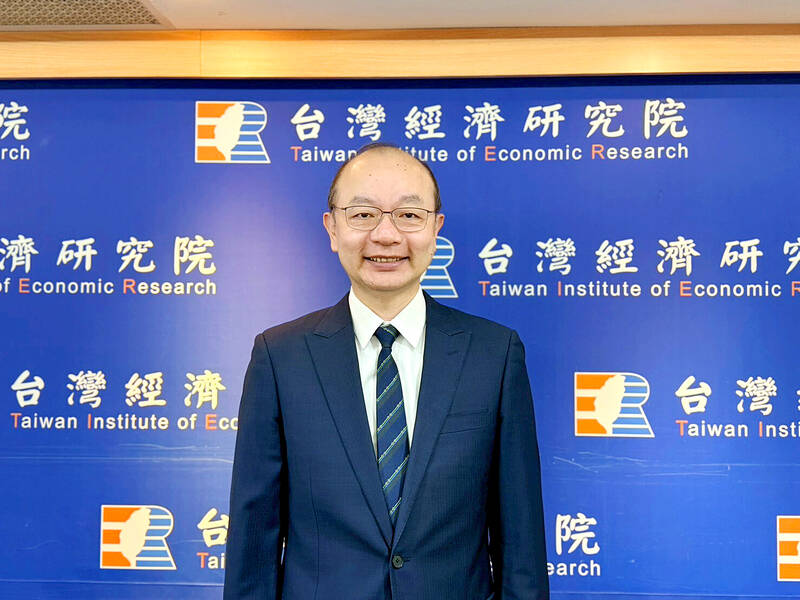
Photo courtesy of the Taiwan Institute of Economic Research
Taiwan’s economy is being supported by four main drivers, led by strong AI-related demand that continues to bolster the information and communications technology sector, Sun said.
Higher raw material prices triggered by Middle East tensions have encouraged inventory replenishment and advance orders, supporting business activity, he said.
The AI boom is driving demand for factories, office space and industrial equipment, helping sustain export orders and shipments in Taiwan’s trade-dependent economy.
Sun referred to comments by Advanced Micro Devices Inc chief executive officer Lisa Su (蘇姿丰), who compared the AI boom to a baseball game still in the “third inning,” as an indication that the industry’s long-term growth cycle remained intact.
Domestic consumption has remained firm, supported by elevated equity markets, AI-linked wage growth and bonus payouts, he said.
Although geopolitical risks remain, markets have largely adjusted for the shock and are focusing more on possible US-Iran peace negotiations, he said.
Taiwan’s economic growth forecast could be revised upward if AI demand continues to accelerate, with investors closely watching whether the supply chain remains “very busy” in the second half of this year, Sun said.
However, the property market remains subdued.
TIER Taiwan Industry Economics Database director Arisa Liu (劉佩真) said the gap between strong equities and weak housing reflects the central bank’s tight credit controls, which have limited capital flowing into real estate.
Investors have shifted toward stocks due to higher returns and liquidity, while expectations of a neutral-to-tight monetary stance are weighing on housing sentiment, Liu said.
Although transactions are likely to remain weak in the near term, high land acquisition and construction waste disposal costs are helping support property prices, leaving buyers and sellers in a standoff, she said.
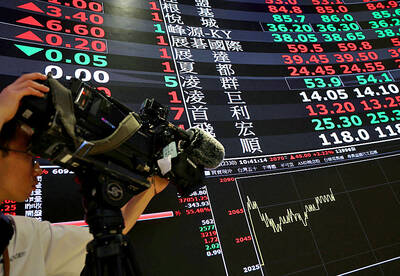
After several years flying high as Asia’s best Nvidia Corp proxy, Taiwan Semiconductor Manufacturing Co (TSMC, 台積電) is increasingly vying with other artificial intelligence (AI) stocks for investor attention. Stock traders are chasing a wider array of beneficiaries as mainstream usage of AI creates demand for hardware beyond the most-advanced chips TSMC makes for Nvidia. Subthemes from the deepening memory crunch to advances in robotics are also luring bids. At the same time, investment caps on single stocks are pushing funds to diversify, while retail investors long familiar with TSMC through its US depositary receipts are being offered a broader set of
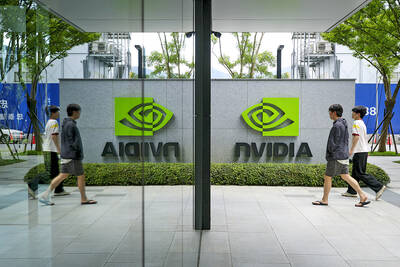
UNDER MICROSCOPE: Taiwan detained three people who allegedly conspired to buy servers in Taiwan and export them using fraudulent documentation, prosecutors said Nvidia Corp chief executive officer Jensen Huang (黃仁勳) on Saturday urged Super Micro Computer Inc to tighten up on compliance after Taiwan detained three people this week for allegedly making fraudulent declarations about artificial intelligence (AI) servers made by its US partner. The development marked the nation’s first crackdown on semiconductor smuggling, which grew after the US slapped restrictions on exports of high-end chips such as Nvidia AI accelerators to China. Nvidia is “rigorous” in explaining regulations to all of its partners, Huang told reporters after arriving in Taipei. “Ultimately Super Micro has to run their own company,” he said in response to
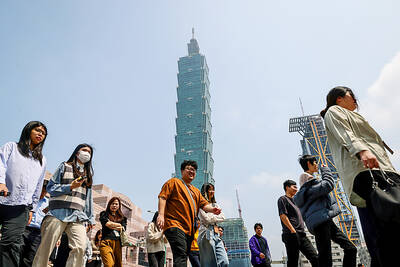
TECH RELIANCE: Growth is increasingly reflecting an unequal K-shaped distribution, where technology sectors outperform and other industries struggle, an expert said Standard Chartered Bank has significantly raised its forecast for Taiwan’s economic growth to 9.5 percent this year, up from 7.6 percent previously, citing surging artificial intelligence (AI) demand driving exports, semiconductor production and investment. The upgrade reflects a sustained AI supercycle that continues to fuel demand for advanced chips and technology infrastructure, which form the backbone of Taiwan’s exports, the bank said in a report this week. “We raise our 2026 growth forecast to reflect a much stronger-than-expected first-quarter GDP figure,” Standard Chartered senior economist for greater China and Asia Tommy Wu (胡東安) said in the report. Driven largely by a 35.3 percent
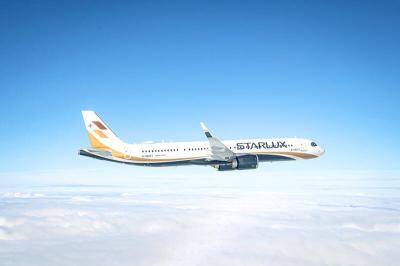
Two of Taiwan’s international carriers, Starlux Airlines Co (星宇航空) and EVA Airways Corp (長榮航空), have retained the five-star airline rating awarded by international airline review organization Skytrax. Starlux was awarded the distinction for a second consecutive year, while EVA Air received it for the 11th straight year, Skytrax said in statements released yesterday and on Thursday last week, respectively. The five-star rating is considered one of the airline industry's highest honors and is awarded following professional audits of airline product and frontline service standards, Skytrax said. The ratings are based on in-depth assessments using unified global quality standards rather than customer review scores


 RSS
RSS