


Stomach bugs on cruise ships hit a nearly two-decade high as more people than ever board the vessels, underscoring how easily viruses spread on contained voyages.
While cruises are in a global spotlight after a rare hantavirus outbreak killed three people on a cruise ship last month, mild gastrointestinal illnesses are far more common on ships. They have risen for the last four years to the highest since 2007, according to data from the US Centers for Disease Control and Prevention’s Vessel Sanitation Program. The data tracks ships with 13 or more passengers with foreign itineraries that dock at one or more US ports.
The Vessel Sanitation Program tracks the number of gastrointestinal outbreaks that cruise ships report every year, defined as situations when more than 3 percent of people on board have some kind of stomach illness.
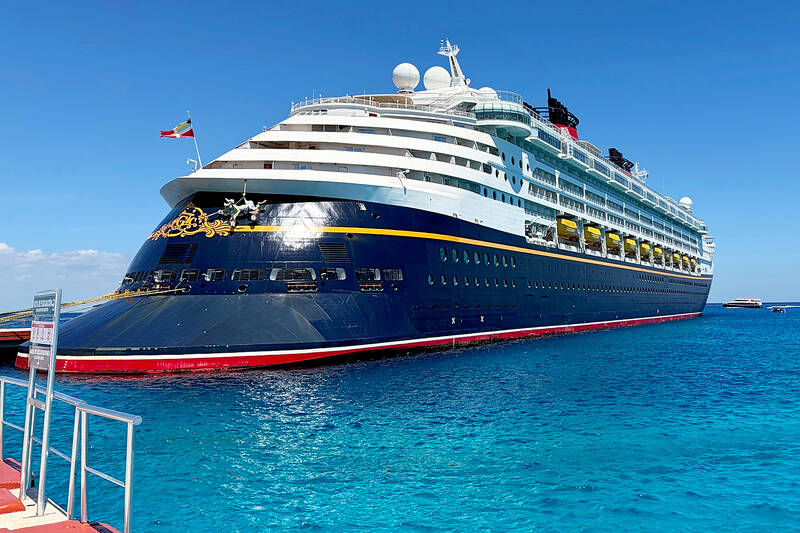
Photo: AP
A new variant of the stealthy norovirus in 2006 led to a sharp increase in outbreaks on ships. They later declined but the number of such outbreaks has risen since the pandemic period and last year reached 23, the highest number since 2007, according to CDC data.
A new strain was associated with outbreaks on land last year, according to a CDC spokesperson. January through mid-May last year saw the number of stomach flu outbreaks reach 17 on cruise ships, but that number has fallen to four in that same period this year, the spokesperson said.
Passengers and crew from the MV Hondius are returning home throughout the world after the deadly outbreak of the Andes strain of hantavirus spread on the ship last month.
The ship did not dock at a US port, but caught the attention of people across the world.
The incident brought back memories of the cruise ship quarantined off the coast of Japan in 2020 during the COVID-19 pandemic.
Most cruises halted voyages during the height of the COVID-19 pandemic, but the industry has rebounded hard. Global cruise passenger volume reached a record 37 million last year, with demand expected to persist into this year, according to the Cruise Lines International Association.
Health concerns in the past have not dented demand and advance bookings at Carnival Corp and Royal Caribbean Cruises Ltd are holding up this year, said Jaime Katz, an analyst at Morningstar Inc.
“There’s an initial hesitation on booking until consumers are able to distill the magnitude of the impact of that outbreak,” she said.
Carnival and Royal Caribbean did not respond to requests for comment. Norwegian Cruise Line Holdings Ltd referred questions to the Cruise Lines International Association.
Cruise ships operate under strict mandatory reporting that makes outbreaks more visible and illness rates on-board remain below hospitality settings on land, the association said in a statement.
“If you’re going on a cruise, you need to recognize the risk is higher,” said Abraar Karan, an instructor in the division of infectious diseases at Stanford University.
Dense socializing spaces, as well as shared food and water systems, can accelerate the spread of diseases, while limited medical equipment and staffing make curbing infections harder, he said.
The average cruise-goer is older and may be more likely to pick up infections, said Karan, who recommends wearing a mask on ships where respiratory illness is found and washing your hands.
“Cruises are a lot of fun,” he said. “But that’s just part of the trade-off.”
Shares of contract chipmaker Taiwan Semiconductor Manufacturing Co (TSMC, 台積電) came under pressure yesterday after a report that Apple Inc is looking to shift some orders from the Taiwanese company to Intel Corp. TSMC shares fell NT$55, or 2.4 percent, to close at NT$2,235 on the local main board, Taiwan Stock Exchange data showed. Despite the losses, TSMC is expected to continue to benefit from sound fundamentals, as it maintains a lead over its peers in high-end process development, analysts said. “The selling was a knee-jerk reaction to an Intel-Apple report over the weekend,” Mega International Investment Services Corp (兆豐國際投顧) analyst Alex Huang
Taiwan Semiconductor Manufacturing Co (TSMC, 台積電) is expected to remain Apple Inc’s primary chip manufacturing partner despite reports that Apple could shift some orders to Intel Corp, industry experts said yesterday. The comments came after The Wall Street Journal reported on Friday that Apple and Intel had reached a preliminary agreement following more than a year of negotiations for Intel to manufacture some chips for Apple devices. Taiwan Institute of Economic Research (台灣經濟研究院) economist Arisa Liu (劉佩真) said TSMC’s advanced packaging technologies, including integrated fan-out and chip-on-wafer-on-substrate, remain critical to the performance of Apple’s A-series and M-series chips. She said Intel and Samsung
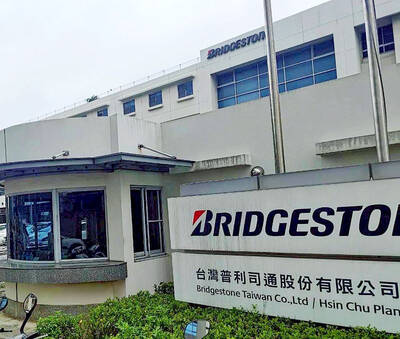
TRANSITION: With the closure, the company would reorganize its Taiwanese unit to a sales and service-focused model, Bridgestone said Bridgestone Corp yesterday announced it would cease manufacturing operations at its tire plant in Hsinchu County’s Hukou Township (湖口), affecting more than 500 workers. Bridgestone Taiwan Co (台灣普利司通) said in a statement that the decision was based on the Tokyo-based tire maker’s adjustments to its global operational strategy and long-term market development considerations. The Taiwanese unit would be reorganized as part of the closure, effective yesterday, and all related production activities would be concluded, the statement said. Under the plan, Bridgestone would continue to deepen its presence in the Taiwanese market, while transitioning to a sales and service-focused business model, it added. The Hsinchu
Taiwan Semiconductor Manufacturing Co (TSMC, 台積電) has approved a capital budget of US$31.28 billion for production expansion to meet long-term development needs during the artificial intelligence (AI) boom. The company’s board meeting yesterday approved the capital appropriation plan for purposes such as the installation of advanced technology capacity and fab construction, the world’s largest contract chipmaker said in a statement. At an earnings conference last month, TSMC forecast that its capital expenditure for this year would be at the higher end of the US$52 billion to US$56 billion range it forecast in January in response to robust demand for 5G, AI and


 RSS
RSS