


Super Micro Computer Inc on Tuesday reported improved margins and gave a profit forecast that suggested it is controlling the costs of getting powerful artificial intelligence (AI) servers into customers’ hands.
Earnings, excluding some items, would be US$0.65 to US$0.79 a share in the period ending June 30, while quarterly revenue would be US$11 billion to US$12.5 billion, Super Micro said in a statement.
Analysts polled by Bloomberg projected, on average, profit of US$0.57 a share on sales of US$11.2 billion.
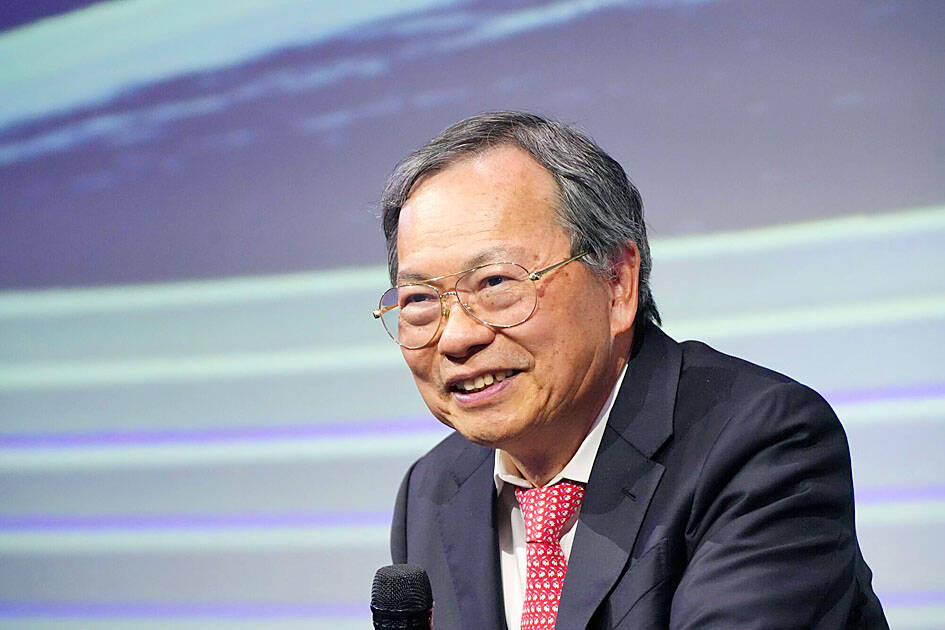
Photo: Bloomberg
The sale of the company’s servers fitted with Nvidia Corp chips have surged as customers seek to expand their ability to train and run AI tasks. As new versions of Nvidia’s processors roll out, Super Micro and its competitors, such as Dell Technologies Inc and Hewlett Packard Enterprise Co, are spending to win contracts and to speed new products to clients.
A recent legal cloud had also raised the specter that Super Micro’s clients might switch to other vendors. The forecast indicates that so far demand remains positive in a market where supply is constrained, limiting buying options.
The company also reported adjusted gross margin of 10.1 percent last quarter, which ended on March 31. That topped analysts’ estimates of 6.75 percent.
Adjusted profit was US$0.84 a share, compared with analysts’ average estimate of US$0.63.
“Our margin recovery and the rapid growth of our DCBBS [Data Center Building Block Solutions] business demonstrate that our business remains robust,” Super Micro CEO Charles Liang (梁見後) said in the statement, referring to the company’s unit selling combined hardware, software and services offerings.
“With the addition of our new US manufacturing facilities in Silicon Valley, we are exceptionally well-positioned to meet the massive demand,” he said.
The DCBBS, unit offers products that blend multiple types of equipment such as chips, networking and cooling, as well as software for managing backup batteries and controlling large numbers of server racks.
The offerings are helping Super Micro sell more to clients and generate more profit, Liang said during a conference call with analysts after the results were released.
DCBBS “will soon contribute more than 25 percent of our total profit in the coming few years.” he said.
In March, US prosecutors charged Super Micro cofounder Liaw Yih-shyan (廖益賢) with illegally diverting billions of US dollars in Nvidia-powered servers to China, in contravention of US export controls. Super Micro is not named as a defendant.
The San Jose, California-based company has said it is cooperating with authorities and put Liaw, who stepped down from the board, on administrative leave.
The company also named DeAnna Luna as chief compliance officer. Prior to joining the company in 2024, she oversaw export licensing at Intel Corp.
“I am personally shocked and saddened by these alleged actions,” Liang said on the call.
Revenue from last quarter more than doubled to US$10.2 billion, compared with analysts’ average estimate of US$12.4 billion.
Sales were hurt by delays at some clients, Liang said on the call, without naming them.
“This is purely a short-term delay,” he said. “Several customer sites were not yet equipped with the power and networking required for their cloud deployment, and we expect to capture this revenue in the coming quarters.”
Sales would be US$38.9 billion to US$40.4 billion in the current fiscal year, Super Micro said.
The company had previously said it would generate US$40 billion in annual revenue.
After several years flying high as Asia’s best Nvidia Corp proxy, Taiwan Semiconductor Manufacturing Co (TSMC, 台積電) is increasingly vying with other artificial intelligence (AI) stocks for investor attention. Stock traders are chasing a wider array of beneficiaries as mainstream usage of AI creates demand for hardware beyond the most-advanced chips TSMC makes for Nvidia. Subthemes from the deepening memory crunch to advances in robotics are also luring bids. At the same time, investment caps on single stocks are pushing funds to diversify, while retail investors long familiar with TSMC through its US depositary receipts are being offered a broader set of
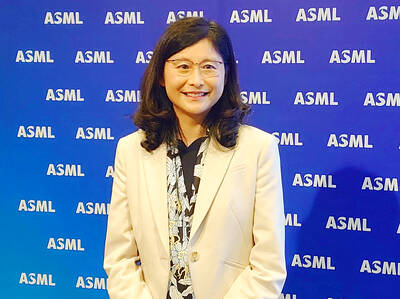
Netherlands-based semiconductor equipment supplier ASML Holding NV yesterday said that it is planning to hire an additional 1,000 people in Taiwan this year in response to growing demand from clients. ASML had previously planned to recruit 600 people this year, but that the plan has been adjusted upward, ASML vice president and ASML Taiwan general manager Grace Wang (汪佳慧) told reporters. ASML has a workforce of more than 4,500 in Taiwan, accounting for about 10 percent of its global total, Wang said. This year’s recruitment campaign would focus on adding people in the customer support, manufacturing and supply chain domains to assist ASML
UNDER MICROSCOPE: Taiwan detained three people who allegedly conspired to buy servers in Taiwan and export them using fraudulent documentation, prosecutors said Nvidia Corp chief executive officer Jensen Huang (黃仁勳) on Saturday urged Super Micro Computer Inc to tighten up on compliance after Taiwan detained three people this week for allegedly making fraudulent declarations about artificial intelligence (AI) servers made by its US partner. The development marked the nation’s first crackdown on semiconductor smuggling, which grew after the US slapped restrictions on exports of high-end chips such as Nvidia AI accelerators to China. Nvidia is “rigorous” in explaining regulations to all of its partners, Huang told reporters after arriving in Taipei. “Ultimately Super Micro has to run their own company,” he said in response to

Nvidia Corp yesterday announced that CEO Jensen Huang (黃仁勳) would attend an employee meeting in Taipei tomorrow to celebrate the launch of the company’s Taiwan headquarters project. Huang would attend a gathering at the site of Nvidia’s planned headquarters in Beitou Shilin Technology Park (北投士林科技園區), the company said in a statement. After arriving in Taiwan on Saturday last week, Huang told reporters that he plans to meet with Quanta Computer Inc (廣達) chairman Barry Lam (林百里) and Taiwan Semiconductor Manufacturing Co (TSMC, 台積電) chairman C.C. Wei (魏哲家), and would attend the groundbreaking ceremony for Nvidia’s Taiwan headquarters tomorrow. Nvidia has not yet applied


 RSS
RSS