


Taiwan’s manufacturing sector expanded at its fastest pace in more than three years last month, as Middle East tensions pushed up raw material costs and prompted firms to accelerate orders, while sustained demand for artificial intelligence (AI) and semiconductors continued to underpin production, the Chung-Hua Institution for Economic Research (CIER, 中華經濟研究院) said yesterday.
The manufacturing purchasing managers’ index (PMI) rose 4.9 points to 60.3, the strongest reading since September 2021, signaling a pickup in activity driven by pre-emptive stockpiling and capacity adjustments across key industries, the CIER said.
Volatility in petrochemical prices and delivery schedules has led manufacturers to front-load purchases — particularly of raw materials — amplifying production momentum, the Taipei-based think tank said.
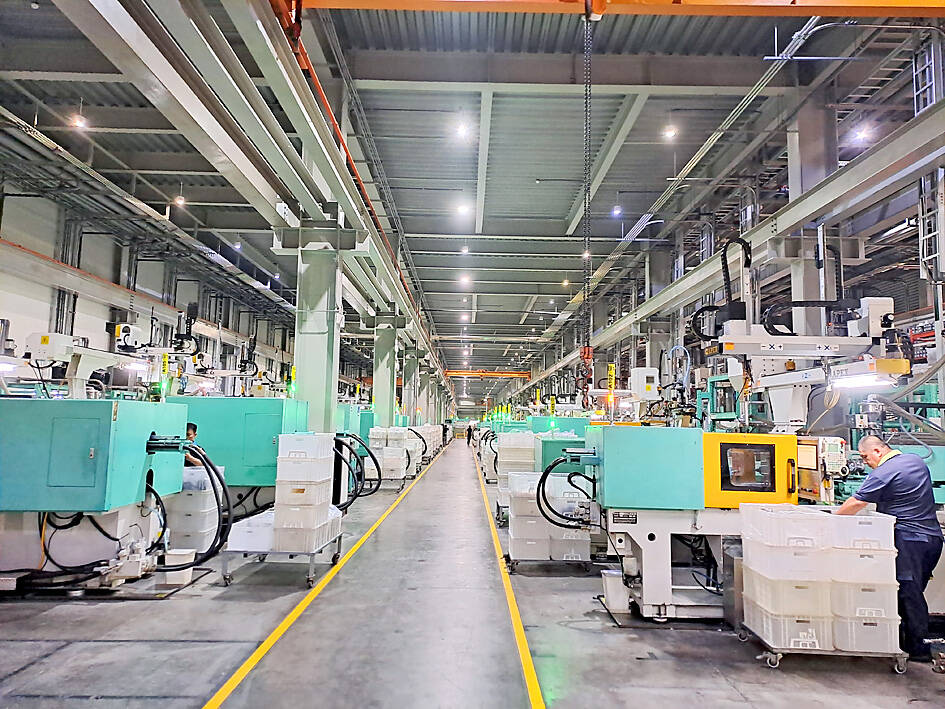
Photo: CNA
“The conflict in the Middle East has triggered a clear pull-forward in demand,” CIER president Lien Hsien-ming (連賢明) said. “This is most evident in raw materials, where stronger buying has lifted both input prices and output activity.”
The raw materials price index surged to 86, marking the fastest increase since April 2022, while the new orders gauge rose for a seventh consecutive month to 52.1, reflecting resilient demand despite external uncertainties.
Beyond geopolitics, support from technology investment remains strong, CIER said.
Global expansion in semiconductor manufacturing, AI servers and data centers — alongside rising demand for drones and power grid infrastructure — has boosted orders for high-end equipment and industrial automation systems, with the electronics sector leading gains and spillovers across its supply chain, it said.
However, the outlook is increasingly uneven, CIER said. Electronics, optical components, electrical machinery and basic materials firms expect continued expansion over the next six months, while suppliers of transportation equipment, chemicals and biotechnology, and food and textiles expect a contraction, it said.
The non-manufacturing index also rose, climbing 4 points to 58.3, marking 14 consecutive months of expansion and the fastest pace since July 2024, the CIER said.
Activity was supported by strong demand from high-end manufacturing clients and seasonal consumption linked to Mother’s Day and peak retail periods, it said. The six-month outlook improved, rising 4.3 points to 56.7.
Academia Sinica research fellow Kamhon Kan (簡錦漢) cautioned that growth momentum is becoming increasingly concentrated in a narrow set of drivers, particularly AI-related investment.
With the Strait of Hormuz still constrained and energy costs weighing on Asia and Europe, growth in Taiwan and the US is increasingly being driven by AI rather than broad-based demand, he said.
That concentration makes overall activity more vulnerable, Kan said, adding that any slowdown in AI investment or escalation in external shocks could trigger sharper swings in economic momentum.
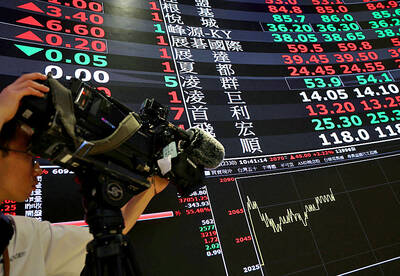
After several years flying high as Asia’s best Nvidia Corp proxy, Taiwan Semiconductor Manufacturing Co (TSMC, 台積電) is increasingly vying with other artificial intelligence (AI) stocks for investor attention. Stock traders are chasing a wider array of beneficiaries as mainstream usage of AI creates demand for hardware beyond the most-advanced chips TSMC makes for Nvidia. Subthemes from the deepening memory crunch to advances in robotics are also luring bids. At the same time, investment caps on single stocks are pushing funds to diversify, while retail investors long familiar with TSMC through its US depositary receipts are being offered a broader set of
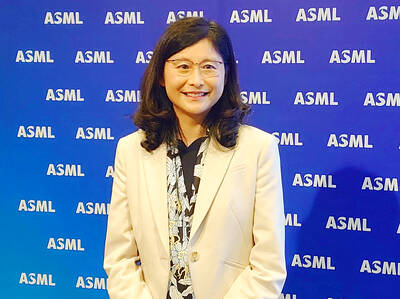
Netherlands-based semiconductor equipment supplier ASML Holding NV yesterday said that it is planning to hire an additional 1,000 people in Taiwan this year in response to growing demand from clients. ASML had previously planned to recruit 600 people this year, but that the plan has been adjusted upward, ASML vice president and ASML Taiwan general manager Grace Wang (汪佳慧) told reporters. ASML has a workforce of more than 4,500 in Taiwan, accounting for about 10 percent of its global total, Wang said. This year’s recruitment campaign would focus on adding people in the customer support, manufacturing and supply chain domains to assist ASML

UNDER MICROSCOPE: Taiwan detained three people who allegedly conspired to buy servers in Taiwan and export them using fraudulent documentation, prosecutors said Nvidia Corp chief executive officer Jensen Huang (黃仁勳) on Saturday urged Super Micro Computer Inc to tighten up on compliance after Taiwan detained three people this week for allegedly making fraudulent declarations about artificial intelligence (AI) servers made by its US partner. The development marked the nation’s first crackdown on semiconductor smuggling, which grew after the US slapped restrictions on exports of high-end chips such as Nvidia AI accelerators to China. Nvidia is “rigorous” in explaining regulations to all of its partners, Huang told reporters after arriving in Taipei. “Ultimately Super Micro has to run their own company,” he said in response to

Nvidia Corp yesterday announced that CEO Jensen Huang (黃仁勳) would attend an employee meeting in Taipei tomorrow to celebrate the launch of the company’s Taiwan headquarters project. Huang would attend a gathering at the site of Nvidia’s planned headquarters in Beitou Shilin Technology Park (北投士林科技園區), the company said in a statement. After arriving in Taiwan on Saturday last week, Huang told reporters that he plans to meet with Quanta Computer Inc (廣達) chairman Barry Lam (林百里) and Taiwan Semiconductor Manufacturing Co (TSMC, 台積電) chairman C.C. Wei (魏哲家), and would attend the groundbreaking ceremony for Nvidia’s Taiwan headquarters tomorrow. Nvidia has not yet applied


 RSS
RSS