


In the Armenian city of Hrazdan, excavators bite into pale soil as foundations take shape for a vast data center, Armenia’s entry into the global artificial intelligence (AI) race.
For the landlocked country with limited natural resources but a strong tradition in engineering and mathematics, it represents a significant shift in ambition — from outsourcing and small-scale IT services to large, infrastructure-heavy technology. Analysts say the mega project developed by the San Francisco-based company, Firebird AI, also carries geopolitical weight as Armenia seeks to forge closer ties with the West, straying from the orbit of Soviet-era master Russia.
The US is facilitating access to advanced chips and technology — rare given global shortages — seeing it as a way to increase its influence in a region long under Moscow’s thumb, analyst Vigen Hakobyan said.

Photo: AP
The US “creates an economic alternative, addressing a geopolitical objective — strengthening its presence and influence in Armenia and the wider region, while reducing Russia’s economic footprint,” he said.
Total investment in the 125-megawatt data center is expected to reach up to US$4 billion — more than 10 percent of Armenia’s annual GDP.
Thousands of Nvidia Blackwell graphics processing units — the most advanced chips currently available — would power cloud-based services, enabling training, deployment and operation of advanced AI systems, Firebird said.
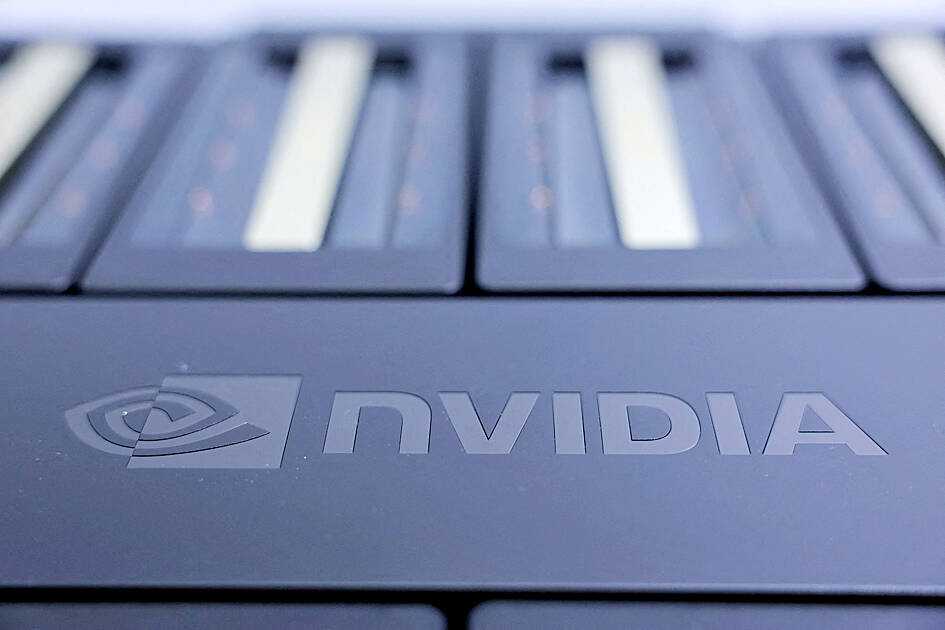
Photo: Ann Wang, Reuters
US approval for the sale of the chips last year was seen as a signal of Washington’s growing strategic interest in the Caucasus country that borders Iran and Turkey.
Armenian Prime Minister Nikol Pashinyan has hailed the project — about 50km from Yerevan — as the “largest and most important technological investment” in Armenia.
Calling it the country’s “Stargate,” after the US data center mega project, he said the idea emerged at a meeting with Nvidia boss Jensen Huang (黃仁勳) in 2023 and took shape during US Vice President J.D. Vance’s visit to Yerevan in February.
During that trip, Vance said the project “means new markets for American workers and for American businesses, but it also means greater prosperity for the people of Armenia.”
Firebrand’s founders are of Armenian descent — a fairly typical set-up for big business projects in the small country, where the 10-million-strong diaspora plays a huge role in political, economic and cultural life.
Most of the center’s capacity is expected to be leased to foreign clients, primarily US firms, but about 20 percent would be reserved for domestic use.
Even this share could “significantly raise the technological level of local industries,” economic analyst Emmanuil Mkrtchyan said.
However, challenges have already begun to surface.
It is unclear when the chips, initially expected this year, would arrive.
“I will not specify an exact date for the delivery of the chips,” Firebird’s cofounder Alexander Yesayan said.
Energy supply is another concern.
Officials say Armenia’s mix of nuclear, hydro, thermal, solar and wind power should be sufficient for the initial phase.
However, Mkrtchyan said long-term expansion could require new generating capacity, potentially including a new nuclear power plant.
Local specialists also warn that infrastructure alone would not be enough.
Armenia has few AI experts and has for decades been struggling to convince young professionals to stay in the country.
“To use these opportunities, we need the right knowledge and personnel,” said Edik Harutyunyan, head of the “42 Yerevan” IT educational program.
A lack of instructors and scientific supervisors is the most acute constraint on growth, he added.
Yesayan said he hopes the center would become the lynchpin of a new tech and education ecosystem.
“We want to build a school of professionals who can compete globally,” he said.
Students are cautiously optimistic.
Milena Aghabekyan, who studies data science and AI at Yerevan State University, said that while the project would create “new opportunities to gain knowledge and practical experience,” it might not reverse the outflow of young professionals seeking careers overseas.
“I am not sure it will stop the brain drain, because those young people who already saw themselves in major international companies will not abandon their plans,” she said. “But many will gain the opportunity to develop here.”
After several years flying high as Asia’s best Nvidia Corp proxy, Taiwan Semiconductor Manufacturing Co (TSMC, 台積電) is increasingly vying with other artificial intelligence (AI) stocks for investor attention. Stock traders are chasing a wider array of beneficiaries as mainstream usage of AI creates demand for hardware beyond the most-advanced chips TSMC makes for Nvidia. Subthemes from the deepening memory crunch to advances in robotics are also luring bids. At the same time, investment caps on single stocks are pushing funds to diversify, while retail investors long familiar with TSMC through its US depositary receipts are being offered a broader set of
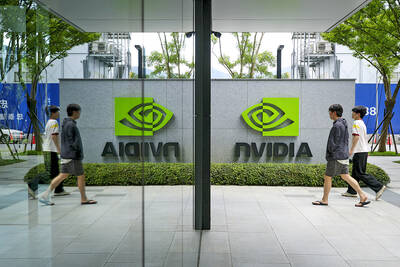
UNDER MICROSCOPE: Taiwan detained three people who allegedly conspired to buy servers in Taiwan and export them using fraudulent documentation, prosecutors said Nvidia Corp chief executive officer Jensen Huang (黃仁勳) on Saturday urged Super Micro Computer Inc to tighten up on compliance after Taiwan detained three people this week for allegedly making fraudulent declarations about artificial intelligence (AI) servers made by its US partner. The development marked the nation’s first crackdown on semiconductor smuggling, which grew after the US slapped restrictions on exports of high-end chips such as Nvidia AI accelerators to China. Nvidia is “rigorous” in explaining regulations to all of its partners, Huang told reporters after arriving in Taipei. “Ultimately Super Micro has to run their own company,” he said in response to

TECH RELIANCE: Growth is increasingly reflecting an unequal K-shaped distribution, where technology sectors outperform and other industries struggle, an expert said Standard Chartered Bank has significantly raised its forecast for Taiwan’s economic growth to 9.5 percent this year, up from 7.6 percent previously, citing surging artificial intelligence (AI) demand driving exports, semiconductor production and investment. The upgrade reflects a sustained AI supercycle that continues to fuel demand for advanced chips and technology infrastructure, which form the backbone of Taiwan’s exports, the bank said in a report this week. “We raise our 2026 growth forecast to reflect a much stronger-than-expected first-quarter GDP figure,” Standard Chartered senior economist for greater China and Asia Tommy Wu (胡東安) said in the report. Driven largely by a 35.3 percent
Two of Taiwan’s international carriers, Starlux Airlines Co (星宇航空) and EVA Airways Corp (長榮航空), have retained the five-star airline rating awarded by international airline review organization Skytrax. Starlux was awarded the distinction for a second consecutive year, while EVA Air received it for the 11th straight year, Skytrax said in statements released yesterday and on Thursday last week, respectively. The five-star rating is considered one of the airline industry's highest honors and is awarded following professional audits of airline product and frontline service standards, Skytrax said. The ratings are based on in-depth assessments using unified global quality standards rather than customer review scores


 RSS
RSS