


SpaceX might be tackling one of the biggest challenges in the chip business: manufacturing the keys to powering artificial intelligence (AI) called graphics processing units, or GPUs.
Ahead of SpaceX’s US$1.75 trillion initial public offering expected this summer, the company has warned prospective investors of its big spending plans to develop AI and other technologies.
It lists “manufacturing our own GPUs” among the “substantial capital expenditures” it is undertaking, according to excerpts of its S-1 registration.
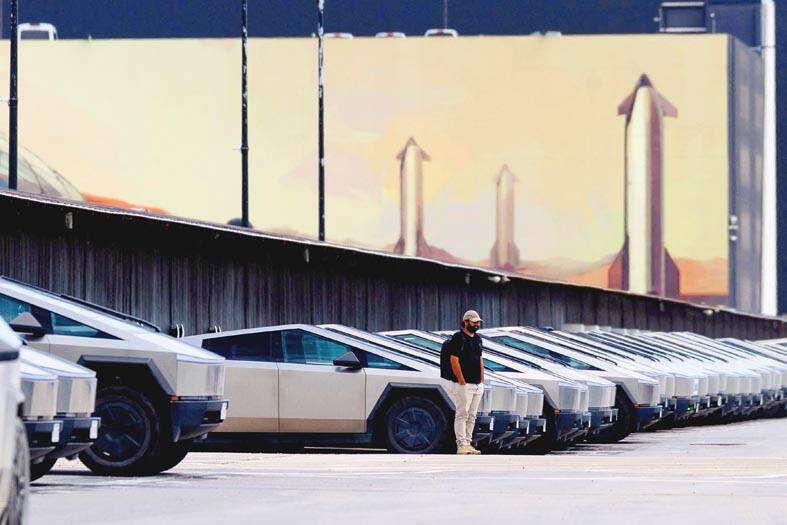
Photo: Reuters
Companies file this document to the US Securities and Exchange Commission to disclose their risks and finances before going public.
SpaceX did not immediately respond to a request for comment, and the size of the expected expenditure could not be determined.
The ambition follows work by SpaceX, its xAI unit and Tesla to jointly develop the Terafab, an advanced AI chip manufacturing complex that chief executive officer Elon Musk is planning in Austin, Texas.
Although Musk has said the project would target chips for cars, humanoid robots and space-based data centers, many details — including the types of AI chips, such as GPUs, it would produce — have been unknown.
There are a range of approaches for chips that power AI. For example, Nvidia largely makes GPUs, which are general purpose and good at performing a wide array of data crunching tasks. Alphabet’s Google takes another approach with its tensor processing units (TPUs), which are tuned to perform specific functions, key to building AI models and running chatbots such as Anthropic’s Claude.
It was unclear when SpaceX plans to manufacture its own chip and which companies — the Terafab developers or their partner Intel — would handle the fabrication technologies inside the plant.
Musk told Tesla analysts on Wednesday that by the time Terafab scales up, Intel’s next-generation 14A manufacturing process “will be probably fairly mature or ready for prime time” and “seems like the right move.”
It was also unclear if SpaceX, in its filing, used the term GPU as shorthand for AI processors generally.
Still, the previously unreported plans for GPU production come as SpaceX warned investors that it might not have enough chip supply to power its growth.
“We do not have long-term contracts with many of our direct chip suppliers,” SpaceX said in the S-1 registration.
“We expect to continue sourcing a significant portion of our compute hardware from third-party suppliers, and there can be no assurance that we will be able to achieve our objectives with respect to TERAFAB within the expected timeframes, or at all,” the company said.
Manufacturing GPUs is not easy. Industry heavyweight Nvidia pioneered GPU design and, like much of the industry, outsources their manufacture to Taiwan Semiconductor Manufacturing Co. (TSMC, 台積電).
TSMC has spent billions of dollars and years developing its most advanced manufacturing processes, which for cutting-edge chips require exotic materials and executing more than 1,000 steps with atomic precision. Its years of manufacturing billions of Apple’s iPhone chips have afforded it an enormous amount of the required hands-on experience to produce cutting-edge processors.
The chip industry, as it is organized, splits steps such as fabricating, packaging and testing among several discrete companies. Musk has said the Terafab would handle each step of chip production, including the design as well.
Shares of contract chipmaker Taiwan Semiconductor Manufacturing Co (TSMC, 台積電) came under pressure yesterday after a report that Apple Inc is looking to shift some orders from the Taiwanese company to Intel Corp. TSMC shares fell NT$55, or 2.4 percent, to close at NT$2,235 on the local main board, Taiwan Stock Exchange data showed. Despite the losses, TSMC is expected to continue to benefit from sound fundamentals, as it maintains a lead over its peers in high-end process development, analysts said. “The selling was a knee-jerk reaction to an Intel-Apple report over the weekend,” Mega International Investment Services Corp (兆豐國際投顧) analyst Alex Huang
Taiwan Semiconductor Manufacturing Co (TSMC, 台積電) is expected to remain Apple Inc’s primary chip manufacturing partner despite reports that Apple could shift some orders to Intel Corp, industry experts said yesterday. The comments came after The Wall Street Journal reported on Friday that Apple and Intel had reached a preliminary agreement following more than a year of negotiations for Intel to manufacture some chips for Apple devices. Taiwan Institute of Economic Research (台灣經濟研究院) economist Arisa Liu (劉佩真) said TSMC’s advanced packaging technologies, including integrated fan-out and chip-on-wafer-on-substrate, remain critical to the performance of Apple’s A-series and M-series chips. She said Intel and Samsung
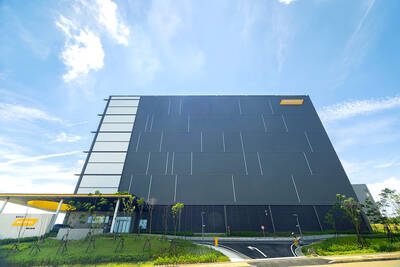
POWER BUILDUP: Powered by Nvidia’s B200 Blackwell chips, the data center would support MediaTek’s computing power demand and business growth, the company said Smartphone chip designer MediaTek Inc (聯發科) yesterday launched a new artificial intelligence (AI) data center with a maximum capacity of 45 megawatts to meet its rising demand for computing power required to develop new advanced chips for AI applications. The company has completed the first-phase computing power buildup at the data center in Miaoli County’s Tongluo Township (銅鑼), providing 15 megawatts of capacity to support its research and development (R&D) capabilities, despite an industrywide shortage of key components, MediaTek said. Supply constraints have plagued a wide range of key components, including memory chips, solid-state drives, power supply units and central
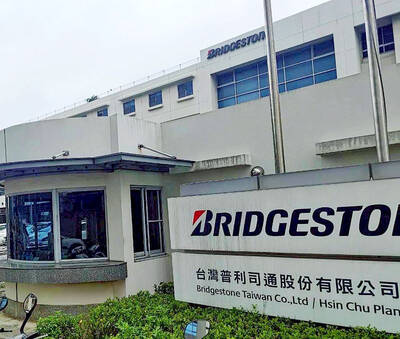
TRANSITION: With the closure, the company would reorganize its Taiwanese unit to a sales and service-focused model, Bridgestone said Bridgestone Corp yesterday announced it would cease manufacturing operations at its tire plant in Hsinchu County’s Hukou Township (湖口), affecting more than 500 workers. Bridgestone Taiwan Co (台灣普利司通) said in a statement that the decision was based on the Tokyo-based tire maker’s adjustments to its global operational strategy and long-term market development considerations. The Taiwanese unit would be reorganized as part of the closure, effective yesterday, and all related production activities would be concluded, the statement said. Under the plan, Bridgestone would continue to deepen its presence in the Taiwanese market, while transitioning to a sales and service-focused business model, it added. The Hsinchu


 RSS
RSS