


Two tankers carrying liquefied natural gas (LNG) from Qatar appear to be attempting to exit the Persian Gulf via the Strait of Hormuz, with the move being closely monitored as a successful transit would mark the first exports to buyers outside of the region since the Middle East conflict started.
The Al Daayen and Rasheeda, which each loaded LNG from Qatar’s export plant in late February, have now slowed and pulled back slightly after earlier heading eastward toward the opening of the strait near Oman, ship-tracking data compiled by Bloomberg showed.
It was not immediately clear from the data if the tankers would abandon the journey.
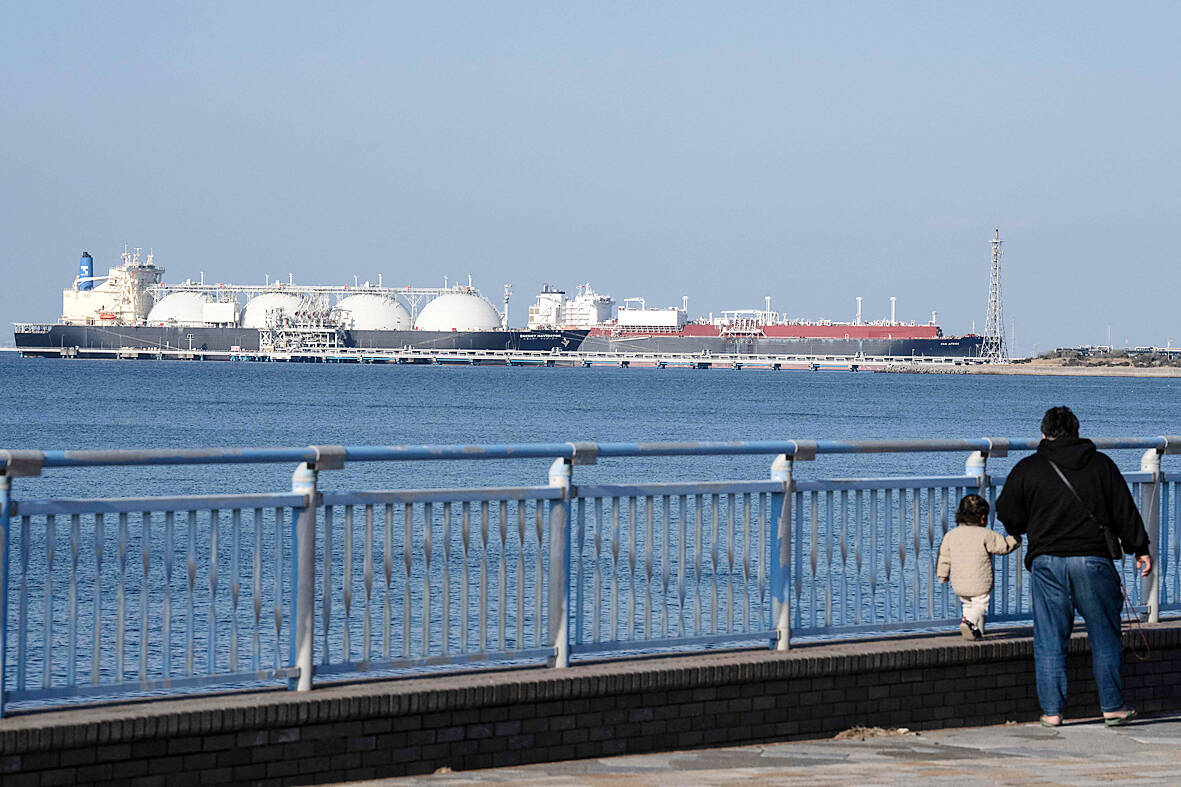
Photo: AFP
The Al Daayen is signaling China, Qatar’s largest LNG buyer, the data showed.
The destinations are not final and vessels might change their indicated port of call at any time. So far, no loaded LNG tanker have passed through the strait since the US and Israel began strikes on Iran on Feb. 28.
The effective closure of the key waterway near Iran and the Arabian Peninsula has choked off energy supplies to global markets, disrupting about one-fifth of the world’s supply of LNG. A tanker, which appeared to not be carrying a shipment, passed through the strait at the weekend.
The potential pass through the strait might be a shot in the arm for Qatar, which supplied nearly one-fifth of all LNG last year, even as the nation’s Ras Laffan export plant has been shut for more than a month due to Iranian attacks. This could allow Qatar to send more shipments that are already loaded and waiting within the Persian Gulf, or offload fuel from storage.
Since US and Israeli strikes began, Iran has allowed passage to its own ships or those it has approved. So far, no known Qatar-linked energy vessels have gone through the strait, with more than four dozen empty Qatari LNG tankers idling across Asia.
The tankers are gathered in several locations, including west India, off Sri Lanka, the northern entrance to the Strait of Malacca and the waters east of Singapore, an analysis of tracking data from Bloomberg and Kpler showed.
None of the tankers is carrying LNG, the data showed.
The idled ships illustrate the scale of the disruption, which has sent shock waves through the LNG industry and forced some nations to cut consumption. At present, there are more than 800 LNG tankers in operation worldwide, according to the International Group of Liquefied Natural Gas Importers.

Taichung reported the steepest fall in completed home prices among the six special municipalities in the first quarter of this year, data compiled by Taiwan Realty Co (台灣房屋) showed yesterday. From January through last month, the average transaction price for completed homes in Taichung fell 8 percent from a year earlier to NT$299,000 (US$9,483) per ping (3.3m²), said Taiwan Realty, which compiled the data based on the government’s price registration platform. The decline could be attributed to many home buyers choosing relatively affordable used homes to live in themselves, instead of newly built homes in the city’s prime property market, Taiwan Realty

The government yesterday approved applications by Alphabet Inc’s Google to invest NT$27.08 billion (US$859.98 million) in Taiwan, the Ministry of Economic Affairs said in a statement. The Department of Investment Review approved two investments proposed by Google, with much of the funds to be used for data processing and electronic information supply services, as well as inventory procurement businesses in the semiconductor field, the ministry said. It marks the second consecutive year that Google has applied to increase its investment in Taiwan. Google plans to infuse NT$25.34 billion into Charter Investments Ltd (特許投資顧問) through its Singapore-based subsidiary Fructan Holdings Singapore Pte Ltd, and

Micron Technology Inc is a driving force pushing the US Congress to pass legislation that would put new export restrictions on equipment its Chinese competitors use to make their chips, according to people familiar with the matter. A US House of Representatives panel yesterday was to vote on the “MATCH Act,” a bill designed to close gaps in restrictions on chipmaking equipment. It would also pressure foreign companies that sell equipment to Chinese chipmaking facilities to align with export curbs on US companies like Lam Research Corp and Applied Materials Inc. The bill targets facilities operated by China’s ChangXin Memory Technologies Inc

Singapore-based ride-hailing and delivery giant Grab Holdings’ planned acquisition of Foodpanda’s Taiwan operations has yet to enter the formal review stage, as regulators await supplementary documents, the Fair Trade Commission (FTC) said yesterday. Acting FTC Chairman Chen Chih-min (陳志民) told the legislature’s Economics Committee that although Grab submitted its application on March 27, the case has not been officially accepted because required materials remain incomplete. Once the filing is finalized, the FTC would launch a formal probe into the deal, focusing on issues such as cross-shareholding and potential restrictions on market competition, Chen told lawmakers. Grab last month announced that it would acquire


 RSS
RSS