


Global redemption pressures in the private credit market have forced several major funds to restrict withdrawals or suspend redemptions, but Taiwan’s exposure remains limited and manageable, the regulator said.
The Financial Supervisory Commission (FSC) on Thursday said that as of the end of February, only a single private credit product sold by a Taiwanese bank was linked to the troubled global funds.
The product was offered exclusively to offshore clients through the bank’s offshore banking unit, with total exposure of approximately NT$250 million (US$7.82 million). No customer complaints have been filed, the FSC said.
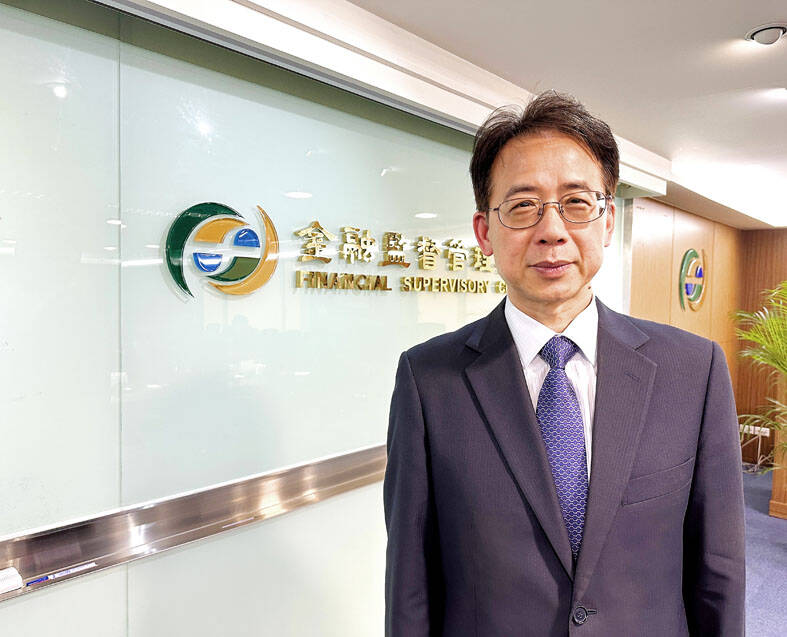
Photo: CNA
FSC Banking Bureau Deputy Director-General Chang Chia-kui (張嘉魁) said that domestic banks are prohibited from investing directly in private funds, insulating the banking sector from direct exposure.
On the distribution side, only one bank sold a single product to offshore clients, not domestic investors, Chang said, adding that overall risk remains controllable.
The global private credit stress was triggered by Blue Owl Capital, which halted redemptions in one of its products and moved to a capital-return mechanism.
That set off a chain reaction, prompting redemption requests for Blackstone’s flagship BCRED fund, which quickly reached its redemption cap. Other funds managed by BlackRock, Cliffwater, and Morgan Stanley have since imposed similar withdrawal limits or delays.
At least seven international private credit funds have faced notable liquidity pressures, signaling that the stress is no longer confined to isolated cases.
Analysts attribute the turbulence to liquidity mismatches and high interest rate pressures. The stress in the global private credit market emerged mainly from structural weaknesses that became visible under prolonged high interest rates and tighter liquidity conditions.
Most private credit loans carry floating rates, increasing borrowers’ interest costs and straining corporate cash flows, which elevates default risks.
Structural mismatches have exacerbated the situation. Many funds finance long-term loans with short-term capital, leaving them unable to meet a surge in redemptions.
Managers often respond by imposing withdrawal limits, further intensifying market anxiety.
Additional factors include loosened underwriting standards during the sector’s rapid growth, which left some loans with weaker credit quality, and opaque valuation practices.
Unlike publicly traded bonds, fund managers typically determine asset valuations internally, allowing abrupt price adjustments following credit events.
Despite global turbulence, the local banking system remains largely insulated, with minimal exposure and manageable risks, FSC data showed.

The domestic unit of the Chinese-owned, Dutch-headquartered chipmaker Nexperia BV will soon be able to produce semiconductors locally within China, according to two company sources. Nexperia is at the center of a global tug-of-war over critical semiconductor technology, with a Dutch court in February ordering a probe into alleged mismanagement at the company. The geopolitical tussle has disrupted supply chains, with some carmakers reportedly forced to cut production due to chip shortages. Local production would allow Nexperia’s domestic arm, Nexperia Semiconductors (China) Ltd (安世半導體中國), to bypass restrictions in place since October on the supply of silicon wafers — etched with tiny components to

Singapore-based ride-hailing and delivery giant Grab Holdings Ltd has applied for regulatory approval to acquire the Taiwan operations of Germany-based Delivery Hero SE's Foodpanda in a deal valued at about US$600 million. Grab submitted the filing to the Fair Trade Commission on Friday last week, with the transaction subject to regulatory review and approval, the company said in a statement yesterday. Its independent governance structure would help foster a healthy and competitive market in Taiwan if the deal is approved, Grab said. Grab, which is listed on the NASDAQ, said in the filing that US-based Uber Technologies Inc holds about 13 percent of
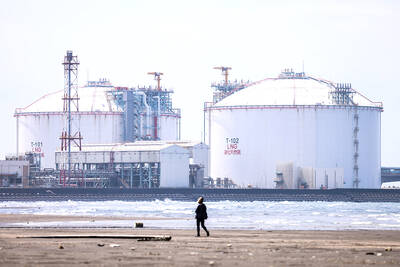
Taiwan is open to joining a global liquefied natural gas (LNG) program if one is created, but on the condition that countries provide delivery even in a scenario where there is a conflict with China, an energy department official said yesterday. While Taiwan’s priority is to have enough LNG at home, the nation is open to exploring potential strategic reserves in other countries such as Japan or South Korea, Energy Administration Deputy Director-General Chen Chung-hsien (陳崇憲) said. While the LNG market does not have a global reserve for emergencies like that of oil, the concept has been raised a few times —

Taiwan Semiconductor Manufacturing Co (TSMC, 台積電) yesterday received government approval to deploy its advanced 3-nanometer (3nm) process at its second fab currently under construction in Japan, the Ministry of Economic Affairs said in a news release. The ministry green-lit the plan for the facility in Kumamoto, which is scheduled to start installing equipment and come online in 2028 with a monthly production capacity of 15,000 12-inch wafers, the ministry said. The Department of Investment Review in June 2024 authorized a US$5.26 billion investment for the facility, slated to manufacture 6- to 12nm chips, significantly less advanced than 3nm process. At a meeting with


 RSS
RSS