


US President Donald Trump’s administration is preparing to outline a tiered system for its broad tariffs on steel and aluminum products in an attempt to simplify a process that has dogged US companies for months.
The US would maintain 50 percent tariffs on a large number of derivative products in which the duty would be calculated by the value of the actual imported good, multiple people familiar with the matter said, speaking on condition of anonymity.
Many other products would be tariffed at a lower 25 percent rate, while some products would fall below that duty level.
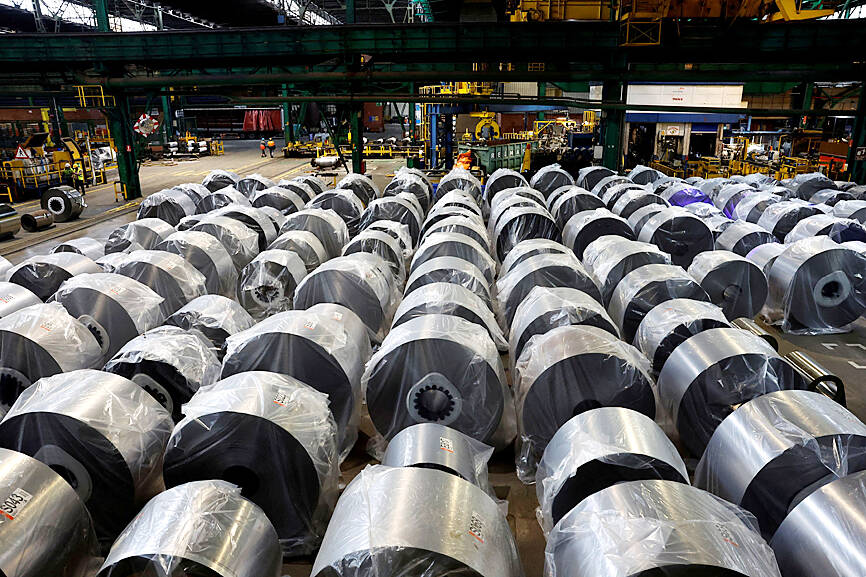
Photo: Reuters
The announcement comes in response to immense pushback from US companies that have complained to the Trump administration that his widespread tariffs on products that contain steel and aluminum materials make it difficult to quickly calculate the appropriate charges on imports.
This difficulty, which buyers had brought to the attention of US Secretary of Commerce Howard Lutnick, US Trade Representative Jamieson Greer and others, threatened to hit company sales and profit, the people said.
US companies and officials had problems assigning duties to a large number of items — including consumer products such as dental floss, which has a small metal piece to cut the floss, but otherwise has no other measurable steel or aluminum, one of the people said.
If an item’s total steel or aluminum content drops below 15 percent of the product, the tariff rate would fall to zero, the people said.
The move comes as the Trump administration is dealing with voter discontent over the economy, fueled by worries over the cost of living. That dynamic threatens to undercut Republican efforts to retain control of the US Congress in midterm elections in November.
Even as the US Supreme Court struck down some of Trump’s country-by-country tariffs, he has taken steps to rebuild that trade regime and continue ahead on industry-specific levies.
Trump last year imposed a 50 percent levy on foreign steel and aluminum in a measure aimed at countering Chinese overcapacity. The decision wound up hitting other major trading partners hard, including Canada, the EU, Mexico and South Korea.
Later added to the list were so-called derivative products that contained the metals, creating an arduous task for companies to identify the percentage of the materials in goods they sourced from overseas.

Singapore-based ride-hailing and delivery giant Grab Holdings Ltd has applied for regulatory approval to acquire the Taiwan operations of Germany-based Delivery Hero SE's Foodpanda in a deal valued at about US$600 million. Grab submitted the filing to the Fair Trade Commission on Friday last week, with the transaction subject to regulatory review and approval, the company said in a statement yesterday. Its independent governance structure would help foster a healthy and competitive market in Taiwan if the deal is approved, Grab said. Grab, which is listed on the NASDAQ, said in the filing that US-based Uber Technologies Inc holds about 13 percent of

Taiwan Semiconductor Manufacturing Co (TSMC, 台積電) yesterday received government approval to deploy its advanced 3-nanometer (3nm) process at its second fab currently under construction in Japan, the Ministry of Economic Affairs said in a news release. The ministry green-lit the plan for the facility in Kumamoto, which is scheduled to start installing equipment and come online in 2028 with a monthly production capacity of 15,000 12-inch wafers, the ministry said. The Department of Investment Review in June 2024 authorized a US$5.26 billion investment for the facility, slated to manufacture 6- to 12nm chips, significantly less advanced than 3nm process. At a meeting with

Taiwan’s food delivery market could undergo a major shift if Singapore-based Grab Holdings Ltd completes its planned acquisition of Delivery Hero SE’s Foodpanda business in Taiwan, industry experts said. Grab on Monday last week announced it would acquire Foodpanda’s Taiwan operations for US$600 million. The deal is expected to be finalized in the second half of this year, with Grab aiming to complete user migration to its platform by the first half of next year. A duopoly between Uber Eats and Foodpanda dominates Taiwan’s delivery market, a structure that has remained intact since the Fair Trade Commission (FTC) blocked Uber Technologies Inc’s
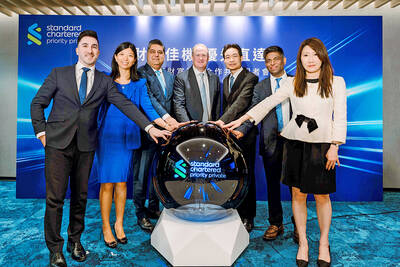
Standard Chartered Taiwan on March 26 announced that it has partnered with international fintech firm FinIQ to build an “Automated Structured Products Pricing Platform.” The bank is also introducing products from global issuers including Goldman Sachs Group Inc, Barclays PLC and BNP Paribas SA. The new platform enables an end-to-end process whereby it finds the most competitive pricing across multiple issuers in a matter of minutes, followed by automated documentation and transaction execution, which significantly shortens time-to-market and delivers a superior wealth management experience. Standard Chartered Bank Taiwan CEO Anthony Yu (游天立) said: “Standard Chartered is increasingly leveraging its wealth management


 RSS
RSS