


Taiwan’s food delivery market could undergo a major shift if Singapore-based Grab Holdings Ltd completes its planned acquisition of Delivery Hero SE’s Foodpanda business in Taiwan, industry experts said.
Grab on Monday last week announced it would acquire Foodpanda’s Taiwan operations for US$600 million. The deal is expected to be finalized in the second half of this year, with Grab aiming to complete user migration to its platform by the first half of next year.
A duopoly between Uber Eats and Foodpanda dominates Taiwan’s delivery market, a structure that has remained intact since the Fair Trade Commission (FTC) blocked Uber Technologies Inc’s proposed acquisition of Foodpanda in December 2024, citing concerns that the combined entity would control about 90 percent of the market.

Photo: CNA
Grab’s entry would significantly alter competition, experts said.
Grab’s strength in Southeast Asia lies in its integrated ecosystem, which combines food delivery, ride-hailing and digital payments, along with partnerships in telecommunications and financial services, Taiwan Mobile Co (台灣大哥大) president Jamie Lin (林之晨) said.
If replicated in Taiwan, its model could shift competition beyond delivery speed and pricing to broader platform ecosystems, including service integration, user engagement and data accumulation, Lin said.
However, analysts cautioned that Taiwan presents structural challenges.
The relatively small market size and dense concentration of food and beverage outlets make delivery services highly substitutable, market analyst Lee Shi-chen (李世珍) said.
In addition, a new law passed in January to bolster protections for delivery workers is expected to increase operating costs.
These factors leave little room for new entrants, Lee said, adding that Grab’s decision to enter through acquisition reflects these constraints.
Building a full-service ecosystem in Taiwan would be difficult, given strong local competition in ride-hailing and other sectors, he said.
Grab might need to rely on price incentives to gain market share, while also investing heavily to attract both consumers and merchants, he added.
Delivery platforms must balance three key factors: consumer prices, merchant commission fees and delivery worker pay, Lee said.
In the short term, increased competition could lead to discounts and promotions that benefit consumers, experts said.
However, long-term sustainability would depend on user experience, pricing strategies, and the effectiveness of customer service and dispute-resolution mechanisms.
Analysts highlighted several factors to watch, including the potential for price competition, the pace of Grab’s service expansion and risks related to platform integration. Any disruption during the transition — such as unstable ordering systems or poor user experience — could give rivals an opportunity to gain market share.
Meanwhile, Grab yesterday responded to concerns over its shareholder structure following the acquisition announcement.
Questions have been raised about Uber Technologies’ “indirect investment” in Taiwan’s delivery market through Grab, as the US company is its largest institutional shareholder with a roughly 13.1 percent stake.
China-based ride-hailing firm Didi Chuxing (滴滴出行) is among Grab’s investors, raising concerns about potential Chinese capital involvement.
However, Grab said that the voting rights of Uber and Didi Chuxing are limited to less than 4 percent and 1.4 percent respectively.
It added that Uber does not participate in Grab’s operations, and that its nominated board members have recused themselves from decisions related to the Taiwanese market.
FTC Acting Chairman Andy Chen (陳志民) on Thursday said that regulators would assess the deal based on actual control, including the influence associated with Uber’s equity stake.
The commission would also look into concerns of “indirect investment” and remain alert to potential market concentration or abuse, Chen said.

Taichung reported the steepest fall in completed home prices among the six special municipalities in the first quarter of this year, data compiled by Taiwan Realty Co (台灣房屋) showed yesterday. From January through last month, the average transaction price for completed homes in Taichung fell 8 percent from a year earlier to NT$299,000 (US$9,483) per ping (3.3m²), said Taiwan Realty, which compiled the data based on the government’s price registration platform. The decline could be attributed to many home buyers choosing relatively affordable used homes to live in themselves, instead of newly built homes in the city’s prime property market, Taiwan Realty
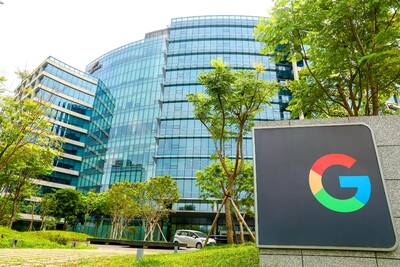
The government yesterday approved applications by Alphabet Inc’s Google to invest NT$27.08 billion (US$859.98 million) in Taiwan, the Ministry of Economic Affairs said in a statement. The Department of Investment Review approved two investments proposed by Google, with much of the funds to be used for data processing and electronic information supply services, as well as inventory procurement businesses in the semiconductor field, the ministry said. It marks the second consecutive year that Google has applied to increase its investment in Taiwan. Google plans to infuse NT$25.34 billion into Charter Investments Ltd (特許投資顧問) through its Singapore-based subsidiary Fructan Holdings Singapore Pte Ltd, and

JET JUICE: The war on Iran’s secondary effects have seen fuel prices skyrocket, knocking flight schedules down to earth in return as airlines struggle with costs Airline passengers should brace for more irritation in the next few months as carriers worldwide cancel flights and ground planes to cope with stratospheric increases in jet-fuel prices. Dutch flag carrier KLM is the latest company to cut its schedule, saying on Thursday that it would scrap 80 return flights at Amsterdam’s Schiphol Airport in the coming month. That puts it in the same league as United Airlines Holdings Inc, Deutsche Lufthansa AG and Cathay Pacific Airways Ltd, which have all pruned itineraries to mitigate costs. Global capacity for next month has been reduced by about 3 percentage points, with all

The US said it plans to help build a first-of-its-kind industrial hub in the Philippines to boost production of inputs crucial to US supply chains. The 4,000-acre hub is intended to be “a purpose-built platform for allied manufacturing” and “an investment acceleration hub where the specific industrial activities are shaped by market demand,” the US Department of State said on Thursday. The project — touted as an “economic security zone” — would be within the Luzon Economic Corridor, a flagship economic project backed by the US and Japan on the main Philippine island. The project was also described as “the first artificial intelligence


 RSS
RSS