


Taiwan’s business climate weakened last month as manufacturing, services and construction sectors all cooled, although firms remained cautiously optimistic about the longer-term outlook, a survey released yesterday by the Taiwan Institute of Economic Research (TIER, 台灣經濟研究院) showed.
The manufacturing business climate gauge fell to 96.41, down 2.1 points from a revised 98.51 in January, ending a seven-month streak of gains, which TIER Economic Forecasting Center director Gorden Sun (孫明德) said mainly reflected seasonal factors, including the Lunar New Year holiday, rather than geopolitical tensions.
Despite the pullback, manufacturers remained upbeat about their business prospects in the coming six months, with 39.6 percent of respondents expecting conditions to improve, up 13.8 percentage points from January, while 17.5 percent anticipated a downturn.
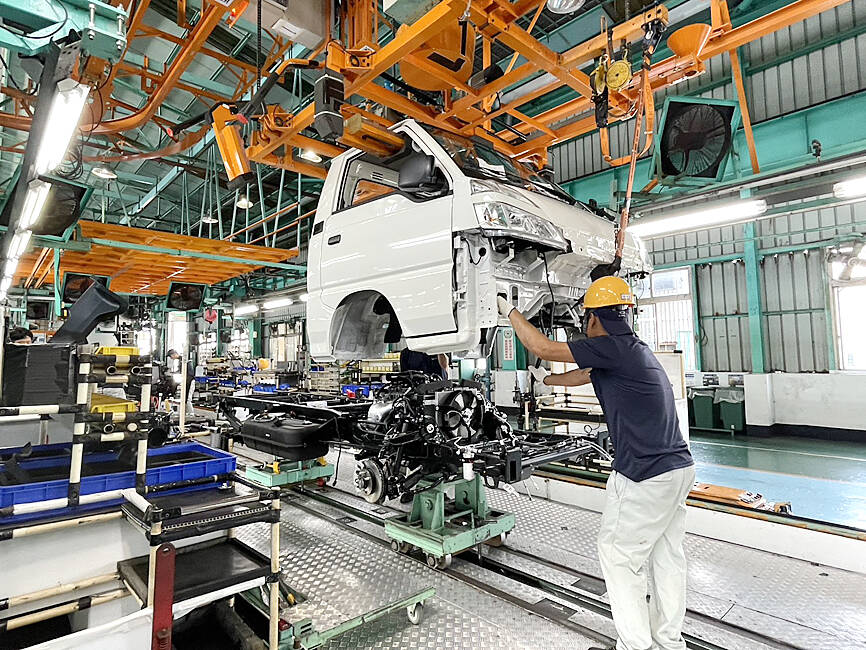
Photo: CNA
Demand linked to artificial intelligence infrastructure is expected to continue supporting construction of semiconductor and technology facilities, underpinning exports and private investment, Sun said.
The services business climate index slipped to 94.55 from a revised 95.42 in January, ending four months of gains, although holiday spending helped cushion the decline, the institute said.
While spending during the holiday season boosted revenue for travel agencies, restaurants and hotels, financial institutions were more cautious, with about 70 percent of banks and securities firms expressing reservation about business conditions, it said.
Retailers are even more guarded due to inflation concerns tied to rising oil prices amid Middle East tensions, as the survey found that about half of the respondents expect conditions to remain unchanged over the next six months, while nearly 40 percent foresee deterioration.
TIER resident Chang Chien-yi (張建一) said that even if the geopolitical conflict ends, international oil prices could remain around US$100 per barrel, putting pressure on consumer prices.
In construction, the business climate index dropped to 95.81 from 99.92 in January, marking a second consecutive monthly decline.
TIER said the weakness stems mainly from the government’s new soil disposal regulations, which have caused delays and temporary halts in some construction projects.
Meanwhile, the property market remained listless, with transaction volumes declining amid tight credit controls. Although the central bank last week raised the loan-to-value ratio for second-home mortgages for individuals from 50 percent to 60 percent, the institute said housing activity is likely to remain subdued in the near term.
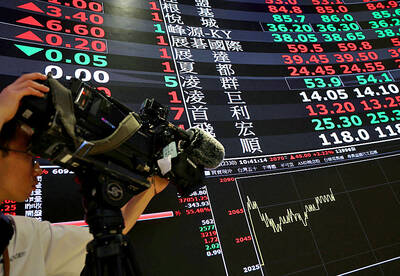
After several years flying high as Asia’s best Nvidia Corp proxy, Taiwan Semiconductor Manufacturing Co (TSMC, 台積電) is increasingly vying with other artificial intelligence (AI) stocks for investor attention. Stock traders are chasing a wider array of beneficiaries as mainstream usage of AI creates demand for hardware beyond the most-advanced chips TSMC makes for Nvidia. Subthemes from the deepening memory crunch to advances in robotics are also luring bids. At the same time, investment caps on single stocks are pushing funds to diversify, while retail investors long familiar with TSMC through its US depositary receipts are being offered a broader set of
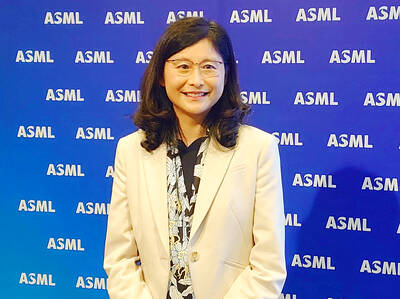
Netherlands-based semiconductor equipment supplier ASML Holding NV yesterday said that it is planning to hire an additional 1,000 people in Taiwan this year in response to growing demand from clients. ASML had previously planned to recruit 600 people this year, but that the plan has been adjusted upward, ASML vice president and ASML Taiwan general manager Grace Wang (汪佳慧) told reporters. ASML has a workforce of more than 4,500 in Taiwan, accounting for about 10 percent of its global total, Wang said. This year’s recruitment campaign would focus on adding people in the customer support, manufacturing and supply chain domains to assist ASML
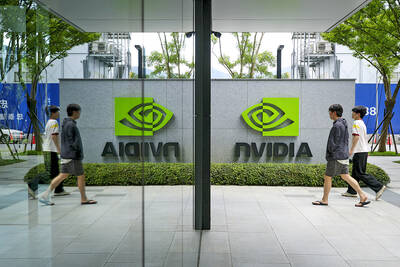
UNDER MICROSCOPE: Taiwan detained three people who allegedly conspired to buy servers in Taiwan and export them using fraudulent documentation, prosecutors said Nvidia Corp chief executive officer Jensen Huang (黃仁勳) on Saturday urged Super Micro Computer Inc to tighten up on compliance after Taiwan detained three people this week for allegedly making fraudulent declarations about artificial intelligence (AI) servers made by its US partner. The development marked the nation’s first crackdown on semiconductor smuggling, which grew after the US slapped restrictions on exports of high-end chips such as Nvidia AI accelerators to China. Nvidia is “rigorous” in explaining regulations to all of its partners, Huang told reporters after arriving in Taipei. “Ultimately Super Micro has to run their own company,” he said in response to

Nvidia Corp yesterday announced that CEO Jensen Huang (黃仁勳) would attend an employee meeting in Taipei tomorrow to celebrate the launch of the company’s Taiwan headquarters project. Huang would attend a gathering at the site of Nvidia’s planned headquarters in Beitou Shilin Technology Park (北投士林科技園區), the company said in a statement. After arriving in Taiwan on Saturday last week, Huang told reporters that he plans to meet with Quanta Computer Inc (廣達) chairman Barry Lam (林百里) and Taiwan Semiconductor Manufacturing Co (TSMC, 台積電) chairman C.C. Wei (魏哲家), and would attend the groundbreaking ceremony for Nvidia’s Taiwan headquarters tomorrow. Nvidia has not yet applied


 RSS
RSS