


The industrial production index rose 17.83 percent year-on-year to 109.46 last month, driven by strong demand for artificial intelligence (AI) and high-performance computing applications that boosted information technology and electronics products’ output, the Ministry of Economic Affairs said yesterday.
The manufacturing production index — which accounts for 93.72 percent of the overall industrial production index — rose 19.64 percent year-on-year to 111.55 last month, the 24th consecutive month of annual growth, ministry data showed.
The figures exceeded the ministry’s forecasts of 102.26 for the industrial production index and 106.26 for the manufacturing production gauge.
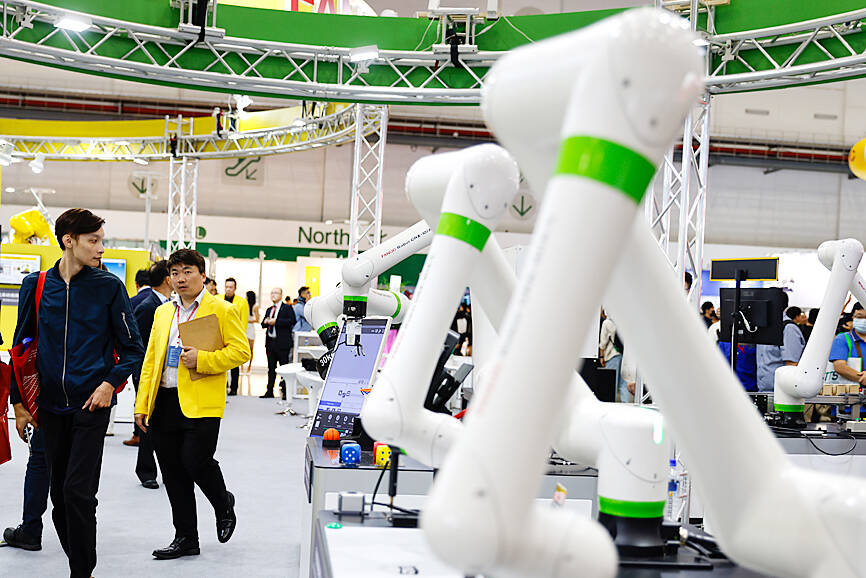
Photo: Ritchie B. Tongo, EPA
The stronger performance was driven by continued capital spending by leading cloud service providers and robust AI demand, which boosted production of electronic components, computers and optical products, Department of Statistics Deputy Director-General Chen Yu-fang (陳玉芳) told a news conference in Taipei.
Industrial production in the first two months of this year grew 22.95 percent year-on-year to 116.68, the highest on record for the period, Chen said.
As the Lunar New Year holiday fell in January last year, but in February this year, and with two fewer working days in the first two months this year compared with last year, it is more appropriate to assess each category on a combined two-month basis, she said.
During the first two months, production of electronic components, including integrated circuits, motherboards and memory products, rose 24.95 percent year-on-year due to strong AI demand, Chen said.
Output of computers, electronic and optical products surged 124.12 percent on strong shipments of servers, switches and solid-state drives amid robust cloud infrastructure construction, she said.
Production of flat-panel displays and related components fell 5.13 percent, as demand for smaller-sized panels weakened, while base metal production — mainly steel — fell 4.66 percent year-on-year due to weak steel demand, she said.
Kaohsiung-based China Steel Corp (中鋼), along with its global peers, has raised product prices supported by China’s production curbs, but whether the sector can rebound still depends on a recovery in global demand, she said.
Output of chemical materials and fertilizers fell 2.47 percent amid sluggish market demand, and vehicle production fell 3.38 percent as shipments of automotive lighting systems, wheel rims and other auto parts declined, while machinery equipment output rose 8.78 percent, supported by demand for chipmaking equipment, industrial robots and automated storage systems.
This month, the ministry expects the manufacturing production index to rise 22.4 to 26.1 percent year-on-year on the back of strong momentum in information technology and electronic products as well as end-of-quarter front-loading demand, Chen said.
Despite the Middle East conflicts, the manufacturing production gauge this quarter could rise 23.9 to 25.3 percent year-on-year to between 122.85 and 124.18, likely a record high for the period and the second-highest for a single quarter, she said.
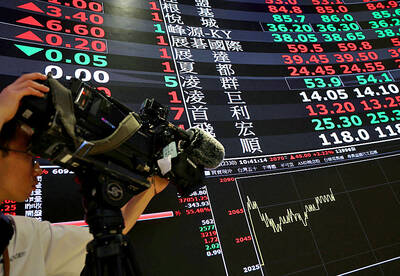
After several years flying high as Asia’s best Nvidia Corp proxy, Taiwan Semiconductor Manufacturing Co (TSMC, 台積電) is increasingly vying with other artificial intelligence (AI) stocks for investor attention. Stock traders are chasing a wider array of beneficiaries as mainstream usage of AI creates demand for hardware beyond the most-advanced chips TSMC makes for Nvidia. Subthemes from the deepening memory crunch to advances in robotics are also luring bids. At the same time, investment caps on single stocks are pushing funds to diversify, while retail investors long familiar with TSMC through its US depositary receipts are being offered a broader set of
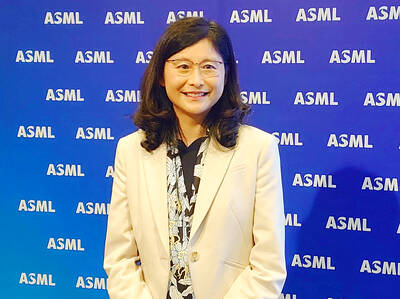
Netherlands-based semiconductor equipment supplier ASML Holding NV yesterday said that it is planning to hire an additional 1,000 people in Taiwan this year in response to growing demand from clients. ASML had previously planned to recruit 600 people this year, but that the plan has been adjusted upward, ASML vice president and ASML Taiwan general manager Grace Wang (汪佳慧) told reporters. ASML has a workforce of more than 4,500 in Taiwan, accounting for about 10 percent of its global total, Wang said. This year’s recruitment campaign would focus on adding people in the customer support, manufacturing and supply chain domains to assist ASML
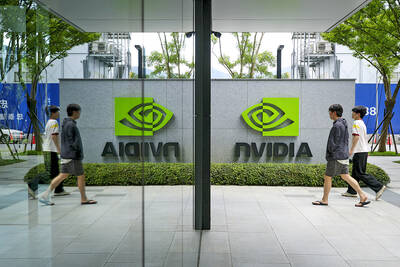
UNDER MICROSCOPE: Taiwan detained three people who allegedly conspired to buy servers in Taiwan and export them using fraudulent documentation, prosecutors said Nvidia Corp chief executive officer Jensen Huang (黃仁勳) on Saturday urged Super Micro Computer Inc to tighten up on compliance after Taiwan detained three people this week for allegedly making fraudulent declarations about artificial intelligence (AI) servers made by its US partner. The development marked the nation’s first crackdown on semiconductor smuggling, which grew after the US slapped restrictions on exports of high-end chips such as Nvidia AI accelerators to China. Nvidia is “rigorous” in explaining regulations to all of its partners, Huang told reporters after arriving in Taipei. “Ultimately Super Micro has to run their own company,” he said in response to

Nvidia Corp yesterday announced that CEO Jensen Huang (黃仁勳) would attend an employee meeting in Taipei tomorrow to celebrate the launch of the company’s Taiwan headquarters project. Huang would attend a gathering at the site of Nvidia’s planned headquarters in Beitou Shilin Technology Park (北投士林科技園區), the company said in a statement. After arriving in Taiwan on Saturday last week, Huang told reporters that he plans to meet with Quanta Computer Inc (廣達) chairman Barry Lam (林百里) and Taiwan Semiconductor Manufacturing Co (TSMC, 台積電) chairman C.C. Wei (魏哲家), and would attend the groundbreaking ceremony for Nvidia’s Taiwan headquarters tomorrow. Nvidia has not yet applied


 RSS
RSS