


As a boom in online gambling across Africa gathers pace, governments are hiking taxes to contain addiction risks and fill depleted state coffers. In by far the biggest market of South Africa, the industry is pushing back.
Once a niche activity, gambling has exploded across the continent as a result of easily available online betting accounts.
South Africa’s gambling industry regulator, the National Gambling Board, estimates that two-thirds of adults engage in online gambling, a sharp rise from 30 percent in 2017.

Photo: Reuters
The South African government has proposed a national 20 percent tax on online gambling profits, which it says would more than double revenues from the sector to 10 billion rand (US$607 million) annually from 4.8 billion rand currently.
The draft bill would be presented to lawmakers this year and the final tax proposal introduced in February next year, the South African National Treasury said.
Several political parties represented in parliament have expressed support for the tax.
Betting firms are lobbying hard against it, arguing that the tax would not curb problem gambling, but instead push it to unregulated sites, which they say would proliferate without the extra burden of the levies.
Local gambling firm Hollywood Bets, one of the largest in the country, has not publicly commented on the tax proposal, while NYSE-listed Betway said it would speak through the industry body, the South African Bookmakers’ Association.
Distress calls to a national helpline for gambling addicts have surged by more than two-thirds over the past year, South African Responsible Gambling Foundation executive director Sibongile Simelane-Quntana said.
The foundation acts as a national crisis center for problem gamblers and treated more than 4,600 people for addiction last year, up from 2,600 in 2024.
Simelane-Quntana said that most South Africans play out of desperation more than entertainment.
“We’re trying to gamble ourselves to prosperity,” she said.
Reuters spoke with two self-confessed gambling addicts in South Africa, who did not want to be named because of the stigma attached to the issue.
Both said that economic hardship had pushed them to gambling.
Southern African nations Malawi and Zimbabwe introduced similar tax hikes on gambling profits this year.
In Senegal, a gambler who identified himself by his initials, I.A, told Reuters that he relapsed into gambling after a five-year hiatus.
“When people ask me where my money goes, I can’t explain and I have to lie,” he said. “It hurts me. How can I not ... tell the truth?”
The 37-year-old Senegalese man living in the capital, Dakar, started playing in 2017, initially betting 300 CFA francs (US$0.5343) a week on sports bets while working as a cashier at a gambling company.
When he started working as a manager, he said he began stealing from the cash register, losing thousands of francs in bets.
He lost his job, but said he headed off legal action by returning the money.
Three months ago, I.A. started playing again after hearing his neighbor mention a new app for instant bets. In the familiar yo-yo of the struggling addict, he has been downloading and deleting apps again and again.
South African punters wagered a record 1.5 trillion rand in the 2024-2025 financial year, National Gambling Board data showed.
The South African government in paper published in November last year said that the proposed tax would reduce the proliferation of online gambling activity and disincentivize problem gambling.
However, in a formal submission to the treasury, the bookmakers’ association, which represents about one-quarter of the country’s 400 bookmakers, said it would be more effective to crack down on illegal gambling sites.
Currently gambling taxes are set by provincial authorities and average between 6 and 9 percent.
The new national tax would increase total tax rates to up to 29 percent, the Treasury said.
Bookmakers’ association chief executive officer Sean Coleman said that the total tax from a mix of provincial, value-added and national taxes, and the new levy would be 38.5 percent of profits.
The association is presenting a case to the government that its proposal would drive players to illegal sites, as legally registered companies could become more expensive and the winnings less attractive to players.
“That’s going to be a counterproposal from us, is to go and address the illegal market ... and we all reap the benefits,” Coleman said.
Meanwhile, debt-ridden Senegal announced additional gambling taxation in its economic recovery plan last year.
Seydina Mohamed Moustapha Gueye, head of a Senegalese association that organizes support group meetings with betting addicts, doubted that tax would help if “there is no policy in place to support these players who suffer from addiction.”
Lonase, the authority that regulates gambling, did not respond to a request for comment.
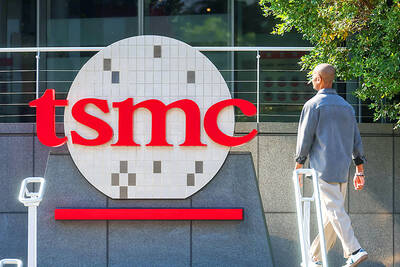
Shares of contract chipmaker Taiwan Semiconductor Manufacturing Co (TSMC, 台積電) came under pressure yesterday after a report that Apple Inc is looking to shift some orders from the Taiwanese company to Intel Corp. TSMC shares fell NT$55, or 2.4 percent, to close at NT$2,235 on the local main board, Taiwan Stock Exchange data showed. Despite the losses, TSMC is expected to continue to benefit from sound fundamentals, as it maintains a lead over its peers in high-end process development, analysts said. “The selling was a knee-jerk reaction to an Intel-Apple report over the weekend,” Mega International Investment Services Corp (兆豐國際投顧) analyst Alex Huang
Taiwan Semiconductor Manufacturing Co (TSMC, 台積電) is expected to remain Apple Inc’s primary chip manufacturing partner despite reports that Apple could shift some orders to Intel Corp, industry experts said yesterday. The comments came after The Wall Street Journal reported on Friday that Apple and Intel had reached a preliminary agreement following more than a year of negotiations for Intel to manufacture some chips for Apple devices. Taiwan Institute of Economic Research (台灣經濟研究院) economist Arisa Liu (劉佩真) said TSMC’s advanced packaging technologies, including integrated fan-out and chip-on-wafer-on-substrate, remain critical to the performance of Apple’s A-series and M-series chips. She said Intel and Samsung
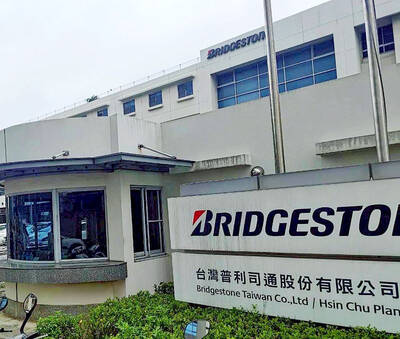
TRANSITION: With the closure, the company would reorganize its Taiwanese unit to a sales and service-focused model, Bridgestone said Bridgestone Corp yesterday announced it would cease manufacturing operations at its tire plant in Hsinchu County’s Hukou Township (湖口), affecting more than 500 workers. Bridgestone Taiwan Co (台灣普利司通) said in a statement that the decision was based on the Tokyo-based tire maker’s adjustments to its global operational strategy and long-term market development considerations. The Taiwanese unit would be reorganized as part of the closure, effective yesterday, and all related production activities would be concluded, the statement said. Under the plan, Bridgestone would continue to deepen its presence in the Taiwanese market, while transitioning to a sales and service-focused business model, it added. The Hsinchu
Taiwan Semiconductor Manufacturing Co (TSMC, 台積電) has approved a capital budget of US$31.28 billion for production expansion to meet long-term development needs during the artificial intelligence (AI) boom. The company’s board meeting yesterday approved the capital appropriation plan for purposes such as the installation of advanced technology capacity and fab construction, the world’s largest contract chipmaker said in a statement. At an earnings conference last month, TSMC forecast that its capital expenditure for this year would be at the higher end of the US$52 billion to US$56 billion range it forecast in January in response to robust demand for 5G, AI and


 RSS
RSS