


Samsung Electronics Co has agreed to supply and collaborate with AMD on next-generation artificial intelligence (AI) memory and computing technologies.
Under a preliminary agreement, Samsung would provide next-generation high-bandwidth memory, HBM4, as the primary supplier for AMD’s MI455X accelerators used in corporate data centers, the companies said in a joint statement yesterday.
Samsung would also supply DDR5 memory chips for AMD’s Helios system based on the MI455X and the new Venice central processing unit design, according to the agreement signed by AMD chief executive officer Lisa Su (蘇姿丰) and Samsung co-chief executive officer Jun Young-hyun in Pyeongtaek.
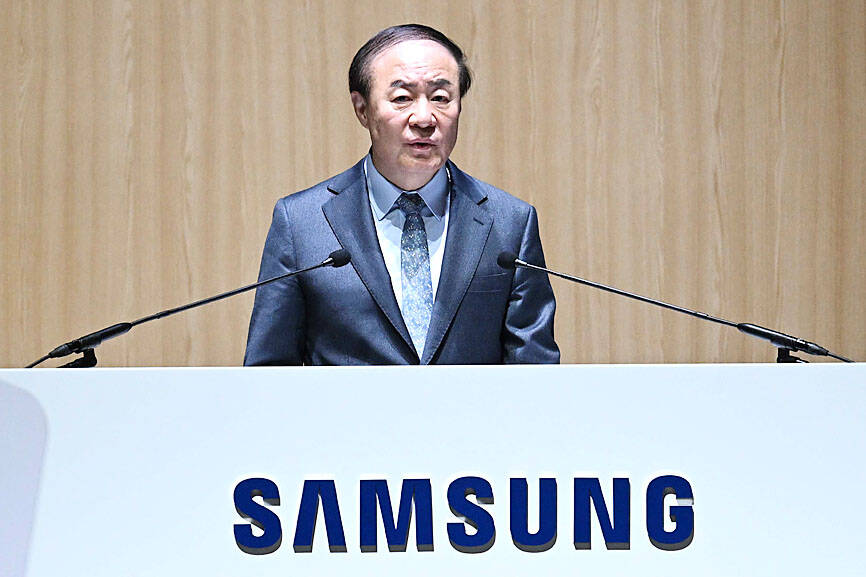
Photo: EPA
The two companies also agreed to discuss opportunities for foundry partnership. Samsung is already a key supplier of the 12-layer HBM3E that is paired with AMD’s accelerators, MI350X and MI355X.
Meanwhile, Samsung is considering a shift toward multiyear contracts for memory chips, a much longer timeframe than is typical, to help stabilize supply and ease concerns about a shortage of essential components.
The company is considering lengthening contracts from the quarterly or annual agreements to as much as three to five years, Jun told shareholders at the company’s annual general meeting yesterday; that is as demand for AI memory chips is expected to continue surging next year, he said.
Samsung, SK Hynix Inc and Micron Technology Inc dominate the supply of memory chips globally. The three have shifted production in recent years toward a specialized form of memory intended for use in Nvidia Corp’s in-demand AI accelerators, leading to a shortfall in output of more conventional storage.
On Monday, SK Group chairman Chey Tae-won said he expected the global shortage of memory chips to persist for another four to five years because of endemic constraints in semiconductor production.
Separately, tens of thousands of Samsung workers yesterday said that they would strike in May over a wage dispute, raising concerns over chip production.
More than 66,000 of nearly 90,000 unionized workers voted on whether to strike, the association of three unions said in a statement.
“Of those who voted, 93.1 percent voted in favor,” it said.
“This result makes clear that the vast majority of Samsung Electronics workers reject the company’s current proposal as failing to uphold the management principle of ‘People First,’” it said.
The unions’ demands include a 7 percent wage hike, the removal of a cap on bonuses and a more transparent performance-based bonus system.
Samsung said it remained “committed to reaching a smooth agreement” with the unions.
Additional reporting by AFP

SECOND-RATE: Models distilled from US products do not perform the same as the original and undo measures that ensure the systems are neutral, the US’ cable said The US Department of State has ordered a global push to bring attention to what it said are widespread efforts by Chinese companies, including artificial intelligence (AI) start-up DeepSeek (深度求索), to steal intellectual property from US AI labs, according to a diplomatic cable. The cable, dated Friday and sent to diplomatic and consular posts around the world, instructs diplomatic staff to speak to their foreign counterparts about “concerns over adversaries’ extraction and distillation of US AI models.” Distillation is the process of training smaller AI models using output from larger, more expensive ones to lower the costs of training a powerful new

Singapore-based ride-hailing and delivery giant Grab Holdings’ planned acquisition of Foodpanda’s Taiwan operations has yet to enter the formal review stage, as regulators await supplementary documents, the Fair Trade Commission (FTC) said yesterday. Acting FTC Chairman Chen Chih-min (陳志民) told the legislature’s Economics Committee that although Grab submitted its application on March 27, the case has not been officially accepted because required materials remain incomplete. Once the filing is finalized, the FTC would launch a formal probe into the deal, focusing on issues such as cross-shareholding and potential restrictions on market competition, Chen told lawmakers. Grab last month announced that it would acquire
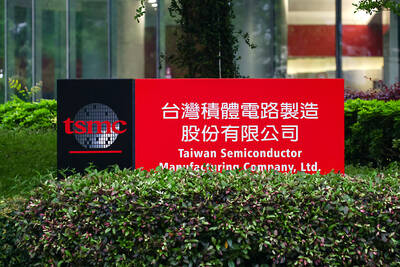
Shares of Taiwan Semiconductor Manufacturing Co (TSMC, 台積電) have repeatedly hit new highs, but an equity analyst said the stock’s valuation remains within a reasonable range and any pullback would likely be technical. The contract chipmaker’s historical price-to-earnings (P/E) ratio has ranged between 20 and 30, Cathay Futures Consultant Co (國泰證期) analyst Tsai Ming-han (蔡明翰) told Central News Agency. With market consensus projecting that TSMC would post earnings per share of about NT$100 (US$3.17) this year, supported by strong global demand for artificial intelligence (AI) applications, and the stock currently trading at a P/E ratio of below 25, Tsai said the valuation
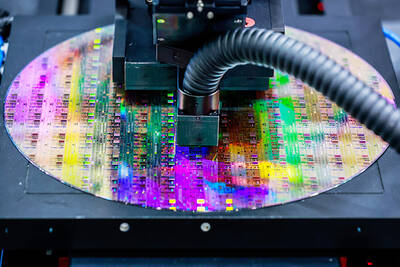
The artificial intelligence (AI) boom has triggered a seismic reshuffling of global equity markets, with Taiwan and South Korea muscling past European nations one by one. With its stock market now valued at nearly US$4.3 trillion, Taiwan surpassed the UK, Europe’s biggest market, earlier this month, data compiled by Bloomberg showed. South Korea is about US$140 billion away from doing the same. The tech-heavy Asian markets have shot past Germany and France in the past seven months. The shift is largely down to massive gains in shares of three companies that provide essential hardware for AI: Taiwan Semiconductor Manufacturing Co (TSMC, 台積電),


 RSS
RSS