


Sales of cat-related products at major convenience stores have surged over the past few years, as rising cat ownership fuels what retailers call the emerging “cat economy.”
Cat food and related products sales at stores such as 7-Eleven, Hi-Life and OK Mart have grown by about 30 percent, outpacing dog food, industry data showed.
Cat food now accounts for more than 60 percent of the shelf space for pet food in many stores.
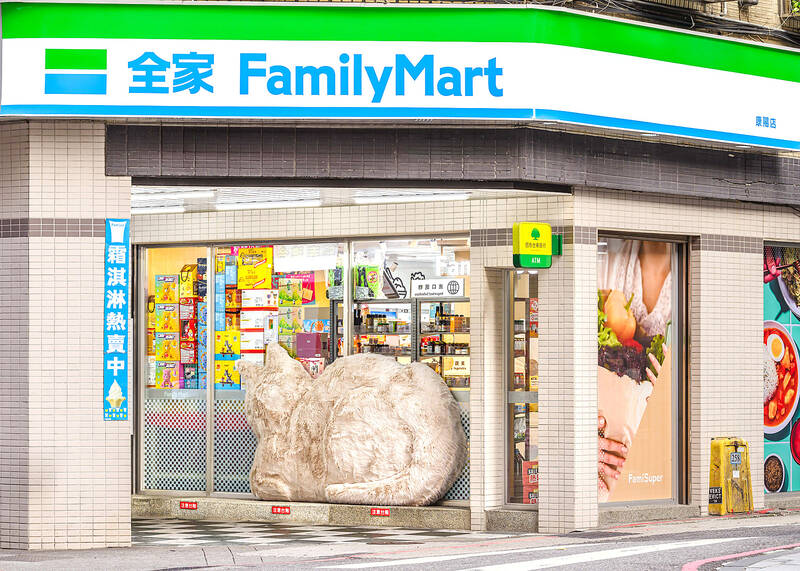
Photo courtesy of Taiwan FamilyMart Co
The trend reflects a broader shift in pet ownership.
In 2023, the estimated number of pet cats nationwide reached 1,311,449, a 50 percent increase from 870,801 in 2021, the Ministry of Agriculture said.
The ministry has yet to release more recent data.
However, by the end of last year, the number of registered cats surpassed that of dogs for the first time, the ministry said, adding that the total registered cats and dogs exceeded 3.4 million, and a majority were felines.
The combined figure has also surpassed the number of children younger than 14, which stands at about 2.8 million, highlighting the country’s declining birthrate and the growing role of pets in households.
7-Eleven chain operator President Chain Store Corp (統一超商) said it began observing strong growth in cat food sales in 2023, with the category posting double-digit gains. The chain has since expanded its offerings, introducing “OPEN!PETS” sections in more than 3,700 stores nationwide, carrying between 110 and 250 items.
FamilyMart chain operator Taiwan FamilyMart Co (全家便利商店) capitalized on the trend through a Feb. 22 “Cat Day” campaign that went viral on Threads.
Cat-themed merchandise and promotions boosted related sales by more than 40 percent, the company said.
OK Mart chain operator OK Mart Co (來來超商) said the share of cat products among its pet offerings has risen from about 60 percent to roughly 70 percent over the past two years, with small packs of wet cat food and single-meal portions proving especially popular.
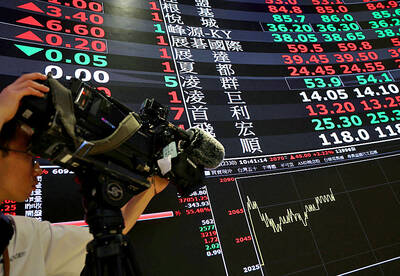
After several years flying high as Asia’s best Nvidia Corp proxy, Taiwan Semiconductor Manufacturing Co (TSMC, 台積電) is increasingly vying with other artificial intelligence (AI) stocks for investor attention. Stock traders are chasing a wider array of beneficiaries as mainstream usage of AI creates demand for hardware beyond the most-advanced chips TSMC makes for Nvidia. Subthemes from the deepening memory crunch to advances in robotics are also luring bids. At the same time, investment caps on single stocks are pushing funds to diversify, while retail investors long familiar with TSMC through its US depositary receipts are being offered a broader set of
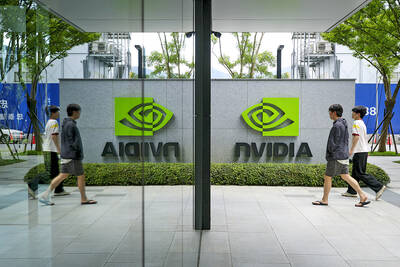
UNDER MICROSCOPE: Taiwan detained three people who allegedly conspired to buy servers in Taiwan and export them using fraudulent documentation, prosecutors said Nvidia Corp chief executive officer Jensen Huang (黃仁勳) on Saturday urged Super Micro Computer Inc to tighten up on compliance after Taiwan detained three people this week for allegedly making fraudulent declarations about artificial intelligence (AI) servers made by its US partner. The development marked the nation’s first crackdown on semiconductor smuggling, which grew after the US slapped restrictions on exports of high-end chips such as Nvidia AI accelerators to China. Nvidia is “rigorous” in explaining regulations to all of its partners, Huang told reporters after arriving in Taipei. “Ultimately Super Micro has to run their own company,” he said in response to
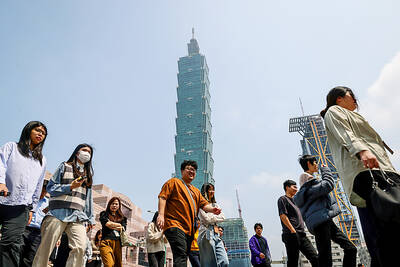
TECH RELIANCE: Growth is increasingly reflecting an unequal K-shaped distribution, where technology sectors outperform and other industries struggle, an expert said Standard Chartered Bank has significantly raised its forecast for Taiwan’s economic growth to 9.5 percent this year, up from 7.6 percent previously, citing surging artificial intelligence (AI) demand driving exports, semiconductor production and investment. The upgrade reflects a sustained AI supercycle that continues to fuel demand for advanced chips and technology infrastructure, which form the backbone of Taiwan’s exports, the bank said in a report this week. “We raise our 2026 growth forecast to reflect a much stronger-than-expected first-quarter GDP figure,” Standard Chartered senior economist for greater China and Asia Tommy Wu (胡東安) said in the report. Driven largely by a 35.3 percent
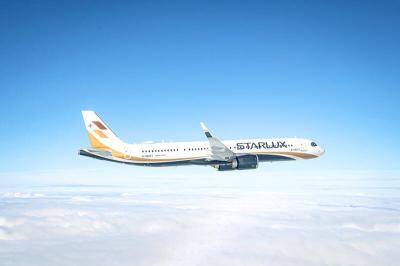
Two of Taiwan’s international carriers, Starlux Airlines Co (星宇航空) and EVA Airways Corp (長榮航空), have retained the five-star airline rating awarded by international airline review organization Skytrax. Starlux was awarded the distinction for a second consecutive year, while EVA Air received it for the 11th straight year, Skytrax said in statements released yesterday and on Thursday last week, respectively. The five-star rating is considered one of the airline industry's highest honors and is awarded following professional audits of airline product and frontline service standards, Skytrax said. The ratings are based on in-depth assessments using unified global quality standards rather than customer review scores


 RSS
RSS