


The manufacturing sector benefited from sustained demand for artificial intelligence (AI) and high-performance computing (HPC) applications, which continued to support industrial activity at the start of the year, a report released yesterday by the Taiwan Institute of Economic Research (台灣經濟研究院) showed.
The manufacturing business climate indicator rose to 13.81 points in January, up 1.32 points from 12.49 in December last year, lifting the sector’s “yellow-blue” — which indicates sluggish conditions — to “green,” signaling steady growth.
The largest contribution came from the input reading, which increased by 1.13 points, suggesting stronger production and procurement activity.
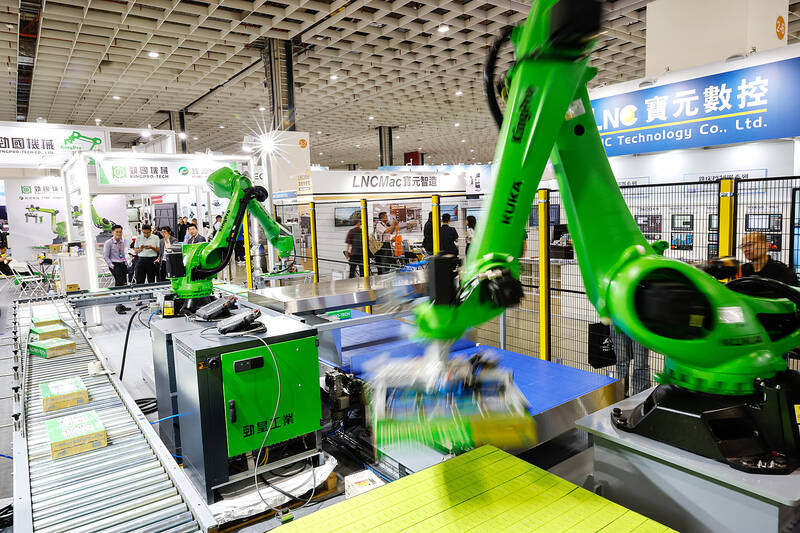
Photo: Ritchie B. Tongo, EPA
The demand gauge also rose by 0.66 points, indicating a modest uptick, the report said.
However, the operating environment measure fell by 0.36 points, while cost and selling price components declined by 0.07 points and 0.05 points respectively, pointing to some lingering uncertainty in the broader business climate, it said.
The proportion of industries flashing “blue,” which indicates a recession, dropped sharply from 46.60 percent to 19.72 percent, indicating a significant reduction in sectors experiencing contraction, the report said.
More notably, the share of industries with a “green” light jumped from 12.06 percent to 31.95 percent — the largest among all categories — as more manufacturers and firms outside the core AI supply chain displayed signs of stabilization, it said.
In the electronic components sector, demand tied to AI applications, HPC and cloud services remained strong, resulting in double-digit annual growth in exports, export orders and industrial production, the report said.
In the base metals industry, demand for products such as copper foil and copper-clad laminates — key materials used in AI-related hardware — also rose, it said.
Together with the continued increase in global copper prices, this trend supported order momentum and shipments for manufacturers in the sector, it added.
The food industry also posted improved performance, the report said, adding that stronger demand from China and Southeast Asia, combined with seasonal Lunar New Year purchases, helped lift overall activity.
Additional support came from an increase in concerts and promotional events tied to political primary polling ahead of the local elections scheduled for November, the report said.
In the automobile and auto parts sector, demand from North America for components such as collision-related parts increased.
This expansion boosted indicators related to raw materials and production activity, it said.
Despite some weakness in cost and operating environment indicators, the report suggested that Taiwan’s manufacturing sector entered this year on firmer footing, supported by resilient technology demand and improving conditions across a wider range of industries.

SECOND-RATE: Models distilled from US products do not perform the same as the original and undo measures that ensure the systems are neutral, the US’ cable said The US Department of State has ordered a global push to bring attention to what it said are widespread efforts by Chinese companies, including artificial intelligence (AI) start-up DeepSeek (深度求索), to steal intellectual property from US AI labs, according to a diplomatic cable. The cable, dated Friday and sent to diplomatic and consular posts around the world, instructs diplomatic staff to speak to their foreign counterparts about “concerns over adversaries’ extraction and distillation of US AI models.” Distillation is the process of training smaller AI models using output from larger, more expensive ones to lower the costs of training a powerful new

Singapore-based ride-hailing and delivery giant Grab Holdings’ planned acquisition of Foodpanda’s Taiwan operations has yet to enter the formal review stage, as regulators await supplementary documents, the Fair Trade Commission (FTC) said yesterday. Acting FTC Chairman Chen Chih-min (陳志民) told the legislature’s Economics Committee that although Grab submitted its application on March 27, the case has not been officially accepted because required materials remain incomplete. Once the filing is finalized, the FTC would launch a formal probe into the deal, focusing on issues such as cross-shareholding and potential restrictions on market competition, Chen told lawmakers. Grab last month announced that it would acquire
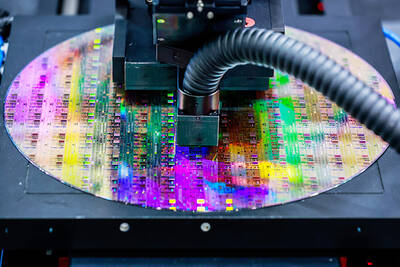
The artificial intelligence (AI) boom has triggered a seismic reshuffling of global equity markets, with Taiwan and South Korea muscling past European nations one by one. With its stock market now valued at nearly US$4.3 trillion, Taiwan surpassed the UK, Europe’s biggest market, earlier this month, data compiled by Bloomberg showed. South Korea is about US$140 billion away from doing the same. The tech-heavy Asian markets have shot past Germany and France in the past seven months. The shift is largely down to massive gains in shares of three companies that provide essential hardware for AI: Taiwan Semiconductor Manufacturing Co (TSMC, 台積電),
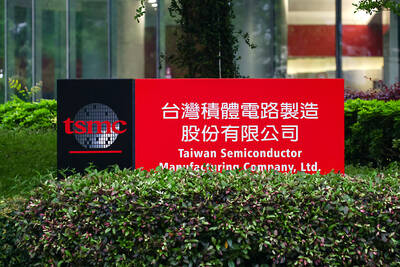
Shares of Taiwan Semiconductor Manufacturing Co (TSMC, 台積電) have repeatedly hit new highs, but an equity analyst said the stock’s valuation remains within a reasonable range and any pullback would likely be technical. The contract chipmaker’s historical price-to-earnings (P/E) ratio has ranged between 20 and 30, Cathay Futures Consultant Co (國泰證期) analyst Tsai Ming-han (蔡明翰) told Central News Agency. With market consensus projecting that TSMC would post earnings per share of about NT$100 (US$3.17) this year, supported by strong global demand for artificial intelligence (AI) applications, and the stock currently trading at a P/E ratio of below 25, Tsai said the valuation


 RSS
RSS