


Acter Group Co (聖暉), which specializes in installing cleanroom electromechanical integration and pipelining systems for semiconductor companies, yesterday said that revenue should rise by a double-digit percentage this year, benefiting from capacity expansions by foundries and major memory chipmakers amid the artificial intelligence (AI) boom.
The company benefits from strong AI infrastructure investment sprees by the world’s major cloud service providers, spurring demand for advanced chips and chip-on-wafer-on-substrate (CoWoS) chip packaging capacity from Taiwan Semiconductor Manufacturing Co (台積電), and high-bandwidth-memory and standard DRAM chips from Micron Technology Inc and Nanya Technology Corp (南亞科技).
“We are targeting double-digit percent revenue and profit growth this and next year, building on a high base in 2025,” Acter spokesman Jeff Liang (梁鈞幃) told a media briefing.
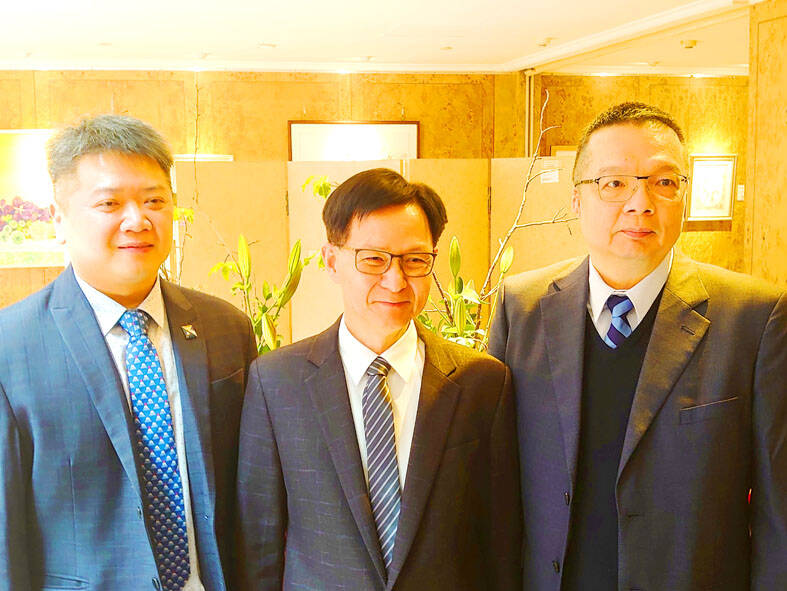
Photo: CNA
“As of January, orders on hand exceeded NT$50 billion [US$1.58 billion]. That is just a baseline estimate,” he said.
That was an increase from NT$46.8 billion orders received during the same period last year, he added.
The company’s revenue surged 37 percent year-over-year last year to a record-high NT$41.48 billion.
Acter also expects contributions from its overseas projects to expand after new construction projects, including semiconductor fabs and data centers in the US, Japan and Southeast Asia, commence this year.
Its overseas operations made up about 40 percent of the company’s total revenue last year.
The US is to start contributing to revenue this year, accounting for about 7 percent of the total and rising to 20 percent next year, Acter said.
Gross margin is expected to improve further this year from 21 percent last year, given greater overseas market exposure, it said.
“We have to look beyond the home market and be prepared for future growth after domestic fab expansions reach their peak,” Liang said.
Liang identified rising raw material costs and a labor shortage as two key challenges this year.
To optimize its overseas operations’ cost management, Acter has formed a strategic alliance, or “flagship fleets” with industry peers in the US and Southeast Asian countries to leverage each other’s resources, as they serve the same customers, he said.
Greenfiltec Ltd (濾能), a filter manufacturer specializing in airborne molecular contamination prevention and semiconductor chemical filters, and Acter subsidiary Rayzher Industrial Co (銳澤) are members of the flagship fleets.
Rayzher, which specializes in installing main systems and gas pipelines to transmit utilities for semiconductor manufacturers, has set up branches in Japan, Singapore and Phoenix, Arizona, to provide on-site services for customers.
The company plans to build a branch in Germany next quarter, it said.
Another subsidiary, Nova Technology Corp (朋億), said it would benefit from the memory chip’s supercycle, as it has won orders from major memory chipmakers to help install water, gas and chemicals supply pipeline systems, company president David Ma (馬蔚) said.
Revenue should rebound this year after last year’s 14.13 percent decline, he said.

SECOND-RATE: Models distilled from US products do not perform the same as the original and undo measures that ensure the systems are neutral, the US’ cable said The US Department of State has ordered a global push to bring attention to what it said are widespread efforts by Chinese companies, including artificial intelligence (AI) start-up DeepSeek (深度求索), to steal intellectual property from US AI labs, according to a diplomatic cable. The cable, dated Friday and sent to diplomatic and consular posts around the world, instructs diplomatic staff to speak to their foreign counterparts about “concerns over adversaries’ extraction and distillation of US AI models.” Distillation is the process of training smaller AI models using output from larger, more expensive ones to lower the costs of training a powerful new

Singapore-based ride-hailing and delivery giant Grab Holdings’ planned acquisition of Foodpanda’s Taiwan operations has yet to enter the formal review stage, as regulators await supplementary documents, the Fair Trade Commission (FTC) said yesterday. Acting FTC Chairman Chen Chih-min (陳志民) told the legislature’s Economics Committee that although Grab submitted its application on March 27, the case has not been officially accepted because required materials remain incomplete. Once the filing is finalized, the FTC would launch a formal probe into the deal, focusing on issues such as cross-shareholding and potential restrictions on market competition, Chen told lawmakers. Grab last month announced that it would acquire
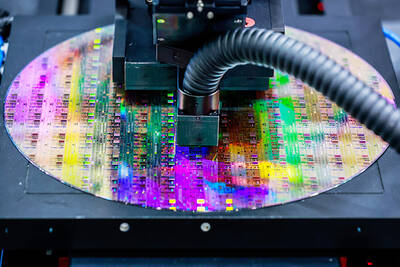
The artificial intelligence (AI) boom has triggered a seismic reshuffling of global equity markets, with Taiwan and South Korea muscling past European nations one by one. With its stock market now valued at nearly US$4.3 trillion, Taiwan surpassed the UK, Europe’s biggest market, earlier this month, data compiled by Bloomberg showed. South Korea is about US$140 billion away from doing the same. The tech-heavy Asian markets have shot past Germany and France in the past seven months. The shift is largely down to massive gains in shares of three companies that provide essential hardware for AI: Taiwan Semiconductor Manufacturing Co (TSMC, 台積電),
Shares of Taiwan Semiconductor Manufacturing Co (TSMC, 台積電) have repeatedly hit new highs, but an equity analyst said the stock’s valuation remains within a reasonable range and any pullback would likely be technical. The contract chipmaker’s historical price-to-earnings (P/E) ratio has ranged between 20 and 30, Cathay Futures Consultant Co (國泰證期) analyst Tsai Ming-han (蔡明翰) told Central News Agency. With market consensus projecting that TSMC would post earnings per share of about NT$100 (US$3.17) this year, supported by strong global demand for artificial intelligence (AI) applications, and the stock currently trading at a P/E ratio of below 25, Tsai said the valuation


 RSS
RSS