


Goldman Sachs Group Inc chairman David Solomon said he has been surprised by the “benign” reaction in financial markets to the Middle East conflict, adding that it would take weeks to understand more about the situation.
“It’s very hard to speculate, because there is so much that is unknown at this point,” Solomon said at the Australian Financial Review Business Summit in Sydney yesterday morning.
Investors are considering whether this would become a more prolonged event and start to impact consumption, he added.
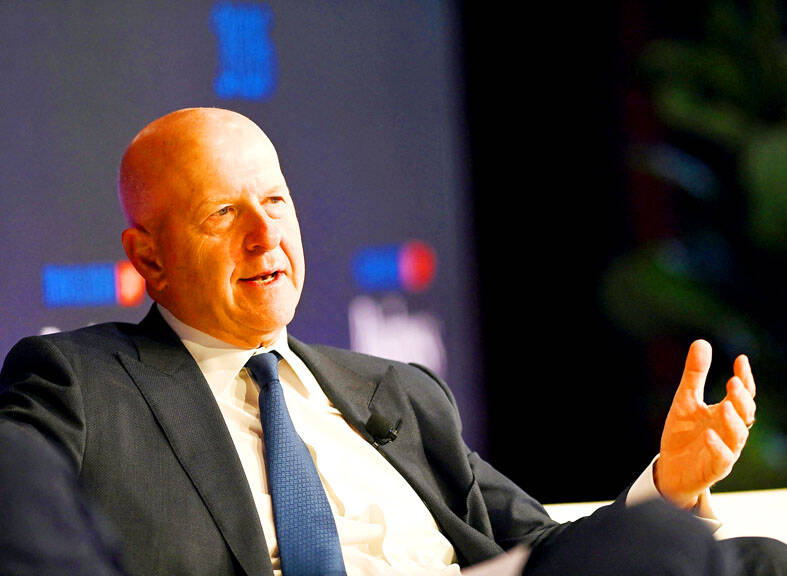
Photo: Reuters
US assurances on securing shipping through the Strait of Hormuz have helped steady nerves in markets. Still, the Iran war has reverberated across the region, with Israel bombarding Tehran in a fresh wave of strikes. The Islamic Republic fired missiles at Qatar, Bahrain and Oman, with Doha saying targets were not limited to military interests.
“I look at the market reaction, and I’m actually surprised,” Solomon said. “The market reaction has been benign.”
The S&P 500 index of US stocks fell less than 1 percent across Monday and Tuesday, partly reflecting its exposure to large technology shares that have held their ground.
Since Solomon spoke, some moves have extended, with the MSCI Asia Pacific Index slumping as much as 4.5 percent and South Korea’s KOSPI plunging more than 12 percent, putting it on track for the worst day on record. Taiwan’s TAIEX and Japan’s TOPIX were down more than 4 percent, while Thailand’s benchmark stock index plunged as much as 8 percent.
The jittery also spilled into currency markets, with India’s rupee weakened to a record low on fears that higher energy prices would stoke inflation.
US Treasuries have fallen this week amid the inflation concerns, reducing expectations for interest rate cuts. The US dollar has gained more broadly even on currencies seen as safe havens, and is up 1.4 percent on the yen this week and 0.7 percent on the Swiss franc.
Solomon said he was not surprised to see the VIX Index and other volatility measures climb.
“I think it’s gonna take a couple of weeks for markets to really digest the implications of what has happened both in the short term and medium term, and I can’t speculate as to how that would play out,” he said.
Much of the market response centers on oil prices, and whether crude can move unobstructed through the Strait of Hormuz. Brent rose above US$82 a barrel yesterday after rallying about 12 percent over two days, the biggest gain since 2020.
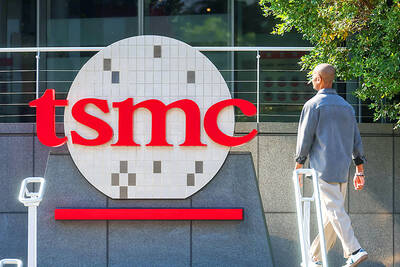
Shares of contract chipmaker Taiwan Semiconductor Manufacturing Co (TSMC, 台積電) came under pressure yesterday after a report that Apple Inc is looking to shift some orders from the Taiwanese company to Intel Corp. TSMC shares fell NT$55, or 2.4 percent, to close at NT$2,235 on the local main board, Taiwan Stock Exchange data showed. Despite the losses, TSMC is expected to continue to benefit from sound fundamentals, as it maintains a lead over its peers in high-end process development, analysts said. “The selling was a knee-jerk reaction to an Intel-Apple report over the weekend,” Mega International Investment Services Corp (兆豐國際投顧) analyst Alex Huang
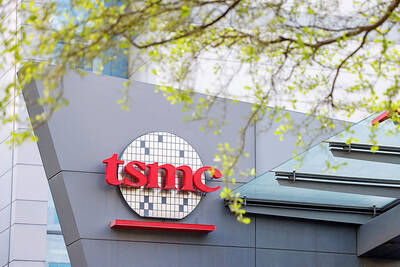
Taiwan Semiconductor Manufacturing Co (TSMC, 台積電) is expected to remain Apple Inc’s primary chip manufacturing partner despite reports that Apple could shift some orders to Intel Corp, industry experts said yesterday. The comments came after The Wall Street Journal reported on Friday that Apple and Intel had reached a preliminary agreement following more than a year of negotiations for Intel to manufacture some chips for Apple devices. Taiwan Institute of Economic Research (台灣經濟研究院) economist Arisa Liu (劉佩真) said TSMC’s advanced packaging technologies, including integrated fan-out and chip-on-wafer-on-substrate, remain critical to the performance of Apple’s A-series and M-series chips. She said Intel and Samsung
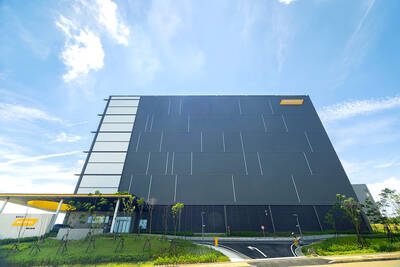
POWER BUILDUP: Powered by Nvidia’s B200 Blackwell chips, the data center would support MediaTek’s computing power demand and business growth, the company said Smartphone chip designer MediaTek Inc (聯發科) yesterday launched a new artificial intelligence (AI) data center with a maximum capacity of 45 megawatts to meet its rising demand for computing power required to develop new advanced chips for AI applications. The company has completed the first-phase computing power buildup at the data center in Miaoli County’s Tongluo Township (銅鑼), providing 15 megawatts of capacity to support its research and development (R&D) capabilities, despite an industrywide shortage of key components, MediaTek said. Supply constraints have plagued a wide range of key components, including memory chips, solid-state drives, power supply units and central
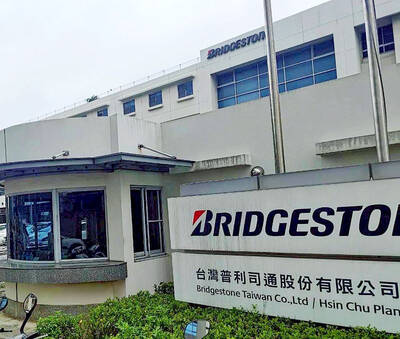
TRANSITION: With the closure, the company would reorganize its Taiwanese unit to a sales and service-focused model, Bridgestone said Bridgestone Corp yesterday announced it would cease manufacturing operations at its tire plant in Hsinchu County’s Hukou Township (湖口), affecting more than 500 workers. Bridgestone Taiwan Co (台灣普利司通) said in a statement that the decision was based on the Tokyo-based tire maker’s adjustments to its global operational strategy and long-term market development considerations. The Taiwanese unit would be reorganized as part of the closure, effective yesterday, and all related production activities would be concluded, the statement said. Under the plan, Bridgestone would continue to deepen its presence in the Taiwanese market, while transitioning to a sales and service-focused business model, it added. The Hsinchu


 RSS
RSS