


Exhibitors and organizers were gamely showing off new artificial intelligence (AI)-focused tech at the Mobile World Congress (MWC) trade fair in Barcelona on Monday, although some were kept away by travel disruptions caused by the US-Israel-Iran war.
The annual gathering, expected to draw around 109,000 visitors, went ahead without many Israeli companies as flights were cancelled from the nation’s airports.
"Certainly, the travel restrictions are having an impact," said Lara Dewar, marketing chief at the GSMA telecoms industry association, which organizes the MWC.
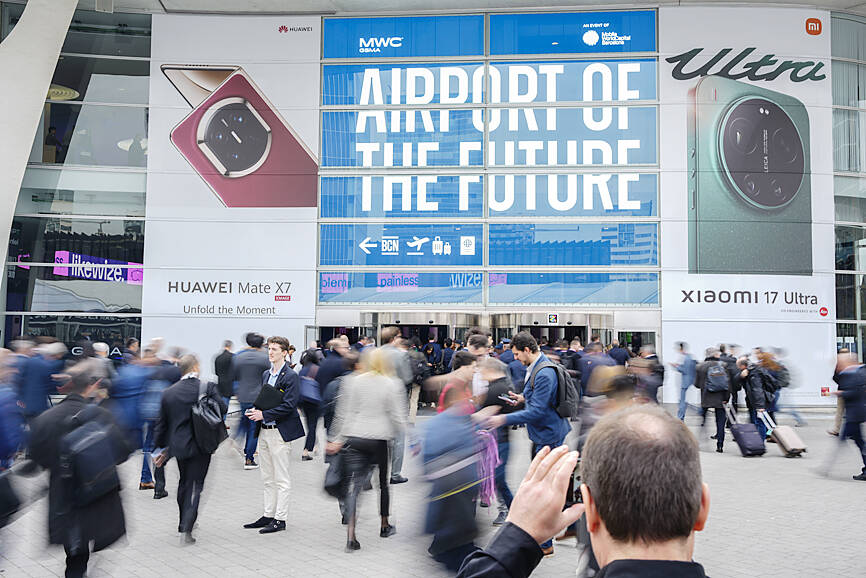
Photo: Alejandro Garcia, EPA
Around 30 Israeli participants had been slated to exhibit in the Catalan city.
Some such as AI security firm DeepKeep were unable to attend, AFP journalists saw on signs posted at the absent companies’ stands.
Nine of the 25 businesses supposed to join the Israeli national pavilion were also kept away.
"Due to the current situation, our flights... were cancelled, and we were unable to reach Barcelona," Nofar Moradian-Shiber of the Israel Export Institute told AFP.
Spanish media reported that thousands of prospective MWC attendees had cancelled, as airports across the Middle East have shut down during the fighting.
The GSMA said that no Iranian exhibitors had been expected at this year’s event.
GSMA director-general Vivek Badrinath referred to the fighting directly in a Monday morning panel discussion, saying: "Our thoughts are with all those affected by the conflict."
Beyond the day’s dominant news story, players in the telecoms sector are looking ahead to a year with packed to-do lists, from network improvements to the growing capability of generative AI.
Governments — especially in Europe — are engaged in a push for technological sovereignty to insulate their tech infrastructure from geopolitical tensions, according to GSMA analysts.
In Europe, "we need larger companies that assume more risks, attract better talent and have deeper technological investments," Telefonica SA chairman and CEO Marc Murtra said.
Calls for more mega-mergers to be allowed in Europe have been an MWC staple for years.
Beyond political considerations, "the mobile industry is facing one of the most unprecedented challenges in its history," market intelligence firm International Data Corp (IDC) analyst Francisco Jeronimo said.
Device makers around the world are confronted with a surge in the price of memory chips, pumped by massive demand from tech giants building up AI computing capacity.
That could put the brakes on growth in global smartphone sales, which added 1.9 percent to reach 1.26 billion devices last year.
Over the short term, the memory price surge will likely trigger a "market contraction" in phones this year, IDC predicted.
Meanwhile, operators and space firms are together racing to offer so-called "direct-to-device" satellite connectivity, in which phones or other connected gadgets communicate directly via satellites overhead without the need for towers on the ground.
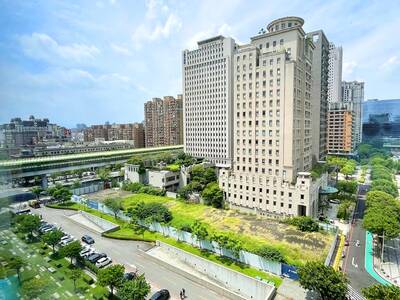
Taichung reported the steepest fall in completed home prices among the six special municipalities in the first quarter of this year, data compiled by Taiwan Realty Co (台灣房屋) showed yesterday. From January through last month, the average transaction price for completed homes in Taichung fell 8 percent from a year earlier to NT$299,000 (US$9,483) per ping (3.3m²), said Taiwan Realty, which compiled the data based on the government’s price registration platform. The decline could be attributed to many home buyers choosing relatively affordable used homes to live in themselves, instead of newly built homes in the city’s prime property market, Taiwan Realty
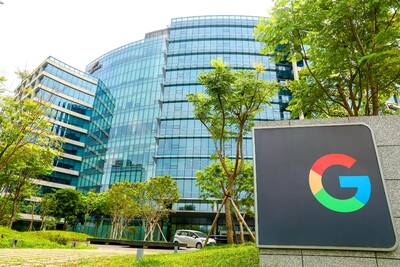
The government yesterday approved applications by Alphabet Inc’s Google to invest NT$27.08 billion (US$859.98 million) in Taiwan, the Ministry of Economic Affairs said in a statement. The Department of Investment Review approved two investments proposed by Google, with much of the funds to be used for data processing and electronic information supply services, as well as inventory procurement businesses in the semiconductor field, the ministry said. It marks the second consecutive year that Google has applied to increase its investment in Taiwan. Google plans to infuse NT$25.34 billion into Charter Investments Ltd (特許投資顧問) through its Singapore-based subsidiary Fructan Holdings Singapore Pte Ltd, and
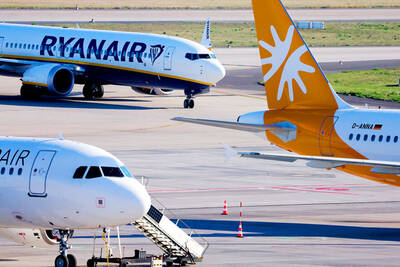
JET JUICE: The war on Iran’s secondary effects have seen fuel prices skyrocket, knocking flight schedules down to earth in return as airlines struggle with costs Airline passengers should brace for more irritation in the next few months as carriers worldwide cancel flights and ground planes to cope with stratospheric increases in jet-fuel prices. Dutch flag carrier KLM is the latest company to cut its schedule, saying on Thursday that it would scrap 80 return flights at Amsterdam’s Schiphol Airport in the coming month. That puts it in the same league as United Airlines Holdings Inc, Deutsche Lufthansa AG and Cathay Pacific Airways Ltd, which have all pruned itineraries to mitigate costs. Global capacity for next month has been reduced by about 3 percentage points, with all

The US said it plans to help build a first-of-its-kind industrial hub in the Philippines to boost production of inputs crucial to US supply chains. The 4,000-acre hub is intended to be “a purpose-built platform for allied manufacturing” and “an investment acceleration hub where the specific industrial activities are shaped by market demand,” the US Department of State said on Thursday. The project — touted as an “economic security zone” — would be within the Luzon Economic Corridor, a flagship economic project backed by the US and Japan on the main Philippine island. The project was also described as “the first artificial intelligence


 RSS
RSS