


OpenAI is projecting that its revenue would grow at a fast clip in the next few years and exceed US$280 billion in 2030, a person familiar with the matter said.
The revenue forecast reflects OpenAI’s strong momentum in subscription sales for its artificial intelligence (AI) software to consumers and businesses. OpenAI has also began testing advertising for certain users, creating a new potential moneymaker for the company.
OpenAI chief financial officer Sarah Friar said the company’s annualized revenue topped US$20 billion last year, up from about US$6 billion the previous year.

Photo: AFP
CNBC was first to report the new revenue estimate.
Like its peers, OpenAI is racing to convince more companies and users to pay up for its AI services to help offset the immense cost of chips, data centers and talent needed to build its technology.
OpenAI previously said it had committed to spend more than US$1.4 trillion on infrastructure for AI in the coming years.
The company is now telling investors it is planning to spend about US$600 billion by 2030, said the person, who spoke on condition of anonymity to discuss private matters.
OpenAI chief executive officer Sam Altman is engaged in a massive construction spree to build data centers in the US and beyond, as he seeks a leading position in AI against rivals such as Alphabet Inc and Anthropic PBC.
The company is close to finalizing the first phase of a new funding round that is likely to bring in more than US$100 billion, Bloomberg News has reported.
The overall valuation of the company, including the eventual funding, could exceed US$850 billion.
Meanwhile, OpenAI said it has “visibility into what we are going to need” regarding chip supply, while emphasizing the need for democratic nations to develop shared safety standards for AI.
The start-up is working with strategic partners who are “supportive” in terms of providing access to chips, OpenAI chief global affairs officer Chris Lehane told Bloomberg Television.
OpenAI executives remain vigilant about supply chain issues, ensuring they “sleep with one eye open” to verify availability, he added.
Lehane, who attended an AI summit in India with Altman last week, also emphasized the importance of international cooperation on governance, pointing to AI safety institutes emerging in the US, the UK and Japan, and drawing parallels to the International Atomic Energy Agency.
“Democratic societies do need to start to develop shared safety standards on this technology,” Lehane said in the interview.
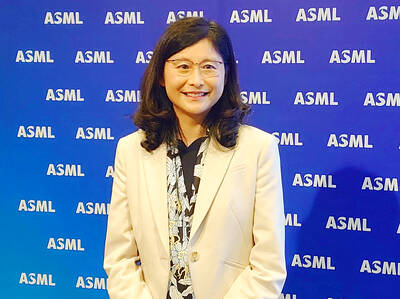
Netherlands-based semiconductor equipment supplier ASML Holding NV yesterday said that it is planning to hire an additional 1,000 people in Taiwan this year in response to growing demand from clients. ASML had previously planned to recruit 600 people this year, but that the plan has been adjusted upward, ASML vice president and ASML Taiwan general manager Grace Wang (汪佳慧) told reporters. ASML has a workforce of more than 4,500 in Taiwan, accounting for about 10 percent of its global total, Wang said. This year’s recruitment campaign would focus on adding people in the customer support, manufacturing and supply chain domains to assist ASML
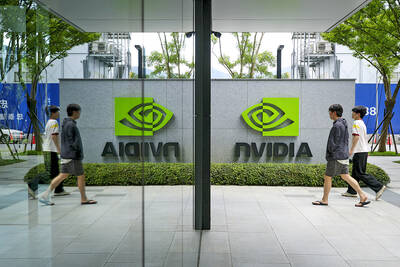
UNDER MICROSCOPE: Taiwan detained three people who allegedly conspired to buy servers in Taiwan and export them using fraudulent documentation, prosecutors said Nvidia Corp chief executive officer Jensen Huang (黃仁勳) on Saturday urged Super Micro Computer Inc to tighten up on compliance after Taiwan detained three people this week for allegedly making fraudulent declarations about artificial intelligence (AI) servers made by its US partner. The development marked the nation’s first crackdown on semiconductor smuggling, which grew after the US slapped restrictions on exports of high-end chips such as Nvidia AI accelerators to China. Nvidia is “rigorous” in explaining regulations to all of its partners, Huang told reporters after arriving in Taipei. “Ultimately Super Micro has to run their own company,” he said in response to

Nvidia Corp yesterday announced that CEO Jensen Huang (黃仁勳) would attend an employee meeting in Taipei tomorrow to celebrate the launch of the company’s Taiwan headquarters project. Huang would attend a gathering at the site of Nvidia’s planned headquarters in Beitou Shilin Technology Park (北投士林科技園區), the company said in a statement. After arriving in Taiwan on Saturday last week, Huang told reporters that he plans to meet with Quanta Computer Inc (廣達) chairman Barry Lam (林百里) and Taiwan Semiconductor Manufacturing Co (TSMC, 台積電) chairman C.C. Wei (魏哲家), and would attend the groundbreaking ceremony for Nvidia’s Taiwan headquarters tomorrow. Nvidia has not yet applied

Huawei Technologies Co (華為) said it has come up with a new pathway to shorten its gap with industry leader Taiwan Semiconductor Manufacturing Co (TSMC, 台積電), potentially achieving a breakthrough in making advanced semiconductors without cutting-edge equipment. Right now there is about a five-year gap between what TSMC is capable of and what Huawei, together with its manufacturing partner Semiconductor Manufacturing International Corp (中芯), can produce. Huawei is to start making 1.4-nanometer chips by 2031 with its own “LogicFolding” technology, Huawei semiconductor chief He Tingbo (何庭波) said in a rare public appearance during a chip conference yesterday, while TSMC has


 RSS
RSS