


Wall Street stocks advanced Friday as markets digested a US Supreme Court decision striking down some of the White House’s sweeping tariffs and US President Donald Trump’s response vowing new levies.
The conservative-majority top court ruled six-three that a 1977 law known as the International Emergency Economic Powers Act Trump has relied on “does not authorize the president to impose tariffs.” A furious Trump, who nominated two of the justices who repudiated him, said he was “absolutely ashamed” of some justices “for not having the courage to do what’s right for our country” and vowed to impose a uniform tariff of 10 percent under a separate authority.
Wall Street stocks, which had opened lower following disappointing US economic data, pushed into positive territory and also ended higher following a choppy session. The S&P 500 ended up 0.7 percent.
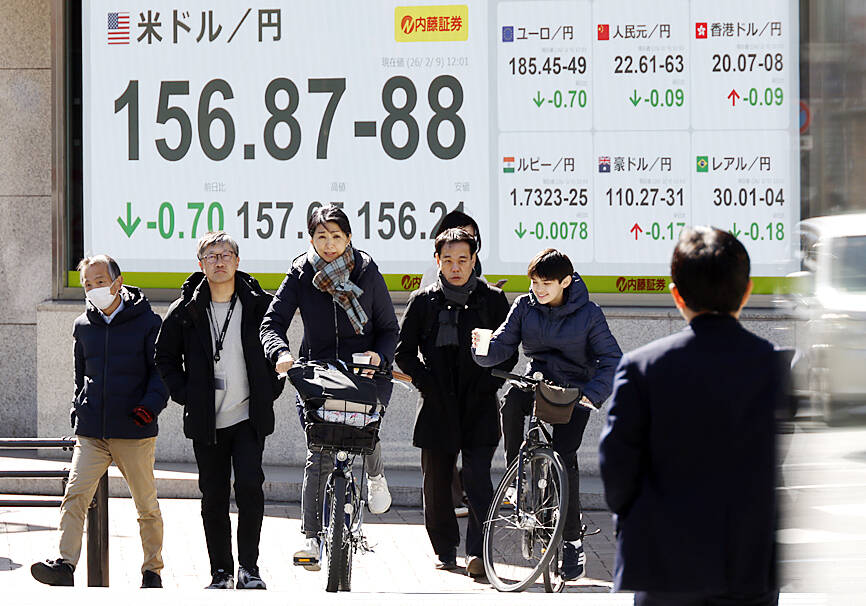
Photo: EPA
Some analysts said they expect the ruling to lead to lower inflation, but others described the situation as fundamentally uncertain.
The market is not “surprised by what it heard from the Supreme Court and at the same time, it’s not surprised that the Trump administration is already touting its ability to make up for the lost revenue that would come from revoking the tariffs,” Briefing.com analyst Patrick O’Hare said.
Siebert Financial chief investment officer Mark Malek described the ruling as throwing a “pretty large wrench into the policy machine,” predicting that policy uncertainty would remain “elevated.”
LPL Financial chief equity strategist Jeff Buchbinder predicted Trump would likely pivot to a different legal strategy.
“However, if lower tariffs help cool inflation, it could firm up expectations for Fed rate cuts later this year,” Buchbinder said in a note.
In Europe, a closely watched survey on Friday showed that business activity in the eurozone accelerated this month, indicating that the region’s economy is on a more stable footing. British firms also boosted output this month, according to the purchasing managers’ index published by S&P Global.
London’s FTSE 100 stock index hit a fresh record high, as did the CAC 40 in Paris.
In Asia, Hong Kong fell as it reopened from a three-day break for the Lunar New Year, and Tokyo was also down. Oil prices, which surged to multi-month highs this week on US suggestions of military action against Iran, moved sideways as markets kept an eye on geopolitics.
Trump had suggested on Thursday that “bad things” would happen if Tehran did not strike a deal within 10 days, which he subsequently extended to 15.
Asked by a reporter on Friday whether he was contemplating a limited military strike, Trump answered: “The most I can say — I am considering it.”
Also on Friday, data showed the US economy expanded at a 1.4 percent annual rate in the October to December period, significantly below the 2.5 percent pace that analysts had forecasted for the quarter.
The period included a lengthy US government shutdown amid a budget fight between Trump and Congress.
“At first glance the first reading of fourth quarter GDP was very disappointing,” Northlight Asset Management chief investment officer Chris Zaccarelli said.
“However, the government was shut down for almost half the quarter,” he added.
Shares of contract chipmaker Taiwan Semiconductor Manufacturing Co (TSMC, 台積電) came under pressure yesterday after a report that Apple Inc is looking to shift some orders from the Taiwanese company to Intel Corp. TSMC shares fell NT$55, or 2.4 percent, to close at NT$2,235 on the local main board, Taiwan Stock Exchange data showed. Despite the losses, TSMC is expected to continue to benefit from sound fundamentals, as it maintains a lead over its peers in high-end process development, analysts said. “The selling was a knee-jerk reaction to an Intel-Apple report over the weekend,” Mega International Investment Services Corp (兆豐國際投顧) analyst Alex Huang
Taiwan Semiconductor Manufacturing Co (TSMC, 台積電) is expected to remain Apple Inc’s primary chip manufacturing partner despite reports that Apple could shift some orders to Intel Corp, industry experts said yesterday. The comments came after The Wall Street Journal reported on Friday that Apple and Intel had reached a preliminary agreement following more than a year of negotiations for Intel to manufacture some chips for Apple devices. Taiwan Institute of Economic Research (台灣經濟研究院) economist Arisa Liu (劉佩真) said TSMC’s advanced packaging technologies, including integrated fan-out and chip-on-wafer-on-substrate, remain critical to the performance of Apple’s A-series and M-series chips. She said Intel and Samsung
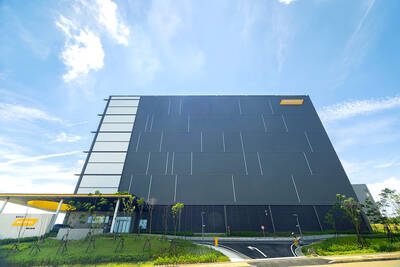
POWER BUILDUP: Powered by Nvidia’s B200 Blackwell chips, the data center would support MediaTek’s computing power demand and business growth, the company said Smartphone chip designer MediaTek Inc (聯發科) yesterday launched a new artificial intelligence (AI) data center with a maximum capacity of 45 megawatts to meet its rising demand for computing power required to develop new advanced chips for AI applications. The company has completed the first-phase computing power buildup at the data center in Miaoli County’s Tongluo Township (銅鑼), providing 15 megawatts of capacity to support its research and development (R&D) capabilities, despite an industrywide shortage of key components, MediaTek said. Supply constraints have plagued a wide range of key components, including memory chips, solid-state drives, power supply units and central
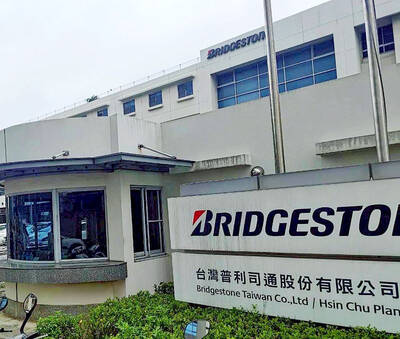
TRANSITION: With the closure, the company would reorganize its Taiwanese unit to a sales and service-focused model, Bridgestone said Bridgestone Corp yesterday announced it would cease manufacturing operations at its tire plant in Hsinchu County’s Hukou Township (湖口), affecting more than 500 workers. Bridgestone Taiwan Co (台灣普利司通) said in a statement that the decision was based on the Tokyo-based tire maker’s adjustments to its global operational strategy and long-term market development considerations. The Taiwanese unit would be reorganized as part of the closure, effective yesterday, and all related production activities would be concluded, the statement said. Under the plan, Bridgestone would continue to deepen its presence in the Taiwanese market, while transitioning to a sales and service-focused business model, it added. The Hsinchu


 RSS
RSS