


Tariffs paid by midsized US businesses tripled over the past year, new research tied to one of the US’ leading banks showed on Thursday — more evidence that US President Donald Trump’s push to charge higher taxes on imports is causing economic disruption.
The additional taxes have meant that companies that employ a combined 48 million people in the US — the kind of businesses that Trump had promised to revive — have had to find ways to absorb the new expense, by passing it along to customers in the form of higher prices, employing fewer workers or accepting lower profits.
“That’s a big change in their cost of doing business,” said Chi Mac, business research director at JPMorgan Chase Institute, which published the analysis on Thursday. “We also see some indications that they may be shifting away from transacting with China and maybe toward some other regions in Asia.”
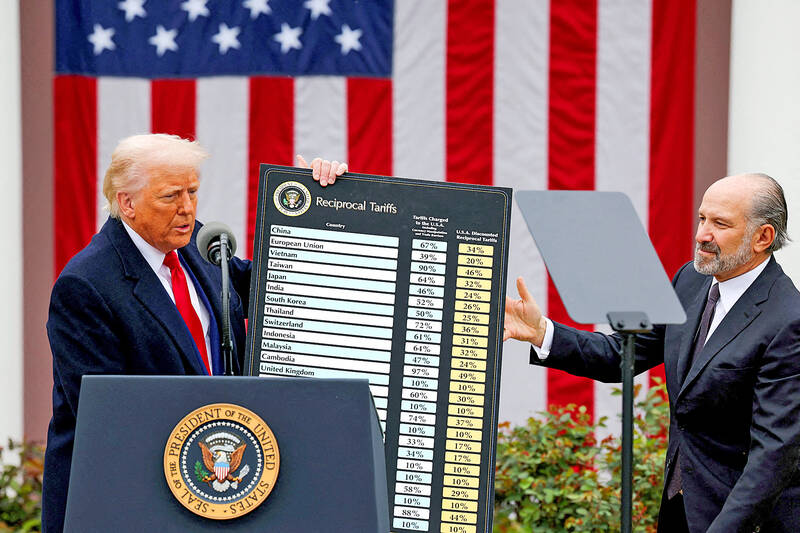
Photo: Reuters
The report used payment data to look at businesses that might lack the pricing power of large multinational companies to offset tariffs, but might be small enough to quickly change supply chains to minimize exposure to the tax increases. The companies tended to have revenues between US$10 million and US$1 billion with fewer than 500 employees, a category known as the “middle market.”
The analysis suggests that the Trump administration’s goal of becoming less directly reliant on Chinese manufacturers has been successful. Payments to China by these companies were 20 percent below their October 2024 levels, but it is unclear whether that means China is simply routing its goods through other countries or if supply chains have moved.
White House spokesman Kush Desai called the analysis “pointless” and said it did not “change the fact that President Trump was right.”
The study showed that US companies are paying tariffs that the president had previously claimed would be paid by foreign entities.
Trump defended his tariffs during a trip to Georgia on Thursday while touring Coosa Steel, a company involved in steel processing and distribution. The president said he could not believe the Supreme Court would soon decide on the legality of some of his tariffs, given his belief that the taxes were helping US manufacturers.
“The tariffs are the greatest thing to happen to this country,” Trump said.
The president imposed a series of tariffs last year for the ostensible goal of reducing the US trade imbalance with other countries, so that the US was no longer importing more than it exports. However, trade data published on Thursday by the US Census Bureau showed that the trade deficit climbed last year by US$25.5 billion to US$1.24 trillion.
Trump on Wednesday posted on social media that he expected there would be a trade surplus “during this year.”
Trump increased the average tariff rate to 13 percent from 2.6 percent last year, according to the New York Fed researchers.
He said that tariffs on some items such as steel, kitchen cabinets and bathroom vanities were in the national security interest of the country.
He also declared an economic emergency to bypass the US Congress and impose a baseline tax on goods from much of the world in April last year at an event he called “Liberation Day.”
Shares of contract chipmaker Taiwan Semiconductor Manufacturing Co (TSMC, 台積電) came under pressure yesterday after a report that Apple Inc is looking to shift some orders from the Taiwanese company to Intel Corp. TSMC shares fell NT$55, or 2.4 percent, to close at NT$2,235 on the local main board, Taiwan Stock Exchange data showed. Despite the losses, TSMC is expected to continue to benefit from sound fundamentals, as it maintains a lead over its peers in high-end process development, analysts said. “The selling was a knee-jerk reaction to an Intel-Apple report over the weekend,” Mega International Investment Services Corp (兆豐國際投顧) analyst Alex Huang
Taiwan Semiconductor Manufacturing Co (TSMC, 台積電) is expected to remain Apple Inc’s primary chip manufacturing partner despite reports that Apple could shift some orders to Intel Corp, industry experts said yesterday. The comments came after The Wall Street Journal reported on Friday that Apple and Intel had reached a preliminary agreement following more than a year of negotiations for Intel to manufacture some chips for Apple devices. Taiwan Institute of Economic Research (台灣經濟研究院) economist Arisa Liu (劉佩真) said TSMC’s advanced packaging technologies, including integrated fan-out and chip-on-wafer-on-substrate, remain critical to the performance of Apple’s A-series and M-series chips. She said Intel and Samsung
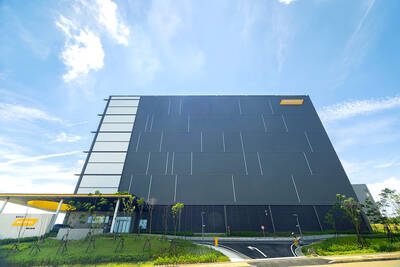
POWER BUILDUP: Powered by Nvidia’s B200 Blackwell chips, the data center would support MediaTek’s computing power demand and business growth, the company said Smartphone chip designer MediaTek Inc (聯發科) yesterday launched a new artificial intelligence (AI) data center with a maximum capacity of 45 megawatts to meet its rising demand for computing power required to develop new advanced chips for AI applications. The company has completed the first-phase computing power buildup at the data center in Miaoli County’s Tongluo Township (銅鑼), providing 15 megawatts of capacity to support its research and development (R&D) capabilities, despite an industrywide shortage of key components, MediaTek said. Supply constraints have plagued a wide range of key components, including memory chips, solid-state drives, power supply units and central
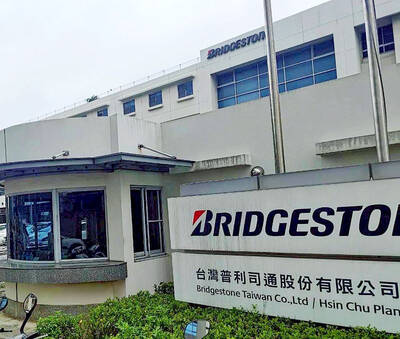
TRANSITION: With the closure, the company would reorganize its Taiwanese unit to a sales and service-focused model, Bridgestone said Bridgestone Corp yesterday announced it would cease manufacturing operations at its tire plant in Hsinchu County’s Hukou Township (湖口), affecting more than 500 workers. Bridgestone Taiwan Co (台灣普利司通) said in a statement that the decision was based on the Tokyo-based tire maker’s adjustments to its global operational strategy and long-term market development considerations. The Taiwanese unit would be reorganized as part of the closure, effective yesterday, and all related production activities would be concluded, the statement said. Under the plan, Bridgestone would continue to deepen its presence in the Taiwanese market, while transitioning to a sales and service-focused business model, it added. The Hsinchu


 RSS
RSS