


Molten glass drops through chutes before being blown into bottles at manufacturer Encirc Ltd’s northwest England plant, where intensive operations are under strain from exorbitant energy prices weighing on Britain’s heavy industry.
“We’re paying a lot more energy costs than our European competitors,” said Oliver Harry, head of corporate affairs at Encirc, which makes over a third of the UK’s glass bottles.
Britain has some of the highest energy prices in Europe, driven by its reliance on natural gas and the costs of transitioning to renewables, which are passed on to bills.
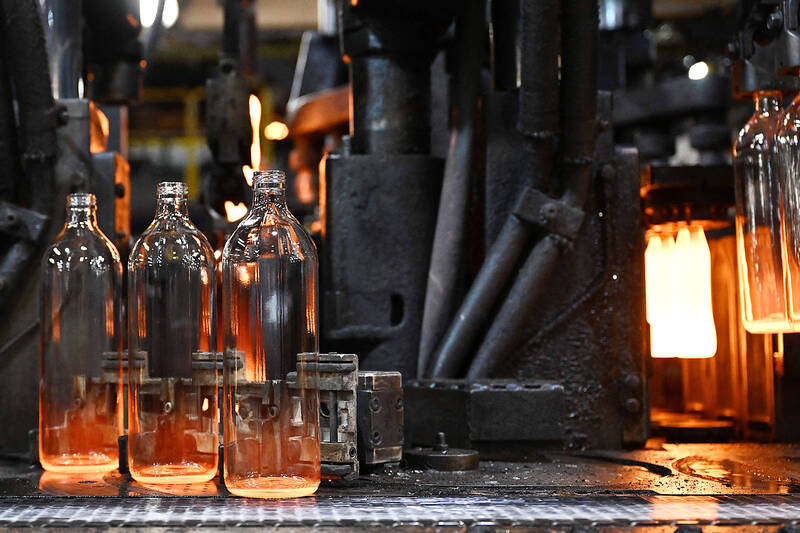
Photo: AFP
The country’s industrial electricity prices were also the steepest in Europe in 2024, according to the latest government data.
Standing in the intense heat of the factory’s two huge furnaces, Harry said: “We’re already seeing an increase in imports into the UK as customers turn to cheap, more unsustainable glass producers,” notably from China and Turkey.
Across energy-intensive industries — from steel and chemicals to glass and cement — companies are warning that government support does not go far enough to keep them competitive.
The government said it will increase discounts on electricity network charges to 90 percent from April, which will save around 500 of the UK’s biggest energy users a cumulative £ 420 million (US$570 million) per year in electricity bills.
“Lowering bills is central to every decision we make,” a government spokesperson said.
The steel sector, already weakened by the closure of traditional coal-fired blast furnaces, argues that more action is needed.
“The industry still faces industrial power prices almost 40 percent higher than in France and Germany,” said Gareth Stace, director general of the UK Steel union,.
The union has called for stronger protections similar to those in France, Italy, Spain and the UAE to shield heavy industry from high wholesale power costs.
Electricity is so expensive in the UK largely because more than a quarter of its power still comes from gas, which surged in price after Russia’s 2022 invasion of Ukraine.
While wholesale prices have since fallen, they remain elevated. Under the liberalized electricity market, the last power station switched on to meet demand sets the price for all generators, and in the UK, that station is usually gas-powered.
“In France, nuclear sets the price fairly often and nuclear is cheaper ... so it’s not always the same expensive gas that sets the price,” Oxford University economics professor Sam Frankhauser said.
In other countries “there’s moments in the day where somebody cheaper sets the price and in the UK, those moments don’t exist” as it is almost always a natural gas plant setting the price, he added.
At Encirc’s Elton factory, where bottles clatter along the conveyor belts to be filled and labelled, executives say energy prices are inseparable from the push to decarbonize.
By the end of the decade, “we’re going to be producing glass bottles that are 80 percent reduced carbon,” Harry said.
“The UK managed to decarbonize the grid phenomenally because of the exit of coal,” London School of Economics professor Gregor Singer said.
“It’s really unfortunate that this gas price shock came now, exactly at that point where you sort of exited coal but you don’t quite have enough renewables yet. In the medium to long run... it’s almost guaranteed that prices are coming down,” he said.
Shares of contract chipmaker Taiwan Semiconductor Manufacturing Co (TSMC, 台積電) came under pressure yesterday after a report that Apple Inc is looking to shift some orders from the Taiwanese company to Intel Corp. TSMC shares fell NT$55, or 2.4 percent, to close at NT$2,235 on the local main board, Taiwan Stock Exchange data showed. Despite the losses, TSMC is expected to continue to benefit from sound fundamentals, as it maintains a lead over its peers in high-end process development, analysts said. “The selling was a knee-jerk reaction to an Intel-Apple report over the weekend,” Mega International Investment Services Corp (兆豐國際投顧) analyst Alex Huang
Taiwan Semiconductor Manufacturing Co (TSMC, 台積電) is expected to remain Apple Inc’s primary chip manufacturing partner despite reports that Apple could shift some orders to Intel Corp, industry experts said yesterday. The comments came after The Wall Street Journal reported on Friday that Apple and Intel had reached a preliminary agreement following more than a year of negotiations for Intel to manufacture some chips for Apple devices. Taiwan Institute of Economic Research (台灣經濟研究院) economist Arisa Liu (劉佩真) said TSMC’s advanced packaging technologies, including integrated fan-out and chip-on-wafer-on-substrate, remain critical to the performance of Apple’s A-series and M-series chips. She said Intel and Samsung
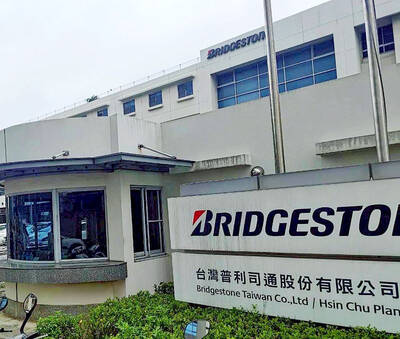
TRANSITION: With the closure, the company would reorganize its Taiwanese unit to a sales and service-focused model, Bridgestone said Bridgestone Corp yesterday announced it would cease manufacturing operations at its tire plant in Hsinchu County’s Hukou Township (湖口), affecting more than 500 workers. Bridgestone Taiwan Co (台灣普利司通) said in a statement that the decision was based on the Tokyo-based tire maker’s adjustments to its global operational strategy and long-term market development considerations. The Taiwanese unit would be reorganized as part of the closure, effective yesterday, and all related production activities would be concluded, the statement said. Under the plan, Bridgestone would continue to deepen its presence in the Taiwanese market, while transitioning to a sales and service-focused business model, it added. The Hsinchu
Taiwan Semiconductor Manufacturing Co (TSMC, 台積電) has approved a capital budget of US$31.28 billion for production expansion to meet long-term development needs during the artificial intelligence (AI) boom. The company’s board meeting yesterday approved the capital appropriation plan for purposes such as the installation of advanced technology capacity and fab construction, the world’s largest contract chipmaker said in a statement. At an earnings conference last month, TSMC forecast that its capital expenditure for this year would be at the higher end of the US$52 billion to US$56 billion range it forecast in January in response to robust demand for 5G, AI and


 RSS
RSS